

FEBRUARY 2026
☃️❄️☃️❄️☃️❄️☃️❄️☃️❄️☃️❄️☃️
BURRRRRRRRRRRRRRRRRRRRRRRRRRRRRRRRRRR

Compliments of Kim Dotcom @KimDotcom
The Hunter Laptop Documentary.
Share this freely on every platform.
https://1hebrutaltruth1.substack.com/p/the-hunter-laptop-documentary
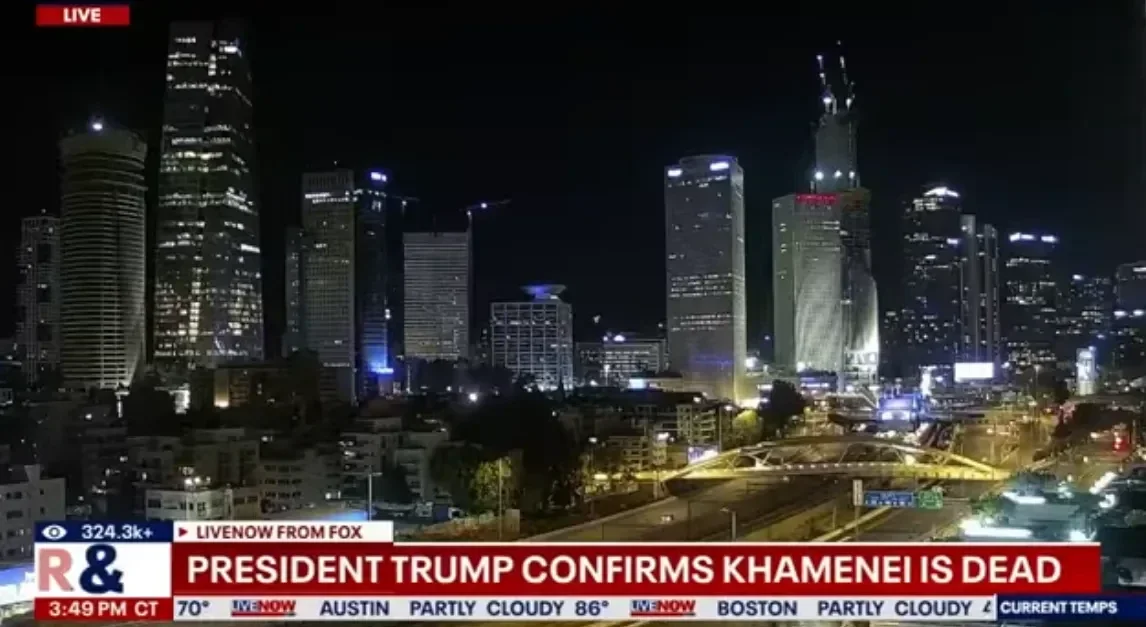
Supreme Leader Ali Khamenei Confirmed Dead After U.S.-Israeli Strikes
CONFIRMED: Trump announces death of Iran's supreme leader
On February 28, 2026, former U.S. President Donald Trump confirmed that Iran’s Supreme Leader Ayatollah Ali Khamenei was killed during a coordinated military operation carried out by the United States and Israel.
Trump posted on social media that Khamenei had been “unable to avoid our Intelligence and Highly Sophisticated Tracking Systems,” and described his death as justice for many victims of the Iranian regime. The military campaign, which began with air and missile strikes targeting Iranian military and leadership sites, was referred to as Operation Epic Fury by U.S. and Israeli officials.
Iranian state media later confirmed the death of Khamenei, announcing his passing and declaring a 40-day period of national mourning. He had ruled Iran since 1989 and was one of the longest-serving clerical leaders in the Islamic Republic’s history. Reports say that several senior officials and members of Khamenei’s family, including his daughter, son-in-law, and a grandchild, were also killed in the strikes.
Analysts describe Khamenei’s death as a major turning point for Iran’s political structure. The Supreme Leader holds ultimate authority over Iran’s military, foreign policy, and internal governance, and there is no clearly designated successor. The Assembly of Experts, a council of clerics, is expected to convene to choose the next leader, but political uncertainty looms. Iran’s Islamic Revolutionary Guard Corps (IRGC) may have increased influence in the interim.
The decision to launch the strikes has sparked intense debate internationally and domestically. Supporters argue it weakens a regime accused of sponsoring terrorism and destabilizing the region. Critics warn that it could escalate the conflict across the Middle East and lead to prolonged violence. Iranian forces have reportedly responded with missile and drone attacks on U.S. bases and Israeli targets in the region following the operation.
The situation remains fluid, with ongoing military and diplomatic developments. World leaders continue to react, and the future leadership and direction of Iran are now key concerns for global security.
The Brutal Truth Summary
“Is there any explanatory reason why Trump only announces news on his Truth social platform first before anybody else gets it?”
Trump has often chosen to announce news first on Truth Social because he owns the platform and uses it to speak directly to his supporters without traditional media filters. By posting there first, he ensures that his own message, tone, and framing reach his audience in his own way before mainstream outlets pick it up. It’s also strategic, as it boosts engagement on his platform.
And we all certainly know the reason is because mainstream media outright lie on regular occasion. In truth, I would rather hear it from HIM… Right from the horse’s mouth, than other news sources. All that remains to be seen are the other media platforms kicking in actual footage and collaborating news.
Also be warned that there was quite a lot of false videos and narratives stating that Dubai was under attack. They’re not. Yes, they are close by but they are not the target.
Address Links
https://www.theguardian.com/us-news/2026/feb/28/khamenei-likely-killed-us-israel-iran-strikes
https://www.axios.com/2026/02/28/iran-khamenei-killed-israel
https://apnews.com/article/5b13b69b708c4ed38e8f95f5fb41a597
Please Like & Share 😉🪽
@1TheBrutalTruth1 FEB. 2026 Copyright Disclaimer under Section 107 of the Copyright Act of 1976: Allowance is made for “fair use” for purposes such as criticism, comment, news reporting, teaching, scholarship, education, and research.
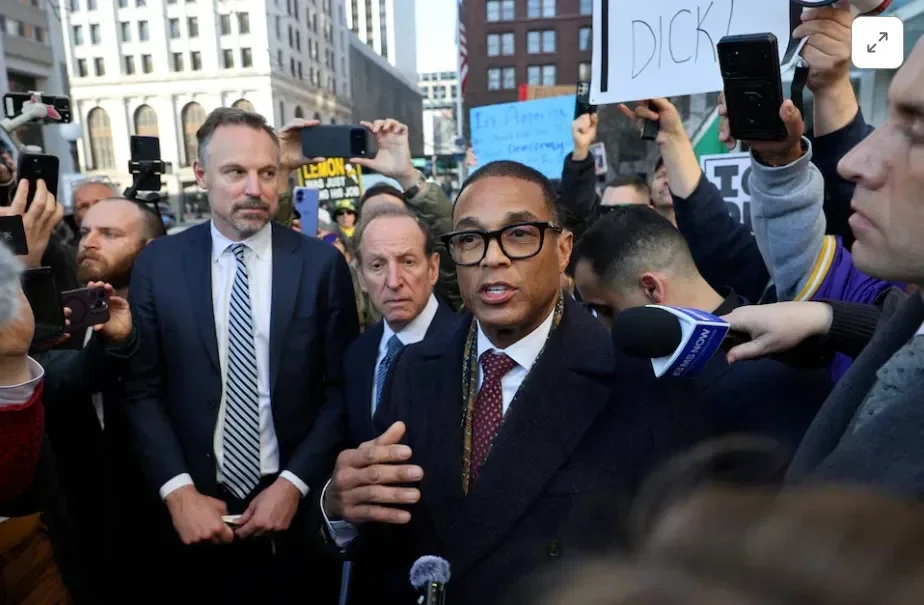
Federal Charges Expand in Minnesota Church Protest Case
Justice Department Charges 30 More in Minnesota Church Demonstration Case
What Happened
The United States Department of Justice announced that 30 additional individuals are being charged in connection with a demonstration that took place at a church in Minnesota last month.
Attorney General Pam Bondi shared the update publicly, stating that federal authorities are continuing their investigation into the incident. The announcement signals that the administration intends to pursue further legal action tied to the protest.
According to federal officials, the charges stem from alleged violations that occurred during the church demonstration. Authorities have not framed the case as a matter of speech alone but as one involving conduct that may have crossed legal boundaries. Details about the specific charges are expected to be clarified through court filings and official statements from prosecutors.
Why the Federal Government Is Involved
The United States Department of Justice becomes involved in cases when federal laws may have been violated. That can include offenses related to interstate activity, civil rights concerns, obstruction, or threats tied to religious institutions. Federal prosecutors must present evidence before a court and demonstrate probable cause for each charge.
Supporters of the administration argue that enforcing federal law during protests is necessary to protect public safety and religious institutions from intimidation or disruption. They say that peaceful protest is protected under the Constitution, but trespassing, threats, or interference with worship services can trigger criminal consequences.
Concerns About Civil Liberties
Critics of the crackdown argue that aggressive federal action risks chilling free speech and political protest. They caution that protest activity near sensitive locations such as churches must be evaluated carefully to ensure First Amendment rights are respected. Civil liberties groups often call for transparency in charging decisions and clear evidence distinguishing lawful protest from criminal behavior.
Minnesota has experienced heightened political tensions in recent years, making demonstrations especially sensitive. Legal experts note that courts will ultimately decide whether the charges hold up under constitutional scrutiny. Each defendant is entitled to due process, including the presumption of innocence.
The Broader Political Context
The announcement comes amid broader national debate over law enforcement responses to protest activity. The Trump administration has emphasized law and order themes and has signaled that demonstrations that disrupt institutions or public safety will face federal consequences. Critics view this approach as part of a wider effort to project strength and deter activism.
As the case moves forward, the outcome will depend on evidence presented in court, judicial rulings, and whether prosecutors can prove their claims beyond a reasonable doubt. Public reaction will likely continue to divide along political lines, reflecting larger disagreements over protest rights and enforcement authority.
The Brutal Truth Summary
Thirty more people charged. That is not a random headline. That is a message.
The Department of Justice is signaling that if you storm a church service to make a political point, you may end up in federal court. This was not framed as peaceful picketing on a sidewalk. It was described as disruption inside a house of worship. Whether you like the immigration policy or not, crossing from protest into interference changes the legal ground fast.
From a hard power perspective, this is about control. The Trump administration has leaned into law and order language, and this move reinforces it. The calculation is simple. Draw a bright line. Speech is protected. Obstruction is not. Worship services are not campaign rallies. If demonstrators entered, blocked, or disrupted religious activity, federal prosecutors will argue that constitutional rights of worshippers were violated in the name of protest.
Critics see something else. They see escalation. They see the federal government flexing muscle to chill dissent tied to immigration enforcement. They worry that broad charging strategies can sweep up minor actors and create a climate of fear around activism. When dozens of people face federal charges at once, it is not subtle. It is meant to deter.
The fringe view goes further. It says this is a test case. Draw the line at churches today. Expand the threshold tomorrow. Normalize mass charging as a political tool. Whether that fear is justified depends on what the evidence shows. Were there threats. Physical obstruction. Coordinated interference. Or was it loud political theater reframed as criminal conspiracy.
Brutal truth. Courts will decide, not social media.
If prosecutors cannot prove specific criminal conduct beyond protected speech, the cases collapse. If they can, the message stands. Protest is legal. Disruption that violates federal law is not. The outcome will shape how aggressively future administrations handle politically charged demonstrations in sensitive spaces.
Sources
United States Department of Justice
Office of the Attorney General
United States Courts Overview
First Amendment Overview from Cornell Law School
https://www.law.cornell.edu/wex/first_amendment
Reuters United States News
https://www.reuters.com/world/us
BBC United States Coverage
https://www.bbc.com/news/world/us_and_canada
Please Like & Share 😉🪽
@1TheBrutalTruth1 FEB. 2026 Copyright Disclaimer under Section 107 of the Copyright Act of 1976: Allowance is made for “fair use” for purposes such as criticism, comment, news reporting, teaching, scholarship, education, and research.
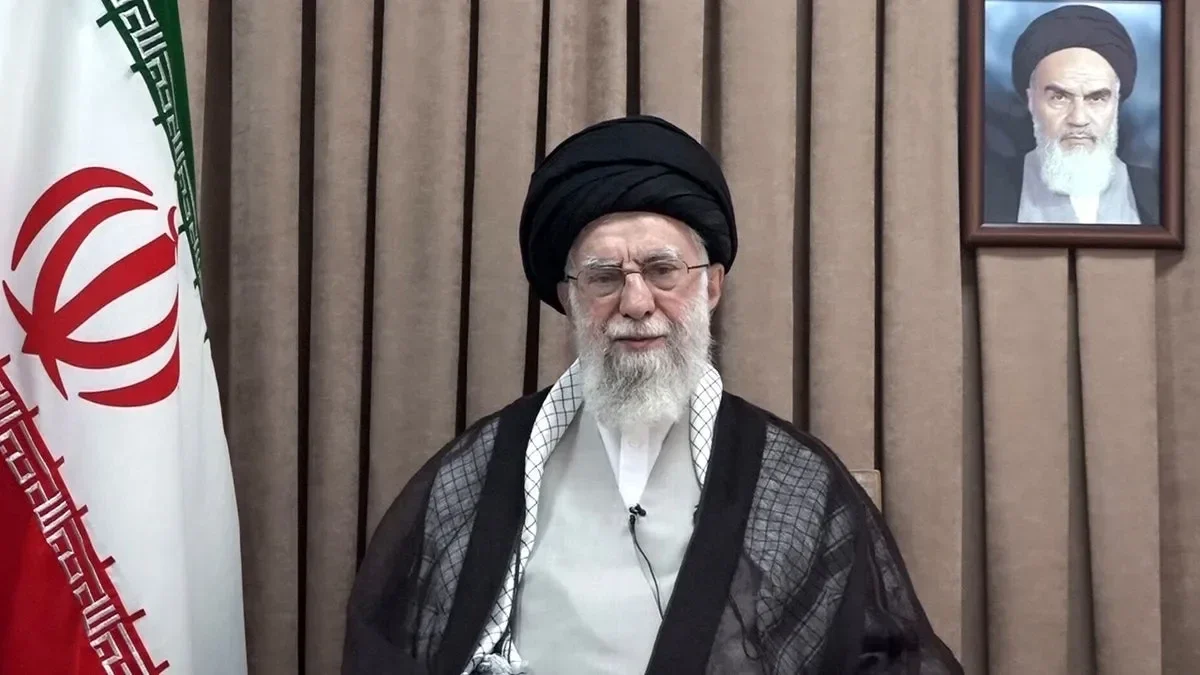
Breaking Claims of Iran Supreme Leader’s Death Await Verification
Unconfirmed Reports Spread After Alleged Strike on Iranian Leadership
A video circulating online claims that Iran’s Supreme Leader, Ali Khamenei, has been eliminated in a joint operation by the United States and the State of Israel.
The broadcast asserts that celebrations are underway inside Iran and among members of the Iranian diaspora worldwide. It also claims that Israeli officials have recovered and confirmed a body and presented evidence to Benjamin Netanyahu and U.S. officials.
At the time of this writing, there has been no official confirmation from the government of Iran, the United States government, or the government of Israel verifying these claims. In major geopolitical events of this magnitude, confirmation typically comes through coordinated official statements, press briefings, and international media verification.
The Structure of Power in Iran
Iran’s political system places ultimate authority in the office of the Supreme Leader. The current officeholder, Ali Khamenei, has served since 1989 following the death of Ruhollah Khomeini. The Supreme Leader controls the armed forces, appoints the head of the judiciary, influences state media, and has final authority over foreign and security policy.
If such a leader were suddenly removed through external military action, the consequences would be immediate and global. Succession is overseen by the Assembly of Experts, a clerical body within Iran, not by foreign governments. Any verified change would trigger internal constitutional processes inside the Islamic Republic.
Military Claims and Regional Risk
The video also references missile strikes in Tel Aviv and claims of retaliation by the Islamic Revolutionary Guard Corps. The IRGC is a powerful branch of Iran’s military structure with regional influence through allied groups. If confirmed, direct strikes between Iran and Israel would represent a major escalation beyond proxy conflict.
Military operations of this scale would normally be acknowledged by the U.S. Department of Defense, the Israeli Defense Forces, and reported through multiple international outlets. Without cross verification from recognized military or governmental sources, such battlefield claims remain unverified.
Diaspora Celebrations and Internal Reaction
Footage presented in the broadcast shows alleged celebrations in Tehran and abroad. Public reaction inside Iran is historically complex. The country has experienced protest movements in recent years over economic conditions, political restrictions, and social policies. However, internal response to a foreign targeted killing of a sitting head of state would likely be mixed and volatile, not universally celebratory.
In past geopolitical crises, misinformation has circulated rapidly on social media before official confirmation. Video clips can be repurposed, edited, or taken from unrelated events. Verification requires time, corroboration, and independent reporting.
Historical Comparisons and Rhetoric
The broadcast compares the alleged death to the fall of Adolf Hitler and frames it as the most significant removal of a dictator since the 1940s. Historical comparisons of that magnitude require caution. Hitler died at the end of a declared world war with formal military surrender and occupation. Iran today remains a sovereign nation with structured institutions, armed forces, and international diplomatic ties.
Inflammatory rhetoric often appears in moments of crisis. Governments typically communicate through formal channels rather than celebratory commentary. Responsible analysis separates emotion from confirmed fact.
Current Status
As of now, there is no official confirmation from Tehran, Washington, or Jerusalem confirming the death of Iran’s Supreme Leader. In major international events, absence of coordinated government statements and absence of corroborated reporting from established outlets is significant.
When events involve potential war between nation states, verification matters. Independent confirmation, official statements, and consistent reporting across multiple sources are the benchmarks that determine whether claims move from rumor to fact.
The Brutal Truth Summary
If Ali Khamenei were truly eliminated in a joint U.S. and Israeli operation, it would not leak first through a hype channel with fireworks clips and pub jokes.
It would detonate across every intelligence service, every embassy, every global market within minutes. Silence from Tehran, Washington, and Jerusalem is not subtle. It is thunder. When a sitting head of state disappears, governments do not whisper. They mobilize.
Iran is not a personality cult floating on one old cleric. The Islamic Republic is a layered power structure built around the Supreme Leader’s office, the Assembly of Experts, and the security spine of the Islamic Revolutionary Guard Corps. Remove the man and the machine does not vanish. It recalculates. Anyone framing this as instant liberation misunderstands how hardened ideological states survive shock.
The missile strike claims against Tel Aviv add another layer of theater. A confirmed direct war exchange between Iran and Israel would trigger regional defense responses, emergency UN sessions, carrier movements, and nonstop satellite tracking. That kind of escalation leaves fingerprints everywhere. When the only source is viral video and commentary, you are watching narrative warfare, not confirmed battlefield reality.
The celebration footage is emotionally powerful but strategically convenient. Diaspora communities often celebrate symbolic victories. Inside Iran, reaction would not be clean or unified. It would be chaotic, fearful, and politically dangerous. A foreign strike killing a national leader can ignite nationalism just as easily as it sparks dissent. Revolutions are not fireworks shows. They are power vacuums filled by whoever moves fastest.
Comparisons to Hitler and dramatic language about the end of tyranny are designed to frame the moment as historic destiny. That is psychological priming.
Real regime collapses are messy, bureaucratic, and documented in real time by governments and multiple news agencies. Until there is official confirmation, coordinated statements, and verifiable evidence, this remains an unverified claim amplified by emotion.
Sources
Official website of the Supreme Leader of Iran
U.S. Department of Defense
Israel Defense Forces
BBC profile of Iran political system
https://www.bbc.com/news/world-middle-east-14542438
Council on Foreign Relations Iran backgrounder
https://www.cfr.org/backgrounder/iran-political-system
Reuters Middle East coverage
https://www.reuters.com/world/middle-east/
Please Like & Share 😉🪽
@1TheBrutalTruth1 FEB. 2026 Copyright Disclaimer under Section 107 of the Copyright Act of 1976: Allowance is made for “fair use” for purposes such as criticism, comment, news reporting, teaching, scholarship, education, and research.
Trump Moves to Cut Off Sanctuary City Funds
No More Blank Checks for Sanctuary Cities
On January 13–14, 2026, President Trump announced (via public remarks/social media, reported widely) that the federal government would “no longer fund” sanctuary cities and, in some versions of the reporting, states with sanctuary cities, with an effective date of February 1, 2026.
Two important “real world” clarifications, though:
He didn’t specify exactly which federal funds would be cut in the announcement. That detail matters because different funds have different legal rules and restrictions.
Actually cutting funds is legally complicated. Past attempts to broadly withhold federal funding from “sanctuary jurisdictions” have been challenged in court, and courts have blocked certain freezes/withholding efforts where the executive branch lacked clear authority.
Also, the fight is still active on the ground: city/state leaders have been issuing new orders restricting ICE access or limiting cooperation, and the administration has responded with legal pressure (including litigation).
--------------------------------------------------
Please Like & Share 😉🪽
@1TheBrutalTruth1 FEB. 2026 Copyright Disclaimer under Section 107 of the Copyright Act of 1976: Allowance is made for “fair use” for purposes such as criticism, comment, news reporting, teaching, scholarship, education, and research.
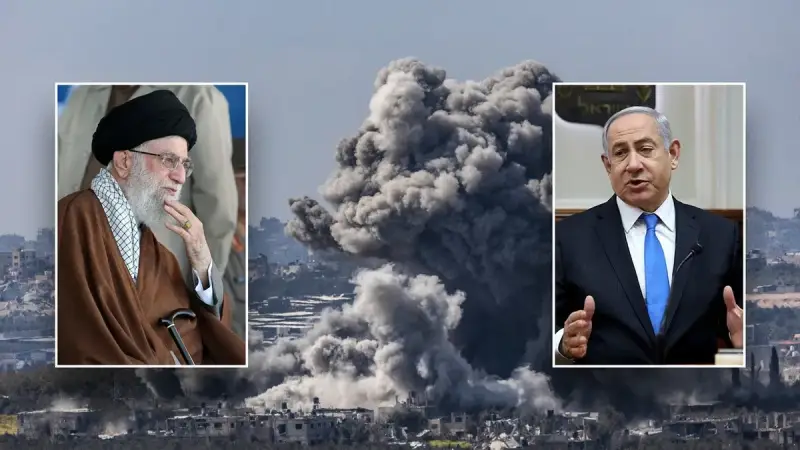
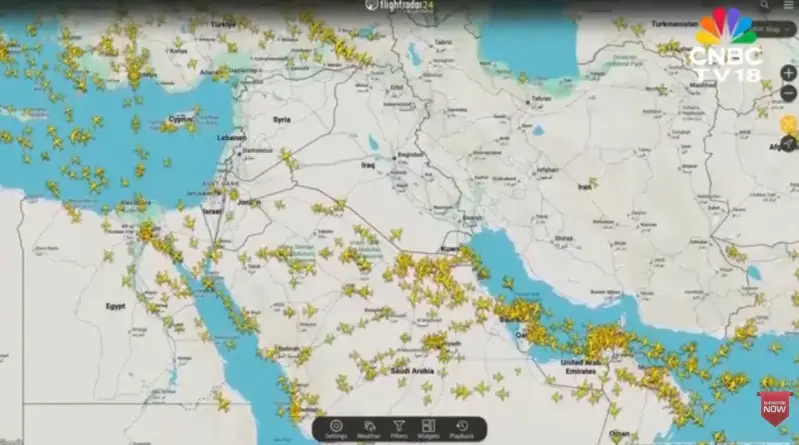
U.S. and Israel Strike Iran in Coordinated Military Action
Iran Responds to U.S.–Israel Strikes Amid Nuclear Dispute
Tensions in the Middle East spiked sharply this weekend as Israel and the United States launched military strikes on Iran, marking one of the most serious escalations between Tehran and its rivals in years.
According to government officials and multiple news outlets, explosions were reported in Tehran’s downtown area and the attacks were described as pre-emptive strikes on Iranian targets amid stalled diplomatic talks over Tehran’s nuclear program. Smoke plumes were seen rising over the city, and sirens sounded across Israel as authorities prepared for possible retaliation.
Israeli Defence Minister Yisrael Katz said the operation was designed to remove threats to the State of Israel, and emergency measures were enacted in cities across the country as the first indications of the assault came in broad daylight. Iran responded by closing its airspace and warning that it would respond to what it characterized as an act of aggression. Earlier reports also noted that Iran’s Supreme Leader Ayatollah Ali Khamenei had been moved to a secure location as the strikes began.
U.S. involvement in the strikes was acknowledged by both American and Israeli officials, with the White House indicating coordination with Israel’s military action. U.S. forces have bolstered their presence in the region in recent weeks, including deploying advanced aircraft and positioning naval assets, a signal that Washington is deeply engaged in the crisis. This joint operation marks a significant moment in U.S.–Israel cooperation and reflects a shared objective to counter what both governments view as nuclear and military threats posed by Iran.
The strikes come at a delicate moment. Diplomatic negotiations between the United States and Iran had been underway, with both sides expressing interest in resolving long-standing issues over Iran’s nuclear activities. Those talks now appear to be jeopardized, raising concerns among international mediators that the window for a diplomatic solution may be closing as military actions escalate.
Iran’s government has vowed to retaliate, and experts warn the situation could spiral into a broader conflict involving regional allies and proxy forces. The risk of missile exchanges, targeted counter-attacks, and further international involvement remains high as the world watches how Tehran responds to these strikes.
This is an ongoing story with developments unfolding rapidly, and further details are expected as more information becomes available from official sources and live reporting teams.
The Brutal Truth Summary
The Middle East just lurched closer to open war and nobody is pretending otherwise.
Israel and the United States launched coordinated strikes on Iran and the era of quiet threats and shadow boxing just cracked wide open. Explosions in Tehran are not diplomatic messages. They are declarations. When jets move and airspace closes, the conversation is no longer theoretical.
Officials are calling the strikes pre-emptive. That word always sounds cleaner than it is. It means you hit first because you believe something worse is coming. Israel says it is eliminating threats. Washington says it is countering nuclear risk. Tehran says it was attacked. Every side believes it is justified. Every side says it had no choice. That is how escalation works.
Diplomacy was supposedly still alive. Talks were ongoing. Statements were being drafted. Now smoke is rising over Tehran and air defense systems are lit up. When bombs land during negotiations, the message is simple. The clock ran out. Whether that failure belongs to Iran’s nuclear ambitions, Western mistrust, or political calculation depends on who is telling the story.
The joint nature of the strike is the real headline. This was not a solo move. It signals alignment at the highest levels between Washington and Jerusalem. Military coordination at this scale is not improvisation. Assets were positioned. Forces were reinforced. Contingencies were mapped. This did not happen overnight.
Now the dangerous part begins. Iran has vowed retaliation. Proxy groups exist across the region. Missile exchanges are no longer a hypothetical. Oil markets, shipping lanes, regional allies and global powers are all watching the same countdown clock. Once the retaliation cycle starts, it does not care about press conferences.
The brutal truth is that deterrence either works or it detonates. Right now the region is balanced on that edge. If Tehran responds hard, this widens fast. If it holds back, the power equation shifts permanently. Either way the illusion of stability just took a direct hit, and the fallout will not be contained to one skyline.
Source Links
https://www.wsj.com/livecoverage/iran-strikes-2026
https://www.aljazeera.com/news/2026/2/28/explosions-in-downtown-tehran-smoke-seen-rising
https://en.wikipedia.org/wiki/2026_Israeli%E2%80%93United_States_strikes_on_Iran
U.S. and Israel Strike Iran in Coordinated Military Action
Please Like & Share 😉🪽
@1TheBrutalTruth1 FEB. 2026 Copyright Disclaimer under Section 107 of the Copyright Act of 1976: Allowance is made for “fair use” for purposes such as criticism, comment, news reporting, teaching, scholarship, education, and research.

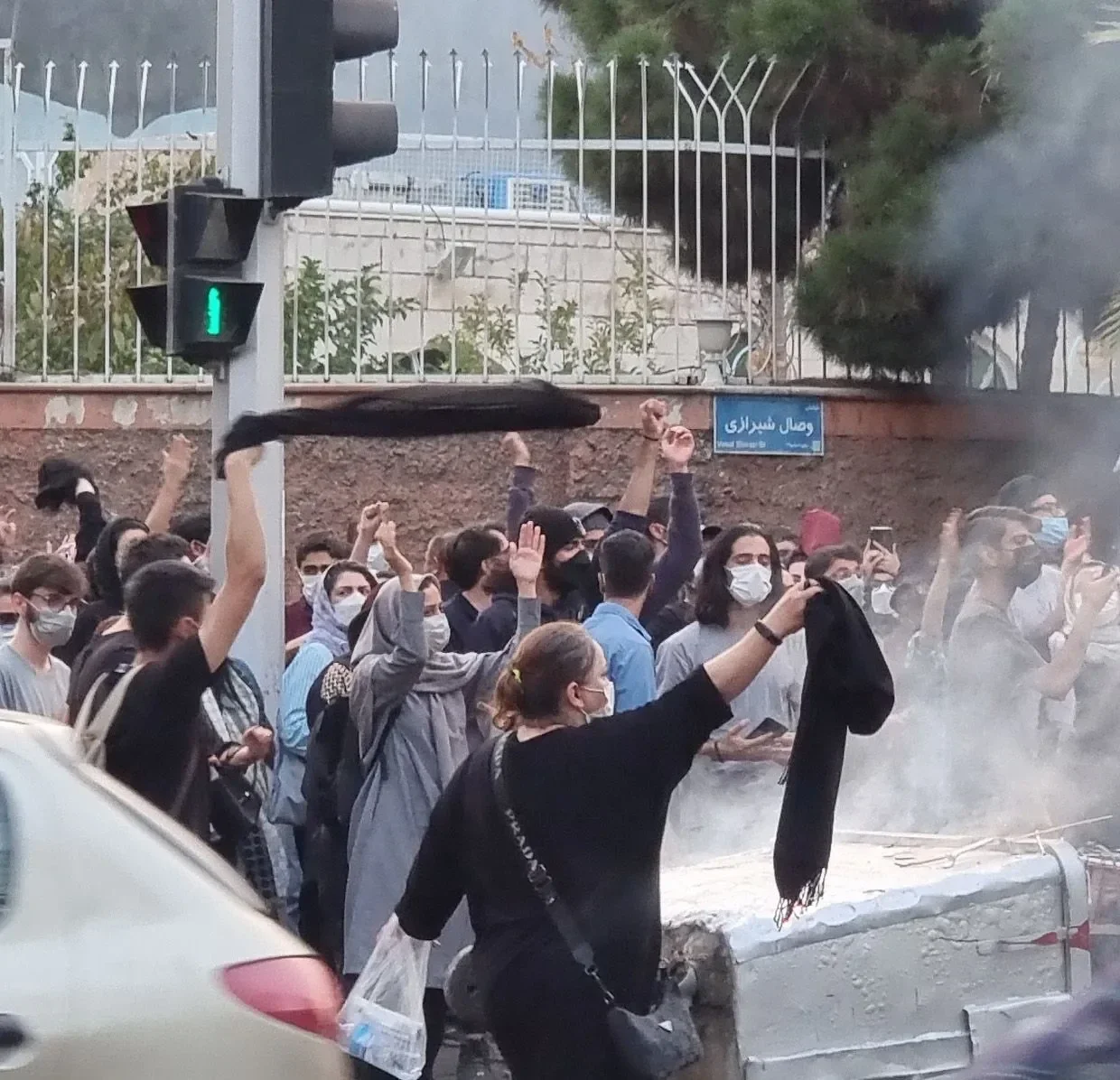
Fighters Storm Khamenei’s Compound - What Happened in Tehran
Iran’s Power Struggle: Armed Opposition Confronts Regime Forces
In late February 2026, reports emerged of armed fighters attempting to breach a secure government compound in Tehran associated with Iran’s Supreme Leader, Ayatollah Ali Khamenei.
Opposition linked sources claimed that members of the People’s Mojahedin Organization of Iran carried out the operation. Iranian state aligned outlets described the incident as a failed attack that was quickly contained.
Location and Strategic Importance
The reported target was a high security complex in central Tehran that houses key governing bodies and offices connected to the office of the Supreme Leader. The compound is heavily guarded and considered one of the most secure political sites in the country. Independent journalists have limited access to confirm details due to tight media restrictions inside Iran.
Groups Involved
Iranian authorities said the Islamic Revolutionary Guard Corps responded immediately to the attempted breach. State affiliated media reported arrests and casualties among the attackers. The opposition group People’s Mojahedin Organization of Iran has long opposed the Islamic Republic and operates largely from outside the country. Tehran classifies the group as a terrorist organization, while some Western governments previously removed it from terrorist lists.
Conflicting Narratives
Opposition aligned channels described the event as a coordinated strike aimed at the heart of the regime. Iranian officials framed it as an isolated and unsuccessful act of violence that did not threaten national stability. Independent confirmation of casualty figures remains difficult, as both sides released sharply different numbers.
The reported clash comes during a period of internal pressure on Iran’s leadership, including economic strain, sanctions, and periodic street protests. Security around key political sites has remained elevated in recent years. Analysts note that attacks near top leadership compounds are rare and often signal deeper tensions within the country’s political landscape.
The Brutal Truth Summary
You don’t walk toward the Supreme Leader’s compound unless you are either desperate, calculating, or trying to send a message that echoes far beyond the walls.
Here is the brutal truth. When armed men move toward the most secure compound in Tehran, this is not random chaos. This is a direct challenge to power. I don’t see this as a reckless stunt. Someone decided to test the nerve of the regime that survives on control, surveillance, and fear.
The compound itself is not just an office building. It is the nerve center of the Islamic Republic. It represents authority, continuity, and the iron grip of clerical rule. If fighters truly reached even the outer perimeter, that alone punctures the illusion of invulnerability. In authoritarian systems, perception is everything. Even the appearance of penetration weakens the aura of untouchable control.
The Islamic Revolutionary Guard Corps responded fast, as expected. That is their job. They are not simply soldiers. They are guardians of the regime’s survival. Arrests, casualties, heavy presence in the streets. That part writes itself. What matters more is what the public cannot verify. When media is restricted and numbers cannot be independently confirmed, truth becomes a weapon used by both sides.
The People’s Mojahedin Organization of Iran has a long history of confrontation with Tehran. To the regime, they are terrorists. To their supporters, they are resistance. To many ordinary Iranians, they are controversial at best. This incident gives them attention, which in insurgent politics is currency.
The conflicting narratives are predictable. The opposition calls it a bold strike at the heart of tyranny. The state calls it a failed and contained incident. Both are selling strength. Both are selling control. The reality likely sits somewhere between exaggerated heroics and sanitized minimization. In power struggles, truth is rarely clean.
This is not about the gunfire. It is about the moment it happened. A regime under sanctions, economic decay, and public resentment does not get the luxury of isolated incidents. Pressure builds quietly until it does not. An armed move toward the Supreme Leader’s compound is not noise. It is a stress fracture in a system that survives on projecting total control. When challengers feel bold enough to approach the core, that tells you something has shifted.
Authoritarian power depends on fear and inevitability. The image of unshakable control is the shield. When that image cracks, even slightly, the entire structure feels it. Whether this was a serious attempt or a symbolic stunt almost does not matter. The message is the same. The center can be touched.
Now the question is simple and brutal. Was this was an isolated spark, or someone inside is making it possible. Security at that level does not falter without either failure or betrayal. Systems built on control do not get breached from the outside unless cracks already exist within.
If challengers are getting close to the core, then access, timing, or intelligence came from somewhere behind the curtain. The most serious threat to any regime is not the noise at the gate, it is the quiet shift of loyalty inside the walls.
Address Links
https://www.reuters.com/world/middle-east/
https://www.bbc.com/news/world-middle-east
https://www.aljazeera.com/middle-east/
https://www.cnn.com/middleeast
https://www.state.gov/foreign-terrorist-organizations/
Fighters Storm Khamenei’s Compound - What Happened in Tehran
Please Like & Share 😉🪽
@1TheBrutalTruth1 FEB. 2026 Copyright Disclaimer under Section 107 of the Copyright Act of 1976: Allowance is made for “fair use” for purposes such as criticism, comment, news reporting, teaching, scholarship, education, and research.
Cheap Slave Labor Now Cloaked as "Democracy"
Do Central Banks Control Immigration Policy?
Mainstream Media News
In recent political commentary, some voices have claimed that central bankers have “confessed” that mass immigration is part of a long-term economic strategy.
The phrase “final solution” has also appeared in headlines and online posts. That phrase carries heavy historical meaning and is not used in official economic policy discussions. It is important to separate emotional rhetoric from documented statements made by financial institutions.
Central banks such as the Federal Reserve, the European Central Bank, the Bank of England, and the International Monetary Fund do not set immigration policy. Their primary role is to manage monetary policy, control inflation, stabilize financial systems, and monitor economic growth. Immigration policy in democratic countries is determined by elected lawmakers and executive agencies, not by central bank boards.
That said, economists, including some central bank researchers, have publicly discussed immigration in economic terms. In aging Western economies, lower birth rates and shrinking labor forces create long-term workforce shortages. Some research papers argue that immigration can help expand the labor supply, support tax systems, and reduce inflationary pressure in certain sectors. These arguments are presented as economic models, not as cultural or ideological directives.
From a conservative perspective, critics argue that large-scale immigration can depress wages, strain public services, and weaken national identity. They also express concern that economic institutions sometimes view population growth primarily through a labor-market lens rather than through social cohesion or border security concerns. These critics believe elected leaders should prioritize sovereignty and workforce development over external labor reliance.
From a middle-of-the-road economic perspective, immigration is often discussed as one factor among many affecting growth, inflation, and productivity. Research from institutions such as the Congressional Budget Office has noted that immigration can increase overall economic output while also creating localized costs that require policy management. The debate centers on scale, enforcement, integration, and labor market impact.
There is no documented “confession” from central bankers stating that mass immigration is a “final solution” or coordinated endgame policy. Public speeches and reports discuss demographic challenges, labor shortages, and fiscal sustainability. Political leaders then decide immigration laws based on broader considerations including border security, humanitarian policy, and domestic labor needs.
The broader public debate reflects deeper concerns about globalization, automation, wage stagnation, and economic inequality. Immigration becomes part of that discussion because it intersects with jobs, housing, healthcare, and education. Strong headlines can suggest coordinated control, but official records show economic analysis rather than secret directives.
As with many high-tension political issues, the disagreement often stems from values and priorities rather than hidden admissions. The core policy questions remain focused on economic growth, labor supply, national identity, and border enforcement.
The Brutal Truth Summary
Barbara Boyd claims that central bankers have openly admitted mass immigration is their solution to the economic crisis. She references the “great replacement theory,” suggesting it is now proven true by central bankers’ statements.
Boyd cites speeches from the Jackson Hole meeting where she claims figures like ECB’s Christine Lagarde and BOJ’s Kazuo Ueda said immigration would fix labor shortages. She argues central bankers admitted immigration lowers wages and is the key to increasing labor supply.
Boyd blames central bankers for decades of zero population growth policies, wars, and environmentalism, which she says led to this crisis. She claims their plan is fascist, comparing it to historical policies of cheap labor and wartime spending.
According to Boyd, Trump’s policies focusing on families, industry, and population growth are the opposite. She concludes that central bankers’ approach leads to war and control, while she believes Trump’s approach leads to prosperity.
Full Address Links
https://www.federalreserve.gov/aboutthefed.htm
https://www.ecb.europa.eu/ecb/orga/decisions/html/index.en.html
https://www.cbo.gov/publication/58939
https://www.heritage.org/immigration
https://www.cbo.gov/publication/60239
https://www.imf.org/en/Publications/WEO
Cheap Slave Labor Now Cloaked as "Democracy"
Please Like & Share 😉🪽
@1TheBrutalTruth1 FEB. 2026 Copyright Disclaimer under Section 107 of the Copyright Act of 1976: Allowance is made for “fair use” for purposes such as criticism, comment, news reporting, teaching, scholarship, education, and research.
Trying to Embarrass The Trump Administration is only Making Them Look Bad.
Dems yelling “KKK” during a formal address drags the moment into the gutter.
The State of the Union has officially morphed from a presidential address into a live televised cage match.
When lawmakers start chanting “KKK” from the chamber floor, it is no longer about policy. It is about performance. This was not a sudden breakdown of order. It was political theater designed for outrage and airtime.
Democrats who shouted argue they were calling out rhetoric they believe fuels racial division. Critics argue that yelling “KKK” during a formal address drags the moment into the gutter. Strip away the spin and the pattern is obvious. Both parties have turned what was once a ceremonial event into a partisan battleground.
Decorum is no longer the standard. Booing, heckling, and walkouts are now routine. Lawmakers are not just speaking to colleagues in the room. They are speaking to cameras, donors, and primary voters. Viral clips matter more than restraint. Spectacle consistently beats substance.
It's not just the chanting. The normalization of confrontation inside Congress is the story. When slogans replace arguments, it signals a political system more focused on scoring points than governing responsibly.
The reality is blunt. High tension. No patience. Cameras everywhere. The State of the Union has become partisan prime time, and unity has taken a back seat to performance.
Trying to Embarrass The Trump Administration is only Making Them Look Bad.
Please Like & Share 😉🪽
@1TheBrutalTruth1 FEB. 2026 Copyright Disclaimer under Section 107 of the Copyright Act of 1976: Allowance is made for “fair use” for purposes such as criticism, comment, news reporting, teaching, scholarship, education, and research.
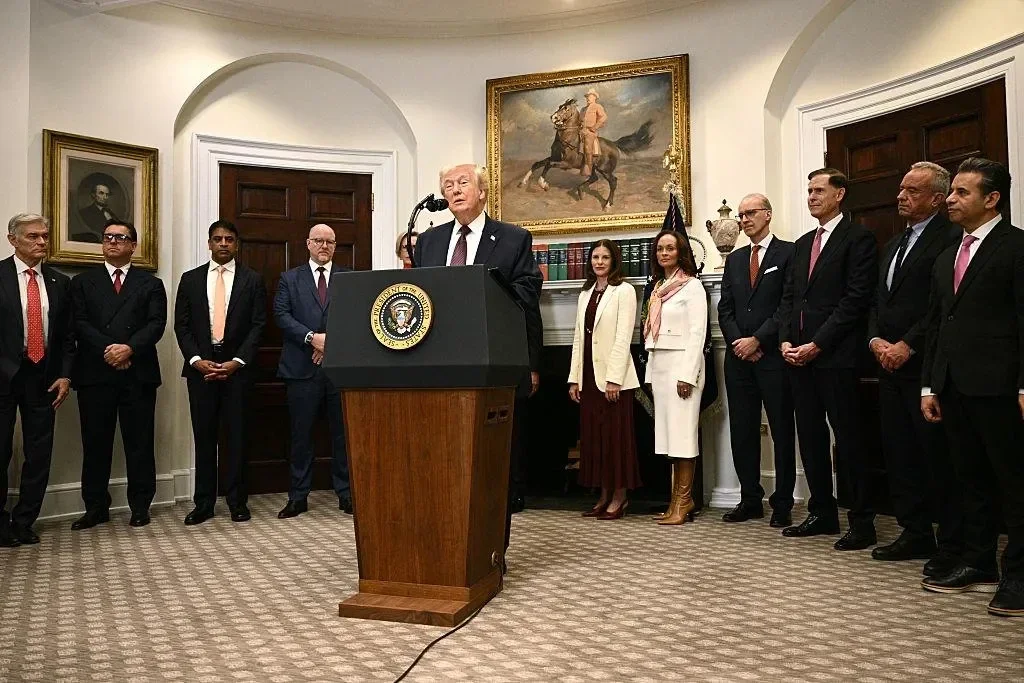
TRUMP NAMED THEM: The Real “Foreign Interests”
Economic Sovereignty or Free Trade: The Tariff Battle After the Supreme Court
As the 2026 political cycle heats up, debate over tariffs and trade power has moved from campaign rallies into the courtroom.
A recent ruling by the Supreme Court of the United States narrowed how far executive authority can stretch under certain emergency trade statutes. Supporters of former President Donald Trump argue the decision does not end the tariff agenda. They say it simply shifts the legal path forward.
Commentator Susan Kokinda has framed the ruling as part of a larger ideological battle. In her view, the fight is not only about China or trade deficits. She argues it is about what she calls “foreign interests” tied to an older free-trade philosophy associated with British economic thinker Adam Smith. That school of thought favors minimal tariffs and global market integration. Kokinda contends that modern institutions such as the United States Chamber of Commerce and the Cato Institute continue to defend versions of that free-trade model.
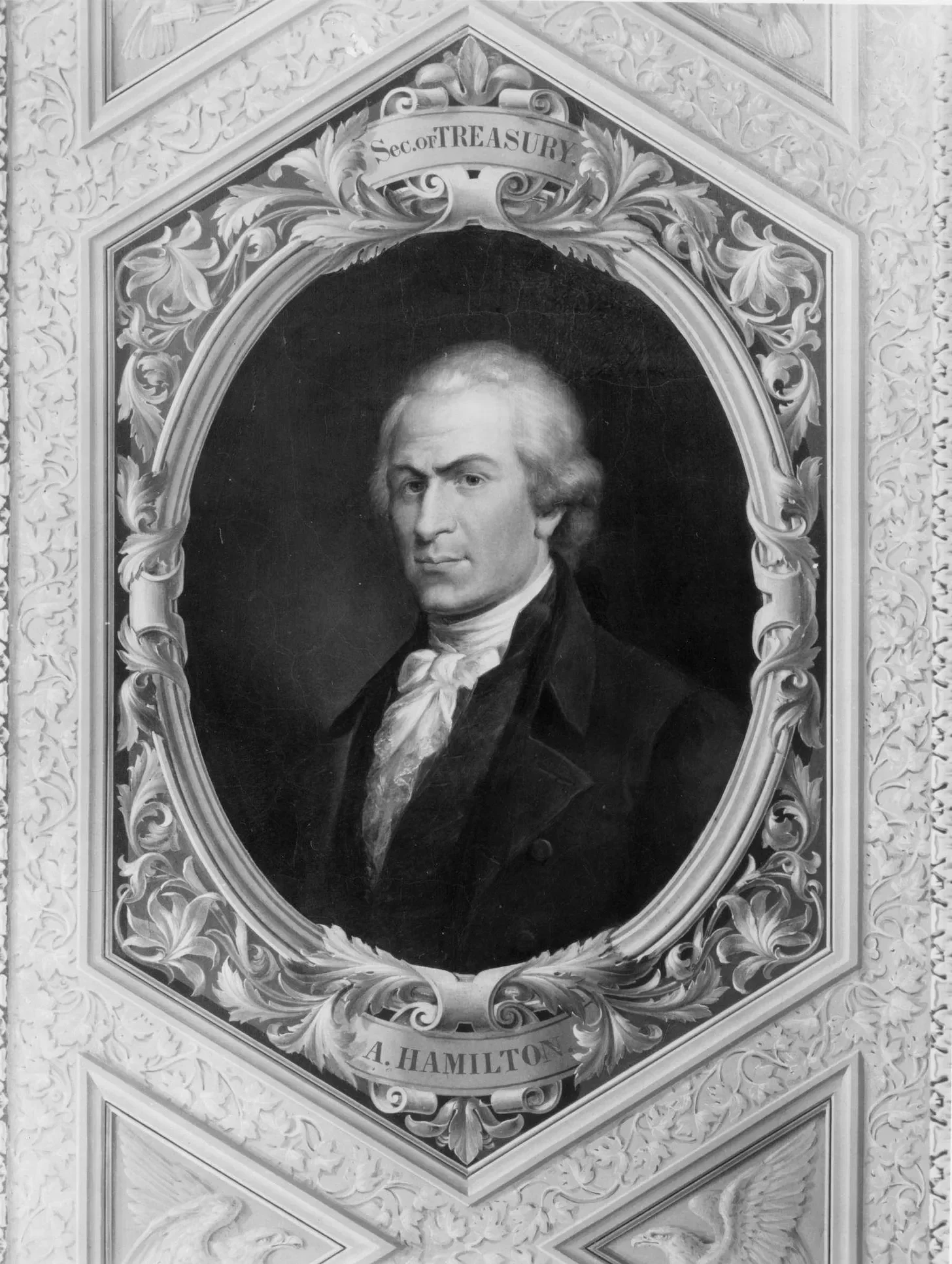
Inside the administration’s orbit, officials have described their strategy differently. Treasury Secretary Scott Bessent and Ambassador Jamieson Greer have characterized the approach as rooted in the economic framework of Alexander Hamilton. Hamilton argued that young or strategic industries sometimes require protection to grow. Supporters call this “economic sovereignty.” The core idea is that tariffs, industrial policy, and domestic manufacturing capacity are tools of national security, not just economic policy.
Administration allies maintain that even if one statute is limited, others remain available. Federal law provides multiple pathways for imposing trade remedies, including provisions tied to national security and unfair trade practices. Some policy advisers have floated a universal baseline tariff of 10 percent on imports, arguing it would simplify enforcement and reduce dependence on foreign supply chains. Critics warn that broad tariffs could raise consumer prices and strain diplomatic ties.
At the same time, another theme has emerged in policy discussions: a concept described as “peace through construction.” During a recent Board of Peace gathering, representatives from dozens of countries reportedly discussed funding infrastructure, housing, and development projects as alternatives to prolonged geopolitical conflict. Advocates argue that economic growth and security investment can stabilize regions more effectively than managed rivalry. The phrase stands in contrast to Cold War-era strategies often associated with power balancing and strategic containment.
Political strategy now intersects with economic policy. Supporters of the tariff agenda argue that midterm elections will determine whether this Hamiltonian model continues. They warn that voter demoralization or low turnout could shift congressional control and slow or reverse the program. Opponents counter that voters will weigh inflation, trade costs, and global relationships before deciding whether industrial protectionism or open trade better serves national interests.
The broader debate reflects a long-standing divide in American economic history. One side favors global free trade and market integration. The other emphasizes domestic production, strategic independence, and protective measures.
The Supreme Court ruling did not end that debate. It clarified legal boundaries, while leaving the ideological contest fully intact.
Sources and Address Links
Supreme Court of the United States
United States Chamber of Commerce
Cato Institute
U.S. Department of the Treasury
Office of the United States Trade Representative
Federal Trade and Tariff Authorities Overview (USTR)
https://ustr.gov/issue-areas/enforcement
Library of Congress – Alexander Hamilton Biography
https://www.loc.gov/item/today-in-history/january-11
Stanford Encyclopedia of Philosophy – Adam Smith
https://plato.stanford.edu/entries/smith-moral-political/
TRUMP NAMED THEM: The Real “Foreign Interests”
Please Like & Share 😉🪽
@1TheBrutalTruth1 FEB. 2026 Copyright Disclaimer under Section 107 of the Copyright Act of 1976: Allowance is made for “fair use” for purposes such as criticism, comment, news reporting, teaching, scholarship, education, and research.



Why some link disclosure to Revelation, and why others keep it grounded in national security and science
Disclosure, UAP Files, and the Bible: What’s Actually Happening vs. What People Think Is Happening
What a lot of people call “disclosure” is not one single event. It is a mix of government transparency, media hype, public suspicion, and real unanswered questions about unusual sightings in the sky.
Some voices online are framing it as proof of alien contact and recovered technology, while official U.S. reporting so far has not confirmed extraterrestrial visitation.
Right now, the most concrete “disclosure” story is political: President Donald Trump publicly said he is directing the Pentagon and other agencies to identify and release government files related to UAP/UFOs and “alien and extraterrestrial life,” citing public interest. That is a real announcement, but it is not the same thing as proof the government has alien bodies or a secret partnership with nonhuman beings.
What Trump Actually Announced, and Why the Wording Matters
Multiple major outlets reported Trump’s statement as a directive to the Department of Defense and other agencies to begin releasing relevant files. That is a policy direction about records, not a scientific confirmation of alien contact.
You may also see a version of the quote floating around that says “Secretary of War.” The U.S. hasn’t used that title since 1947 (it became the Department of Defense). Some reporting repeated “Secretary of War” language, which makes the quote sound stranger than it needs to be, but the mainstream reporting still ties the directive to the Pentagon/Defense.
Obama’s “Aliens Are Real” Moment, and the Walk-Back
This latest spike in attention also followed former President Barack Obama’s podcast “speed round” moment where he said aliens are “real,” then clarified he had seen no evidence of alien contact during his presidency and was speaking loosely about the odds of life existing somewhere in the universe. In other words, the viral line was not presented as a classified confession.
Trump then criticized Obama for allegedly revealing classified information, while also saying he does not know if aliens are real. That combination is part of why the story moved fast: it blends pop culture, national security language, and politics.
What the U.S. Government Has Actually Put in Writing About UAP
If you want the cleanest baseline, it’s the official UAP reporting system and its public documents. The Defense Department’s FY2024 consolidated annual report says AARO received 757 UAP reports in the covered period (May 1, 2023 to June 1, 2024). Many cases were resolved as ordinary objects or events, while others remain unresolved mainly because of limited data.
AARO’s historical review (released in 2024) also states it found no verified evidence that the U.S. government has hidden alien spacecraft, made secret deals with extraterrestrials, or reverse-engineered alien technology. That conclusion does not prove “nothing unusual exists,” but it does set a public, official line: there is no confirmed extraterrestrial explanation in the government’s documented findings.
NASA’s independent UAP study team took a similar approach: it treated UAP as a data problem and argued for better sensors, better reporting, and less stigma, rather than declaring “aliens.” NASA’s report focuses on how to study anomalies scientifically, not on claiming contact.
Why Some People Tie Disclosure to Revelation
The claim that “disclosure” is the same idea as “revelation,” and that modern UFO disclosure is directly tied to end-times deception. That interpretation is real in the sense that many Christians do connect modern cultural events to prophetic frameworks, including warnings about deception and false signs. But it is not an official or testable claim in the way a government report is, and different Christians interpret Revelation very differently.
From a middle-of-the-road perspective, it helps to separate two conversations that often get mashed together: one is national security and aviation safety (what are pilots seeing, and is it foreign tech, sensor error, or something else), and the other is spiritual meaning (what does this imply about God, evil, and prophecy).
People can hold strong beliefs about the second, but the first still needs evidence and clear documentation to avoid turning fear into a blank check for bad information.
The “Market Collapse” Angle and What It’s Based On
Bank of England-related warning about “ontological shock” and financial fallout if a major alien confirmation happens. Reporting in the U.K. described comments from Helen McCaw, a former Bank of England analyst, arguing that leaders should not ignore the possibility that a dramatic disclosure claim could trigger panic, bank runs, or major market instability. This is best understood as a risk scenario discussion, not proof that officials know aliens are here.
It is also true that “disclosure” talk can move money and attention even without proof, because markets react to uncertainty and headlines. That’s why careful language matters: saying “we are releasing files” is not the same as saying “we have confirmed nonhuman intelligence.”
Where This Leaves the Public Right Now
If you strip away the dramatic claims, the real, verifiable picture is this: the U.S. government has a formal UAP office, it collects reports, it has released documents and imagery, and it says it has not confirmed extraterrestrial origin. Meanwhile, political leaders are using the topic publicly, which adds heat and suspicion.
That gap between what people suspect and what has been proven is exactly where misinformation thrives. If large releases happen, they could clarify some cases, embarrass agencies, or show more misidentifications than people expected. Either way, the safest approach is to judge the content of what is released, not the excitement around the word disclosure.
The Brutal Truth Summary
This “disclosure” thing isn’t a movie trailer for aliens. It’s a controlled mix of paperwork, headlines, and public paranoia being sold like a revelation.
Online voices are screaming “alien contact” and “recovered tech,” while the actual official position is still the same: no confirmed extraterrestrial visitation, no verified alien bodies, no proven secret partnership. That means the loudest claims are running miles ahead of the evidence, and a lot of people are treating vibes like facts.
The only solid “disclosure” right now is political theater: Trump says he’s directing Defense and other agencies to identify and release files tied to UAP/UFOs and even “alien” topics because the public is obsessed. Fine. That’s a records push, not a scientific mic-drop. And the sloppy “Secretary of War” wording floating around is exactly the problem—people are repeating dramatic lines without even noticing the basic history error. If your proof depends on a title that hasn’t existed since 1947, you’re not breaking news, you’re spreading noise.
Then you get the Obama moment: a viral “aliens are real” line, followed by a cleanup that it wasn’t a confession, it was loose talk about the odds of life in the universe. Trump jumps on it anyway, calling it “classified,” while also saying he doesn’t know if aliens are real. That’s why this spreads: it’s not evidence, it’s a perfect storm of celebrity politics, national-security language, and algorithm bait.
Meanwhile, the written baseline is boring on purpose: AARO logged hundreds of reports, explained many as ordinary objects or limited-data cases, and says it found no verified evidence of hidden alien spacecraft, deals, or reverse engineering. NASA’s angle is even less romantic: treat it like a data-quality problem, improve sensors, reduce stigma, and stop confusing mystery with proof.
And the “Revelation equals disclosure” framing? That’s belief-space, not proof-space. People can interpret prophecy however they want, but mixing faith claims with national-security reporting is how you get manipulated—because once fear and awe kick in, standards collapse. Same with the “ontological shock” market panic talk: it’s a risk scenario, not a confession. It’s basically: big shocking headlines can trigger chaos. True. Not the same as: aliens are here.
Bottom line: They’re not arriving from some distant galaxy. They’ve been here all along. The crowd is clapping, the headlines are buzzing, the Pentagon’s been told to open the vaults, and everyone keeps chanting the same word like it’s salvation: “Disclosure.”
While the world throws a parade for the so-called Visitors, something far older is unfolding — a 2,000-year-old script moving forward line by line, right on cue.
Address links and sources
Trump order / reporting
Obama podcast moment and clarification
https://time.com/7378768/obama-aliens-real-area-51/
Official U.S. documents (UAP)
https://www.aaro.mil/Portals/136/PDFs/AARO_Historical_Record_Report_Vol_1_2024.pdf
https://www.aaro.mil/UAP-Cases/Official-UAP-Imagery/
https://www.dni.gov/index.php/newsroom/reports-publications/reports-publications-2024/4020-uap-2024
NASA UAP study
https://science.nasa.gov/wp-content/uploads/2023/09/uap-independent-study-team-final-report.pdf
https://www.nasa.gov/news-release/update-nasa-shares-uap-independent-study-report-names-director/
Market/Bank of England angle
https://finance.yahoo.com/news/bank-england-warned-prepare-aliens-212252751.html
Videos (hearings/briefings)
https://www.c-span.org/program/house-committee/hearing-on-government-investigation-of-ufos/612133
https://www.nasa.gov/news-release/nasa-to-release-discuss-unidentified-anomalous-phenomena-report/
Please Like & Share 😉🪽
@1TheBrutalTruth1 FEB. 2026 Copyright Disclaimer under Section 107 of the Copyright Act of 1976: Allowance is made for “fair use” for purposes such as criticism, comment, news reporting, teaching, scholarship, education, and research.
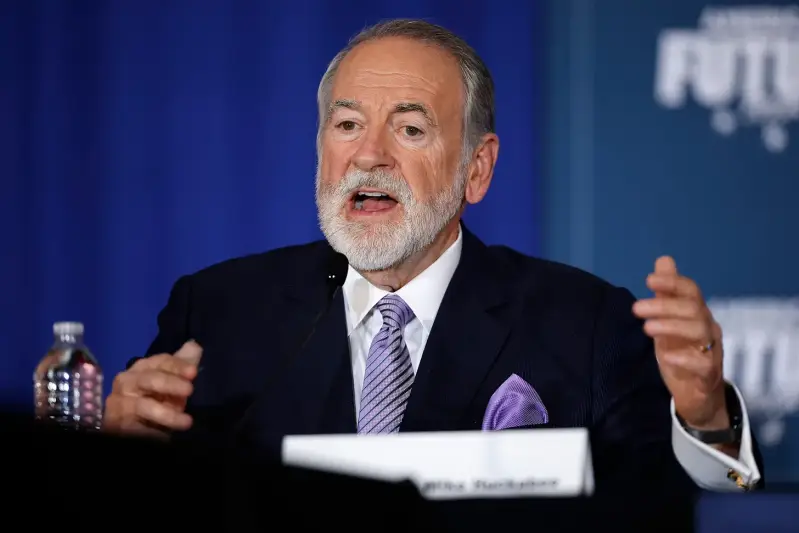
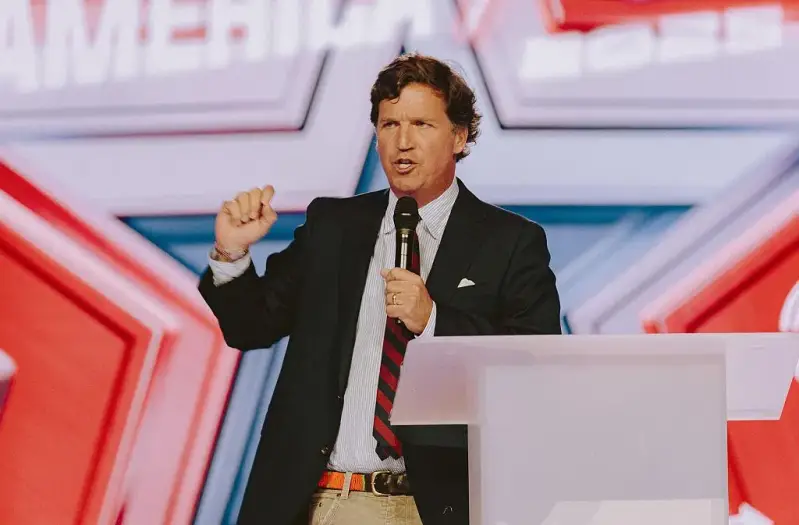
When Allies Clash: Tucker Carlson Criticizes Huckabee Over Israel Meeting
Just shut up.. And send all your money to Israel
Political tensions inside the conservative movement resurfaced this week after media personality Tucker Carlson publicly criticized former Arkansas governor Mike Huckabee over his meeting with Israeli officials.
Carlson argued that U.S. elected leaders should prioritize American national interests above foreign policy alignment, and he framed the meeting as an example of misplaced loyalty. His remarks quickly circulated across social media platforms and cable news discussions.
Huckabee, a longtime supporter of Israel, has consistently defended strong U.S.–Israel ties throughout his political career. He has visited Israel multiple times and has spoken openly about his belief that the alliance is rooted in both strategic cooperation and shared democratic values. Supporters argue that close diplomatic meetings are part of normal foreign policy engagement and reflect decades of bipartisan cooperation between the two nations.
Carlson’s criticism centered on language suggesting that American officials must avoid appearing subordinate to foreign governments. While he used sharp rhetoric, including the term “traitor” in a political sense, there has been no legal accusation of wrongdoing. The dispute reflects a broader debate within conservative circles about foreign aid, military commitments, and the scope of U.S. involvement overseas.
The United States has provided military and economic support to Israel for decades, citing shared security interests and regional stability concerns. Congress routinely debates funding levels and conditions for that assistance. Lawmakers from both major parties have historically supported the alliance, although disagreements over scale and strategy have grown more visible in recent years.
Huckabee and his allies maintain that engagement with Israeli leadership strengthens American influence in the Middle East. Critics within the same political coalition argue that foreign policy should be reassessed in light of domestic economic pressures and global security risks. The disagreement highlights how conservative voters are increasingly divided between traditional internationalist positions and a more restrained “America First” approach.
The exchange also underscores how media platforms now shape internal party debates. Commentary from influential voices like Carlson can move quickly from online segments to national headlines, intensifying pressure on political figures. In this case, what began as a meeting between diplomatic partners evolved into a public test of ideological direction within the broader conservative movement.
No formal investigation or disciplinary action has emerged from the dispute. Instead, the controversy remains a matter of political messaging and voter perception. As election cycles approach, questions about foreign alliances, defense spending, and national sovereignty are likely to remain central themes in public debate.
The Brutal Truth Commentary
The conservative family feud just went nuclear. Tucker Carlson grabbed a flamethrower and aimed it straight at Mike Huckabee, accusing him of cozying up to Israeli officials like America’s interests come with a secondary loyalty clause.
Carlson’s message was blunt: elected leaders work for Americans, not foreign governments and if that sounds harsh, good. Huckabee, a longtime champion of the U.S.–Israel alliance, fired back with the traditional line about shared values, strategic partnerships, and decades of bipartisan support.
This isn’t betrayal, it’s diplomacy. Right.
But the real fight isn’t about one meeting… it’s about who runs the direction of the right. One side says America First means exactly that, no asterisks, no overseas blank checks. The other says alliances are strength, not surrender. There are no criminal charges, no investigations — just a raw ideological knife fight playing out in public.
The internet lit the match, television fanned the flames, and the grassroots watched their own side fracture in real time over allegiance, authority, and how much is too much. This isn’t scandal — it’s a power struggle. And it’s far from over.
Source Links:
Fox News Politics
https://www.foxnews.com/politics
Reuters World News
https://www.reuters.com/world/
Axios Politics
CNN Politics
C-SPAN
Politico
New York Times Politics
https://www.nytimes.com/section/politics
When Allies Clash: Tucker Carlson Criticizes Huckabee Over Israel Meeting
Please Like & Share 😉🪽
@1TheBrutalTruth1 FEB. 2026 Copyright Disclaimer under Section 107 of the Copyright Act of 1976: Allowance is made for “fair use” for purposes such as criticism, comment, news reporting, teaching, scholarship, education, and research.

New York's Pathway to Socialism
Price Controls, Public Ownership, and the Politics of Affordability - How Rent Freezes, Public Ownership, and Tax Increases Redefine the Role of City Government
From an America First angle, the “pathway to socialism” argument in New York City is usually not about a single switch being flipped. It’s about a steady shift toward a bigger city role in pricing, ownership, and daily services—especially when the city is already under heavy fiscal pressure.
NYC’s own budget and oversight documents show the city’s finances are large and complex, and outside analysts warn that gaps can be bigger than they look if true obligations aren’t fully budgeted.
The first marker is government setting prices in the private market. Mamdani’s published platform includes “Freeze the rent,” which is a direct form of price control. Supporters say rent freezes protect tenants from spikes and stabilize neighborhoods; critics say strict controls can reduce maintenance, shrink new supply, and shift property into the hands of bigger players that can survive thin margins longer than small owners. Even if you agree with the goal, the mechanism is a textbook step toward more state control over a major part of the economy: housing prices.
The second marker is expanding government provision of goods and services that are normally private-sector territory. Mamdani’s platform calls for “City-owned grocery stores” and “Fast, fare free buses.” That’s not “socialism” in the strict dictionary sense by itself, but it is a clear move toward municipal ownership and municipal delivery as a solution to affordability. America First critics look at that and say: once the city becomes the provider, it will keep expanding the provider role, because every cost overrun becomes a political demand for more funding, more staffing, and more control.
The third marker is how these commitments get funded when deficits and obligations are rising. Recent reporting describes Mamdani floating either higher taxes on wealthy/corporations or, if Albany refuses, a large property-tax increase as a “last resort,” and it notes the city faces multi-billion-dollar deficit pressure. When government expands services and simultaneously depends on new taxes to sustain them, critics argue you get a ratchet effect: spending becomes “essential,” taxes rise to cover it, and the middle layers of the tax base (small business, landlords, homeowners) get squeezed when projected revenue doesn’t arrive.
The fourth marker is institutional momentum and reduced accountability. NYC fiscal policy is not just City Hall—many tax changes require state approval, and transit funding is entangled with state decisions. That shared authority can make it easier for big policy shifts to advance in pieces, while blame gets spread around when costs spike. Watch the pipeline: boards, commissions, budget baselines, and “pilot programs” that quietly become permanent.
One important factual counterpoint, though, is that New York has also taken steps that cut against a pure “cashless-control” storyline. NYC law requires many businesses to accept cash (with limited exceptions), and New York State passed a cash-acceptance requirement explicitly to prevent discrimination against people without bank accounts or credit cards. So, even while the city debates expanded public services and higher taxes, lawmakers have also acknowledged that forcing everything onto digital payment rails can harm the unbanked—meaning the policy reality is mixed, not one-directional.
New York's Pathway to Socialism - Denise Gradin
Please Like & Share 😉🪽
@1TheBrutalTruth1 FEB. 2026 Copyright Disclaimer under Section 107 of the Copyright Act of 1976: Allowance is made for “fair use” for purposes such as criticism, comment, news reporting, teaching, scholarship, education, and research.
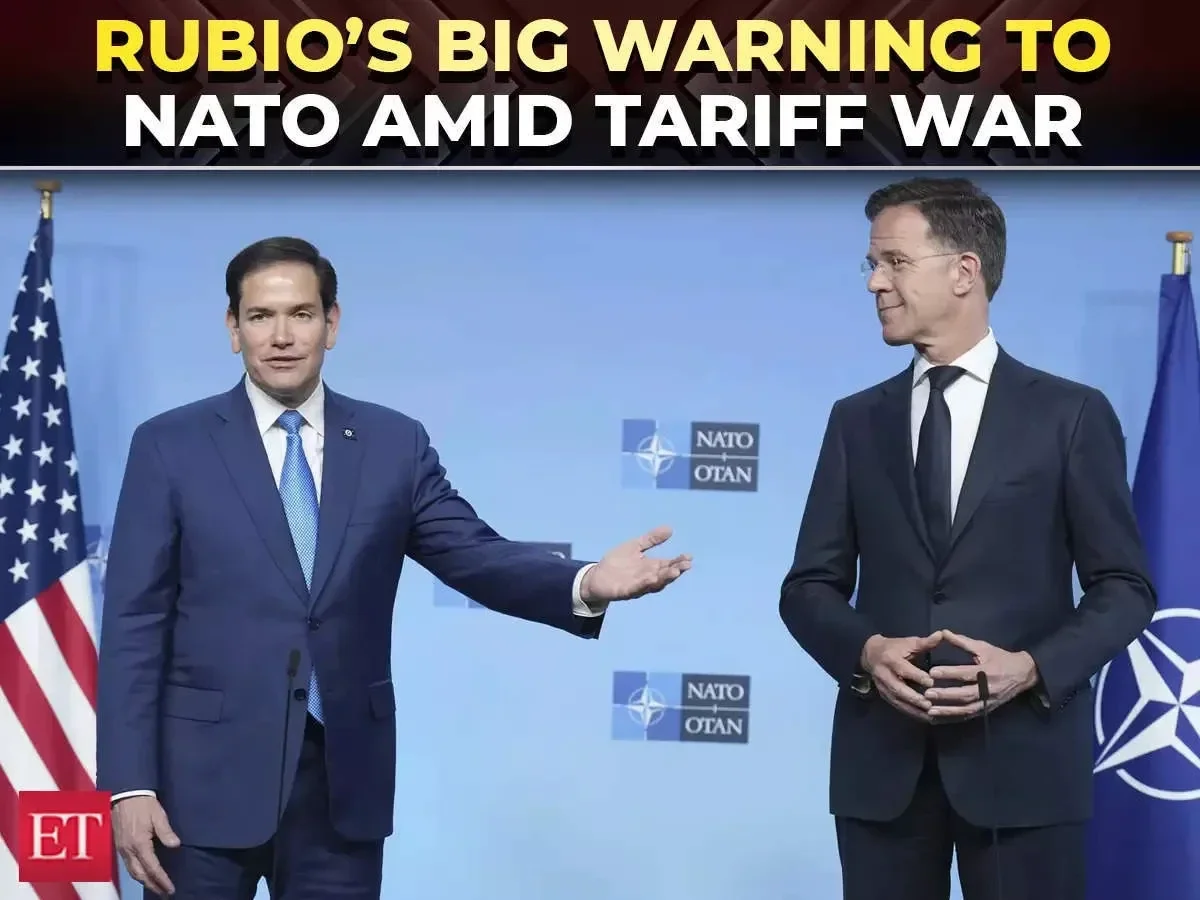

Deindustrialization by Design? Rubio’s Munich Warning and the Battle Over the Global Economic Model
Rubio’s Claim in Munich
At the Munich Security Conference, Secretary of State Marco Rubio argued that deindustrialization in the United States and parts of Europe was not accidental but the result of deliberate, long-term policy choices.
He stated that over decades, policymakers favored financial expansion and global integration at the expense of domestic manufacturing, productive capacity, and energy security. According to Rubio, this shift reduced national independence and weakened middle-class incomes tied to industrial jobs.
Rubio’s remarks focused on the idea that economic strategy shapes national power. He suggested that nations that outsource core production — including energy, heavy industry, and advanced manufacturing — risk becoming dependent on foreign supply chains, exposing themselves to geopolitical pressure and economic shocks.
The “Controlled Disintegration” Debate
Commentator Susan Kokinda linked Rubio’s argument to a 1977 Council on Foreign Relations discussion paper that used the phrase “controlled disintegration” in reference to managing global economic transitions. Critics interpret that language as evidence of a deliberate effort to shift from the traditional American industrial model toward a more globalized financial system. Supporters of global integration counter that the phrase reflected concerns about instability in the post–Bretton Woods era and was not a call to dismantle U.S. industry.
The debate centers on the so-called Hamiltonian American System, a historical model emphasizing domestic industry, infrastructure investment, tariffs, and national banking to build productive capacity. Advocates of that model argue that trade liberalization and financialization hollowed out U.S. manufacturing regions beginning in the late 20th century.
European Reaction and Industrial Strain
European leaders have also voiced concerns about industrial decline. European Central Bank President Christine Lagarde recently warned of growing geo-economic fragmentation and financial fragility as nations reorient supply chains and face rising energy costs. Her comments reflect broader anxiety within Europe about maintaining competitiveness in energy-intensive sectors.
Belgium’s prime minister has publicly cited a sharp contraction in chemical production capacity, attributing much of the decline to energy costs and decarbonization policies. Europe’s chemical sector is among the most energy-intensive industries, and rising power prices have placed pressure on production margins. These developments have fueled debate across the European Union about balancing climate goals with industrial resilience.
A Shift in U.S. Economic Direction
The current U.S. administration argues that it is reversing decades of deindustrialization through tariffs, industrial policy, and targeted investment. Trade Ambassador Greer and Treasury Secretary Scott Bessent have emphasized rebuilding domestic supply chains, protecting strategic industries, and increasing capital investment in manufacturing.
Energy policy has become a central component of that strategy. Energy Secretary Chris Wright announced plans to deploy a next-generation nuclear reactor in Utah as part of expanding reliable domestic power generation. Supporters argue that advanced nuclear development is key to strengthening the physical economy and supporting industrial expansion.
Financial Sector Tensions
White House advisor Peter Navarro has criticized major financial institutions, including JP Morgan CEO Jamie Dimon, arguing that high credit card interest rates burden American households. Proposals to reduce credit card rates from the 20–30 percent range to closer to 10 percent have been framed as part of a broader effort to rebalance the economy toward household income growth rather than financial sector profits.
This debate reflects a larger philosophical divide. One side prioritizes global capital flows and market efficiency. The other emphasizes national production, industrial employment, and strategic autonomy.
The Brutal Truth
Marco Rubio didn’t mince words in Munich. He said the quiet part out loud: America and parts of Europe didn’t drift into deindustrialization.. they chose it. For decades, policymakers prioritized global finance, trade liberalization, and capital mobility while letting factories close, energy production shrink, and supply chains migrate overseas. The bet was that financial growth would replace industrial strength. The bill has arrived.
Susan Kokinda revived a 1977 Council on Foreign Relations phrase “controlled disintegration.”
Critics argue that wasn’t academic theory but a mindset shift. Move away from the Hamiltonian model of tariffs, infrastructure, and domestic industry toward a borderless financial order. Defenders say that interpretation stretches the text. But the outcome is visible: manufacturing towns hollowed out, middle-class wages stagnated, and national resilience weakened.
Europe is now confronting similar consequences. Christine Lagarde warns about geo-economic fragmentation and financial fragility. Belgium’s leadership openly acknowledges sharp losses in chemical production capacity, linking it to high energy costs and aggressive decarbonization. Energy-intensive industries don’t survive on slogans. They survive on affordable power and stable policy. Remove either, and production leaves.
The current U.S. administration argues it is flipping the script: tariffs to shield strategic sectors, industrial policy to rebuild capacity, nuclear energy to secure baseload power, and pressure on financial institutions accused of extracting too much from households. The message is blunt … rebuild the physical economy or remain dependent on foreign producers and volatile markets.
This isn’t a minor policy disagreement. It’s a clash between two economic worldviews. One believes global capital efficiency is king. The other believes national production is sovereignty. One bets on markets. The other bets on machines, energy, and wages tied to real output.
Deindustrialization wasn’t bloodless. It reshaped communities, weakened strategic leverage, and tied national prosperity to global stability that no longer exists. Now the fight is whether to double down on the old system, or tear it out and rebuild from steel up.
Sources
U.S. Department of State – https://www.state.gov
Munich Security Conference – https://securityconference.org
Council on Foreign Relations Archives – https://www.cfr.org
European Central Bank – https://www.ecb.europa.eu
Belgian Federal Government – https://www.belgium.be
U.S. Department of Energy – https://www.energy.gov
U.S. Department of the Treasury – https://home.treasury.gov
Office of the U.S. Trade Representative – https://ustr.gov
Substack - Deindustrialization by Design? Rubio’s Munich Warning and the Battle Over the Global Economic Model
Please Like & Share 😉🪽
@1TheBrutalTruth1 FEB. 2026 Copyright Disclaimer under Section 107 of the Copyright Act of 1976: Allowance is made for “fair use” for purposes such as criticism, comment, news reporting, teaching, scholarship, education, and research.


Faith, Politics, and Power: Debate Erupts Over Carrie Prejean Boller’s Alleged Removal from Religious Liberty Commission
A Controversy at the Crossroads of Faith and Government - Religion, Zionism, and the Boundaries of Government Service
Online debate intensified this week after claims circulated that Carrie Prejean Boller was removed from President Trump’s Religious Liberty Commission for expressing her Catholic views on Israel and Zionism. As of now, no formal White House statement has confirmed that her alleged removal was directly tied to those views. However, the discussion has sparked renewed attention around how religious belief intersects with U.S. foreign policy and advisory roles.
Carrie Prejean Boller is a former Miss California USA who gained national attention in 2009 for publicly expressing traditional Christian views on marriage during a televised pageant. Since then, she has been active in conservative and faith-based advocacy circles. Her reported involvement with a religious liberty advisory body placed her at the intersection of faith, politics, and federal policymaking.
What Is the Religious Liberty Commission?
The Religious Liberty Commission referenced in online discussions is described as an advisory body focused on protecting freedom of religion in domestic and international policy conversations. Advisory commissions generally provide recommendations but do not hold binding authority. Their members often represent a wide range of faith traditions and viewpoints.
Faith-based advisory roles can be sensitive, especially when members speak on issues connected to international politics. The topic of Israel and Zionism is particularly complex within Christian communities. Some evangelical groups strongly support modern Israel on theological grounds, while certain Catholic voices have historically taken more cautious or critical positions regarding political Zionism and Middle East policy.
The Broader Policy Context
Donald Trump made U.S.–Israel relations a central part of his foreign policy during his presidency. His administration recognized Jerusalem as Israel’s capital and moved the U.S. embassy there, a decision praised by many pro-Israel groups and criticized by others who feared it could complicate peace negotiations. Those decisions remain politically significant among both supporters and critics.
Within Catholic teaching, perspectives on Israel and Zionism vary. The Catholic Church affirms the importance of Jewish–Christian dialogue and rejects antisemitism. At the same time, it distinguishes between theological support for the Jewish people and political endorsement of specific state policies. Individual Catholics may hold differing views on how those principles apply to modern geopolitics.
Free Speech and Advisory Appointments
The core question raised by this controversy is whether expressing a religiously grounded political opinion should affect one’s position on a government advisory body. Supporters of Boller argue that removing someone for articulating a traditional Catholic view would contradict the very principle of religious liberty the commission is meant to protect. Critics counter that advisory roles tied to executive policy may require alignment with the administration’s foreign policy priorities.
At this time, no publicly released documentation has confirmed the exact reason for any personnel change. Without an official explanation, much of the debate remains based on public statements and online reporting rather than formal government records.
Political and Cultural Impact
Disputes involving religion and Israel often carry heightened political weight in the United States. Support for Israel has historically drawn bipartisan backing, though debate over Middle East policy has become more polarized in recent years. Within Christian communities, views range from strong theological Zionism to more restrained diplomatic perspectives.
If confirmed, the situation could reignite broader national discussions about the boundaries between personal faith expression and service on executive advisory bodies. It also highlights the tension between religious conviction and political strategy in American public life.
Until formal clarification is issued, the story remains one of allegation rather than established fact. What is clear is that issues involving religion, Israel, and government appointments continue to generate significant public reaction across ideological lines.
COMMENTARY
The Brutal Truth
A political firestorm ignited after claims spread that Carrie Prejean Boller was pushed out of a Religious Liberty Commission role for expressing her Catholic views on Israel and Zionism.
There is no official confirmation tying her alleged removal to those views… but that hasn’t stopped the outrage machine from spinning at full speed.
This isn’t just about one appointment. It’s about power, optics, and whether “religious liberty” applies when someone’s theology collides with foreign policy. Supporters argue that if a commission exists to protect faith-based expression, punishing someone for expressing a faith-based position would be hypocritical. Critics argue advisory roles tied to executive policy aren’t pulpits.. they’re political instruments, and alignment matters.
Donald Trump made strong pro-Israel policy moves during his presidency, including recognizing Jerusalem as Israel’s capital. That stance energized supporters and angered opponents. Within Christianity.. and especially within Catholic circles, views on Zionism and modern Israeli policy are not monolithic. Some strongly support Israel on theological or moral grounds. Others draw sharper distinctions between religious solidarity and political endorsement of state policy.
Right now, there is no documented proof explaining why any personnel change occurred. That leaves a vacuum.. and in politics, vacuums get filled with assumptions, narratives, and outrage.
What this episode really exposes is a bigger tension: Can you serve in a political advisory role and still publicly hold nuanced or dissenting religious views on a sensitive geopolitical issue? Or does political loyalty override theological nuance?
Until there’s an official explanation, the controversy is built more on perception than paperwork. But the reaction proves one thing clearly.. when religion, Israel, and executive power collide, the temperature in American politics spikes instantly.
Sources
White House Archives – https://www.whitehouse.gov
U.S. Embassy in Israel History – https://il.usembassy.gov
United States Conference of Catholic Bishops – https://www.usccb.org
U.S. Department of State – Israel Relations – https://www.state.gov
Congressional Research Service – U.S.–Israel Relations Overview – https://crsreports.congress.gov
Substack
Please Like & Share 😉🪽
@1TheBrutalTruth1 FEB. 2026 Copyright Disclaimer under Section 107 of the Copyright Act of 1976: Allowance is made for “fair use” for purposes such as criticism, comment, news reporting, teaching, scholarship, education, and research.
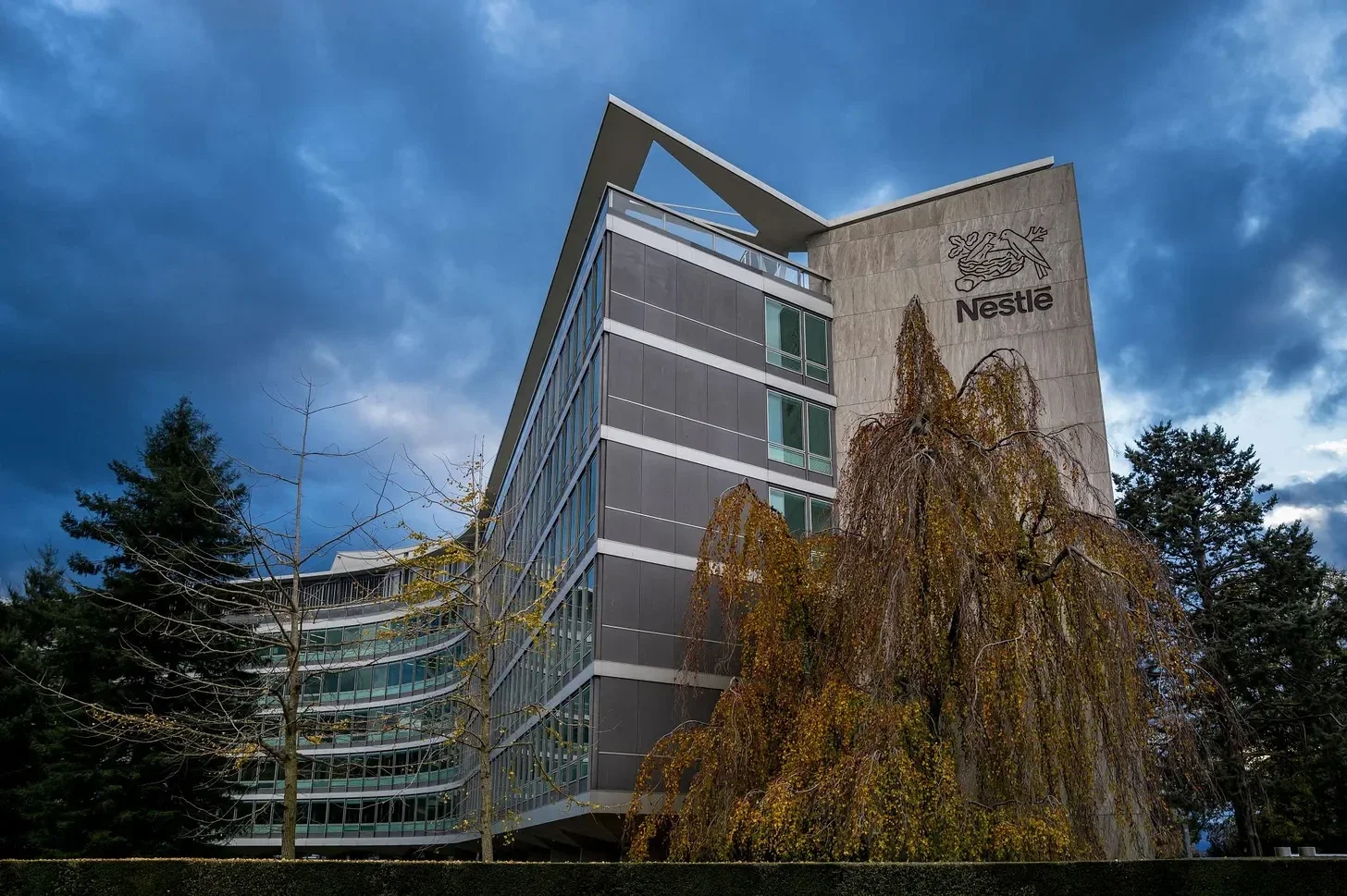

Nestlé’s Biggest Recall Ever: Infant Formula Crisis Sparks European Investigation
Cereulide discovery raises questions about quality control oversight
Nestlé is facing one of the most serious corporate crises in its modern history. The company recently announced the largest product recall it has ever conducted, pulling infant formula products from store shelves after a contaminated ingredient was discovered.
The contamination involved cereulide, a toxin that can cause nausea and vomiting, especially dangerous for infants whose immune systems are still developing.
The recall has sent shockwaves through global markets. Nestlé is the largest food company in the world, and infant nutrition is one of its most sensitive and closely watched business segments. Parents depend on formula as a primary source of nutrition for babies, and any safety issue immediately raises alarm. Shares of the company fell as investors reacted to the scale of the recall and the potential financial and reputational damage.
What Was Found
According to company disclosures, multiple production sites were found to contain cereulide contamination. Cereulide is produced by certain strains of Bacillus cereus bacteria. Ingesting contaminated food can lead to rapid-onset symptoms such as nausea, vomiting, and stomach cramps. While most healthy adults recover quickly, infants are significantly more vulnerable to dehydration and complications.
The discovery led to an early January recall of affected infant formula batches. The company stated that it acted after identifying the contaminated ingredient during quality control testing. Even so, the scale of the recall suggests the issue extended across several facilities, increasing concerns about oversight and supply chain monitoring.
Leadership Under Scrutiny
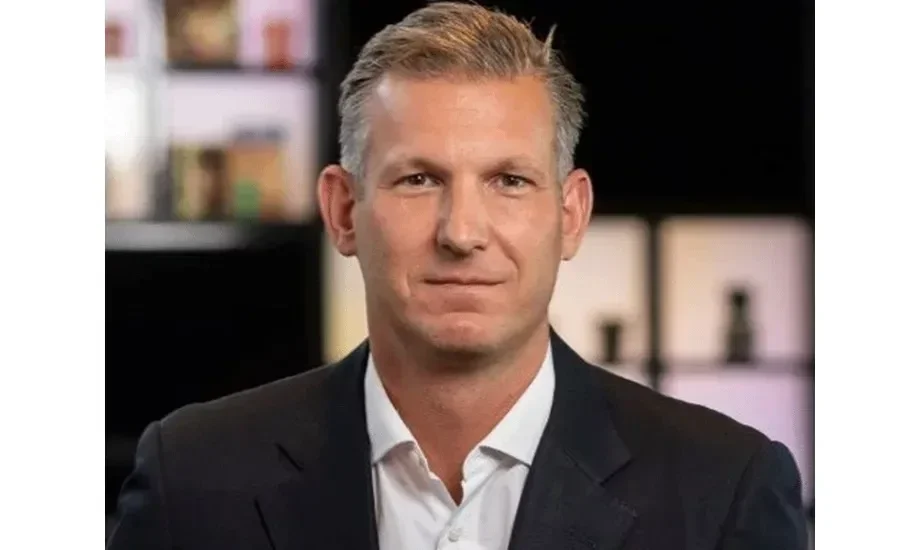
Philipp Navratil, the CEO of Nestlé SA, is now under intense pressure from shareholders, regulators, and the public. Prosecutors in Europe have reportedly opened an investigation into the contamination and recall procedures. Authorities will likely examine whether safety protocols were followed, how quickly the company responded, and whether reporting requirements were properly met.
Navratil and his executive team are expected to present a turnaround strategy outlining corrective actions. This may include tighter supplier controls, expanded quality testing, internal audits, and operational restructuring. Investors are watching closely to see whether leadership can stabilize confidence and prevent long-term brand damage.
Financial and Market Impact
Nestlé’s stock price has taken a noticeable hit following news of the recall. Large-scale recalls not only involve direct financial costs—such as pulling inventory and refunding retailers—but also legal exposure and potential fines. More significantly, reputational damage in the infant nutrition market can be difficult to reverse.
The company competes in a highly regulated and emotionally sensitive space. Trust is central to its infant formula business. Once shaken, that trust can take years to rebuild. Analysts suggest that transparent communication and demonstrable safety reforms will be critical in limiting long-term impact.
Broader Industry Context
Food safety failures involving infant products often trigger broader regulatory scrutiny. European regulators are expected to review compliance standards across facilities. Similar cases in the past have led to tighter inspection regimes and higher compliance costs industry-wide.
The coming weeks will likely determine whether this incident becomes a contained corporate setback or a prolonged crisis. The scale of the recall and the opening of prosecutorial review suggest the stakes are high. For Nestlé, restoring confidence with families, regulators, and investors will require more than statements—it will require measurable change.
HERE IN AMERICA
As of today (Feb 18, 2026), there has not been a U.S. FDA public recall/alert specifically for cereulide-contaminated infant formula that was distributed in the United States. The major cereulide recalls that are driving headlines have been centered on specific batches sold in Europe and other non-U.S. markets (for example, products like SMA/Guigoz and other country-specific Nestlé brands).
That said, here’s the important “America” reality:
-
If you bought formula in the U.S. through normal U.S. retail channels, there’s no confirmed FDA notice right now saying cereulide is in U.S.-distributed formula. (If that changes, FDA would typically post it publicly.)
-
If you bought imported formula online (third-party sellers, international versions, “EU formula,” etc.), you could be holding products from countries involved in the recall—so you should treat that as higher risk and check batch codes/recall lists. Nestlé has a public advisory explaining the issue and its testing/recall actions.
What to do right now (practical steps)
-
Check whether your can is an import. If the label/batch format looks European or the brand is one mainly sold abroad (examples commonly cited in recall reporting include SMA/Guigoz/NAN/BEBA variants), don’t guess—verify it.
-
Use the manufacturer’s batch/recall checker (Nestlé advisories are being updated as this evolves).
-
Watch FDA’s recall/outbreak pages for any U.S. change. (Right now, FDA’s most prominent infant-formula action recently has involved a different issue—ByHeart/botulism—separate from cereulide.)
-
If your baby has sudden vomiting, repeated vomiting, or signs of dehydration, call your pediatrician or urgent care. EFSA notes infants (especially younger ones) can be more vulnerable to complications from vomiting/toxin exposure.
The Brutal Truth
Nestlé — the biggest food company on the planet — just got punched in the face by its own supply chain.
This isn’t a minor labeling error. This is infant formula. Baby food. The one product where “almost safe” isn’t safe at all. The company had to launch the largest recall in its history after cereulide… a toxin linked to Bacillus cereus — showed up across multiple production sites. Not one plant. Multiple. That’s not a glitch. That’s a systems failure.
Cereulide causes rapid vomiting and stomach distress. Adults get sick. Babies can dehydrate fast. When you’re selling powdered nutrition to newborns, there is zero margin for error. Zero. And now investors are watching the stock slide while prosecutors in Europe circle the scene asking whether safety protocols were followed or whether someone cut corners in a billion-dollar machine.
CEO Philipp Navratil is under the microscope. Shareholders want answers. Regulators want documents. Parents want reassurance. And “we caught it in quality control” only goes so far when the recall stretches across facilities. Trust in the infant nutrition business is oxygen. Once it thins out, brands suffocate slowly.
Financial damage is one thing. Legal exposure is another. But reputational damage in baby food? That lingers. Every recall in this category drags the entire industry into tighter oversight, more inspections, and higher compliance costs. When you sell to infants, you don’t get second chances easily.
Now — America.
As of February 18, 2026, there is no FDA recall tied to cereulide-contaminated formula distributed through normal U.S. retail channels. The major recalls have centered on specific European and non-U.S. batches. That matters.
If you bought formula at a standard U.S. retailer, there is currently no confirmed FDA notice saying cereulide is in those products.
But if you ordered imported “EU formula” online through third-party sellers, that’s different. Imported batches could overlap with affected regions. That’s where vigilance matters. Check lot numbers. Verify through manufacturer recall tools. Don’t assume.
Bottom line: This is a massive corporate embarrassment with real consequences, but it is not — at this moment — a confirmed U.S. contamination crisis. Panic helps no one. Blind trust helps no one either. Verify what you have. Watch official updates. And if an infant shows sudden vomiting or dehydration, call a doctor immediately.
Nestlé now has one job: prove this was contained, fix what failed, and earn back the trust it just burned through. In baby food, you don’t get infinite retries.
Sources
Nestlé Corporate Newsroom – https://www.nestle.com/media
European Food Safety Authority – https://www.efsa.europa.eu
Reuters Business Coverage – https://www.reuters.com
Bloomberg Markets – https://www.bloomberg.com
World Health Organization – Infant Nutrition Guidelines – https://www.who.int/health-topics/infant-nutrition
Nestlé’s Biggest Recall Ever: Infant Formula Crisis Sparks European Investigation
Please Like & Share 😉🪽
@1TheBrutalTruth1 FEB. 2026 Copyright Disclaimer under Section 107 of the Copyright Act of 1976: Allowance is made for “fair use” for purposes such as criticism, comment, news reporting, teaching, scholarship, education, and research.


When the Breath Test Is Wrong: Growing Questions Over DUI Arrests Involving Sober Drivers
DUI Enforcement Under Scrutiny After Negative Blood Tests
Across several states, court cases and media investigations have raised concerns about DUI arrests involving drivers who later tested negative for alcohol or drugs through blood analysis. In some of these cases, roadside breath tests or field sobriety assessments indicated impairment, but certified laboratory blood results later showed no measurable intoxicants. Legal experts say these incidents highlight the complexity of DUI enforcement and the possibility of testing or procedural errors.
Investigative reporting in February 2026 found cases in which drivers were arrested for DUI, yet later blood testing came back negative for alcohol and drugs, including instances documented across multiple states. In these situations, the arrest usually happens first because the legal standard at the roadside is “probable cause,” meaning an officer can make an arrest based on observations and field tests before lab results exist. Later, when a certified lab report shows no intoxicants, the case can be dismissed or reduced, but the person may still have gone through towing fees, jail booking, license consequences, and public records exposure.
One reason this conflict can happen is that several parts of a DUI stop are not “yes-or-no” science. Field sobriety tests measure balance, coordination, and attention, but those can be affected by fatigue, injury, anxiety, or medical issues that look like impairment. Breath testing can also be complicated by physiology and test conditions: peer-reviewed research has documented that “mouth alcohol” contamination (for example, from belching or reflux) can create falsely elevated breath results and that detection systems do not always catch it. Separate forensic literature also explains that breath testing relies on assumptions about how alcohol moves between blood and breath, and that ratio can vary between people and situations.
A negative blood test does not automatically prove the stop was “made up,” but it is strong evidence that the original DUI theory may have been wrong, incomplete, or based on an error. Some cases turn into civil lawsuits or policy debates about whether states should require faster confirmatory testing, stronger documentation (like body camera review), and clearer standards for when drug-impairment evaluations are used. The key factual point is that a DUI arrest can be legally made without lab confirmation, and that’s exactly why these “sober driver” cases can exist in the first place.
How DUI Testing Works
Most DUI arrests begin with officer observations, such as erratic driving, slurred speech, or failed field sobriety tests. A preliminary breath test may be used roadside. However, roadside devices are screening tools and not the final evidentiary standard in many jurisdictions. Confirmatory testing typically requires calibrated breath machines at stations or certified blood tests analyzed in a lab.
Medical conditions such as acid reflux, diabetes, low-carb diets, or certain medications have been cited in court cases as possible contributors to false or misleading breath readings. In addition, improper device calibration, operator error, or environmental contaminants have also been raised as defense arguments in DUI proceedings. Courts evaluate each case individually.
After a traffic stop, DUI testing usually moves in layers, and each layer has a different purpose. The roadside field sobriety tests most commonly used nationwide are the NHTSA standardized tests (HGN eye test, walk-and-turn, and one-leg stand). They are designed to give officers structured clues, not a final chemical measurement. If an officer uses a roadside breath device, that result is typically a screening step. The stronger “evidential” breath machines used at stations are held to tighter standards, and NHTSA publishes model specifications and conforming product lists for these devices, along with guidance that owners must keep inspection, maintenance, and calibration records.
The chemical proof usually comes from either an evidential breath test under controlled procedures or a lab-tested blood sample with documented chain-of-custody. That process matters because breath testing can be affected by test conditions. For example, mouth alcohol contamination can produce falsely high readings, and a 2025 peer-reviewed paper described cases where breath instruments’ mouth-alcohol detection systems did not catch contamination even though those devices are designed to look for it. This is one reason many procedures include strict waiting/observation periods and careful retesting rules before results are relied on in court.
Finally, the legal pathway can change what testing happens next. Many states use “implied consent” laws, meaning drivers can face license consequences for refusing a post-arrest chemical test, and some jurisdictions may seek a warrant for a blood draw if a driver refuses or if drug impairment is suspected. The result is that two people can experience very different testing routes after similar stops, depending on state law, what the officer suspects (alcohol vs. drugs), and what confirmatory testing is available quickly.
The Role of Body Cameras and Blood Tests
In several publicly reported cases, defendants were released or charges were dropped after blood tests came back negative. Body camera footage has sometimes shown drivers appearing coherent and compliant despite initial arrest decisions. Civil rights attorneys argue that rapid arrests without confirmed toxicology results can cause financial and reputational harm even when charges are dismissed.
Law enforcement agencies maintain that DUI enforcement is a public safety priority and that officers must act based on probable cause at the time of the stop. They note that impairment can also result from substances not immediately detected or from prescription medications. Departments generally require periodic device calibration and officer certification to reduce error rates.
Body cameras and blood tests matter because they create a record that can be checked after the arrest. In the WSMV investigation (Feb. 8–9, 2026), reporters documented cases across 22 states where people were arrested for DUI but later bloodwork showed no alcohol or drugs. In one Alabama case, body camera footage captured a driver explaining he was exhausted after a long shift and short on sleep, and police noted no odor of alcohol, yet he was arrested after field tests; the lab blood test later showed no drugs or alcohol. That kind of video can show how the driver looked, what was said, and whether the officer’s written report matches what happened on the roadside.
Blood testing is also important because it can overturn the core claim of impairment, but it often comes back days, weeks, or even months later—after the person has already been booked, towed, and publicly labeled. That delay is why some people see charges dropped only after damage is done. In Tennessee, a related report said 41 DUI cases tied to one trooper in Bedford County were dismissed, including 22 cases where drivers had no alcohol or drugs in their system or were within legal limits, based on records and a district attorney spreadsheet described in the story. Patterns like that become a major warning sign because they suggest the decision to arrest is not lining up with the strongest evidence that arrives later.
Legal Safeguards and Ongoing Debate
Defense attorneys often advise individuals to request independent blood testing when possible and to consult legal counsel immediately after an arrest. Judges rely on toxicology reports, calibration records, and officer testimony when determining case outcomes. In some jurisdictions, reforms have been proposed to improve transparency around device maintenance logs and testing accuracy.
There is no national database confirming widespread false DUI arrests, but recurring court dismissals and investigative reporting have fueled public debate. The broader issue centers on balancing aggressive impaired-driving enforcement with protections against wrongful arrest.
The Brutal Truth
Here’s the hard truth: you can be stone-cold sober and still end up in handcuffs.
Across multiple states, investigative reports uncovered drivers arrested for DUI who later had certified blood tests showing zero alcohol and zero drugs. The arrest came first because “probable cause” is the legal trigger — not proof. Field sobriety tests, roadside breath devices, and officer observations are enough to book you.
The lab results? Those can take weeks. By then, you’ve already been cuffed, towed, processed, possibly suspended, and publicly labeled.
The science isn’t as clean as people assume. Field tests measure balance and coordination — things that can be wrecked by fatigue, injury, anxiety, medical conditions, or just nerves. Breath testing depends on assumptions about how alcohol moves between blood and breath, and research shows variables like mouth alcohol contamination can skew readings. Even detection safeguards don’t always catch it. Calibration, maintenance logs, and operator training matter — and when they slip, people pay.
Body cameras and bloodwork are often the only lifelines. Video sometimes shows drivers calm, coherent, and explaining medical or exhaustion issues — while reports describe impairment. Later, blood tests wipe out the chemical basis for the charge. Cases get dropped. But the financial hit, mugshot exposure, legal fees, and stress don’t magically disappear. In some jurisdictions, clusters of dismissed cases tied to individual officers have raised deeper questions about decision-making consistency.
Law enforcement argues — correctly — that DUI enforcement is about public safety and that officers must act on what they see in real time. That’s the tension. The system allows arrest without lab confirmation. That’s legal. That’s how it’s built. But when sober drivers repeatedly clear themselves only after the damage is done, the debate shifts from “Was the arrest legal?” to “Was it right?”
This isn’t a claim of mass conspiracy. It’s a collision between human judgment, imperfect testing layers, and a system designed to act fast and verify later. And sometimes, later proves the driver wasn’t impaired at all.
Address Links
National Highway Traffic Safety Administration – Impaired Driving Overview:
https://www.nhtsa.gov/risky-driving/drunk-driving
American Bar Association – DUI Resources:
https://www.americanbar.org/groups/criminal_justice/resources/
National Institute on Alcohol Abuse and Alcoholism – Alcohol Testing Information:
National Registry of Exonerations:
https://www.law.umich.edu/special/exoneration/Pages/about.aspx
When the Breath Test Is Wrong: Growing Questions Over DUI Arrests Involving Sober Drivers
Please Like & Share 😉🪽
@1TheBrutalTruth1 FEB. 2026 Copyright Disclaimer under Section 107 of the Copyright Act of 1976: Allowance is made for “fair use” for purposes such as criticism, comment, news reporting, teaching, scholarship, education, and research.


Gold Rush Turns to Gold Panic: What Happened in China?
From Boom to Bust: China’s Retail Gold Correction
In early 2026, reports surfaced across Chinese financial media and social platforms that thousands of small, privately operated gold shops had abruptly shut their doors in several provinces. The closures followed a sharp and volatile swing in gold prices after months of heavy retail buying.
Much of that demand was driven by everyday investors — often referred to in Chinese media as “aunties,” a term commonly used to describe middle-aged and older women who actively trade gold and other household investments.
Retail gold buying in China has been strong for years, especially during periods of economic uncertainty, real estate instability, and stock market volatility. Physical gold jewelry and small bullion bars are widely viewed as a store of value. According to the World Gold Council, China consistently ranks among the world’s largest consumers of gold, both for jewelry and investment purposes.
Why Gold Prices Suddenly Moved
Gold can move fast because most price discovery happens in big global trading hubs through futures and spot markets, not inside local jewelry stores. When the U.S. dollar strengthens, gold often drops because it becomes more expensive for buyers using other currencies, which can reduce demand at the margin. At the same time, changes in U.S. interest-rate expectations matter: if traders think rates will stay higher for longer, “cash and bonds” look more attractive than gold because gold does not pay interest.
That push-and-pull can flip quickly after major data releases (like inflation or jobs reports) or ahead of Federal Reserve signals, and it can cause sudden down moves even when longer-term demand remains strong.
Another factor is market timing and liquidity. When key markets are closed for holidays or trading volumes are thinner, price swings can get larger because there are fewer active buyers and sellers to “smooth out” moves.
That can be especially true around China’s Lunar New Year period, when a major chunk of physical buying can slow temporarily, changing short-term support levels. In addition, after a big rally, leveraged traders sometimes unwind positions quickly, and that kind of forced selling can make a drop look sudden and dramatic even if the underlying reasons are normal market mechanics.
Who Are the “Chinese Aunties”?
The phrase “Chinese aunties” is widely used in financial commentary to describe retail investors who often move into gold during uncertain times. It is not an official term but reflects a cultural stereotype of disciplined savers who prefer tangible assets over speculative stocks. In past cycles, heavy retail buying in China has influenced short-term gold demand spikes.
“Chinese aunties” is a media nickname, often translated from the Chinese slang term dama (大妈), used to describe middle-aged women who are active retail buyers in markets like gold. The label became widely known after a major burst of bargain buying during the 2013 gold selloff, when many ordinary shoppers rushed into jewelry and gold shops to buy physical gold at lower prices. Over time, financial coverage has kept using the term as shorthand for a large group of practical, cash-based household investors who tend to follow price dips and prefer assets they can see and hold.
These investors matter because China is one of the world’s biggest sources of physical gold demand, and retail buying can surge quickly when people feel uncertain about other options. Recent reporting has tied renewed “auntie” interest in metals to concerns about weak property conditions, choppy stock markets, and low bank deposit returns, which push more households toward gold bars, coins, small “gold bean” products, and even app-based access to metal-linked products.
That kind of demand can tighten local supply, lift premiums inside China, and add momentum during rallies—especially when many buyers act at the same time—but it still operates inside a much larger global pricing system.
Economic Pressures Behind the Closures
China’s broader economic slowdown has affected consumer spending and small business liquidity. Ongoing stress in the property sector, tighter credit conditions for private businesses, and weaker household confidence have all created strain. In that environment, a sudden commodity price swing can become the tipping point for highly leveraged or thin-margin businesses.
One pressure point is that high gold prices can squeeze the basic jewelry business even when “gold” is popular. When prices rise faster than incomes, more shoppers delay buying new jewelry, so store traffic drops and turnover slows. The World Gold Council reported that China’s gold jewelry demand fell year over year in 2025, and outlets covering the sector tied the drop to gold becoming less affordable for everyday buyers.
Another pressure point is structural: China’s jewelry market is crowded, and big brands have been shrinking or upgrading their store networks to protect margins, which leaves smaller independent shops fighting harder for fewer sales. World Gold Council retailer research described intense price competition and consolidation, with major brands cutting points of sale.
Reuters also reported large chains adjusting strategy during weak domestic spending and volatile gold prices, including reducing their retail footprint. On top of that, policy and market mechanics can hit cash flow fast: recent reporting said tax changes were expected to weigh most on jewelers and smaller gold firms, and Caixin described how sharp price swings triggered heavy buyback demand—exactly the kind of rush that can drain liquidity or force shops to manage payouts tightly.
Global Impact and Market Reaction
Gold remains heavily influenced by central bank purchases, U.S. dollar strength, Federal Reserve rate expectations, and geopolitical events. China’s retail activity is significant, but it is only one part of a much larger global pricing system.
Even when a story is centered in China, the global gold market reacts mostly through the big pricing channels: spot and futures trading in London and New York, plus benchmark pricing in Shanghai. When traders see sudden stress in China’s physical market — like long buyback lines, retailer restrictions, or abrupt shop shutdowns — it can raise short-term uncertainty, but it does not automatically change the global trend.
What it can do is shift regional “premiums,” meaning the amount buyers in China pay above the global benchmark when local demand is strong or supply is tight. Reuters reported that China’s bullion premiums jumped sharply in late January 2026, which is a concrete sign the physical market there was pulling harder on supply even while global prices were swinging.
The bigger global reaction still depends on institutional forces. World Gold Council data for 2025 shows global gold demand hit a record, driven largely by investment flows (including ETFs and bars/coins) and continued central-bank buying at historically high levels. That matters because institutional flows can move larger volumes than retail selling in one country, especially during volatile weeks.
In other words, China’s retail activity can add volatility and headlines, but sustained moves are more likely when the dollar and interest-rate expectations shift, or when investment demand surges or fades across major markets.
The Brutal Truth
China’s gold party hit the hangover stage.
After months of feverish retail buying, thousands of small, independent gold shops reportedly shut their doors almost overnight. Everyday investors — the so-called “aunties” who piled into physical gold as property wobbled and stocks stumbled — helped drive a surge in demand. But gold doesn’t care about neighborhood jewelry counters. Prices are set in global trading pits and electronic screens in New York, London, and Shanghai, where futures contracts, dollar strength, and interest-rate bets move the needle in seconds. When the dollar flexed and rate expectations shifted, gold pulled back — hard.
That drop exposed the weak underbelly of China’s fragmented retail gold market. Small shops loaded up on high-priced inventory during the rally. Then volatility hit. Margins vanished. Customers slowed new purchases. Others lined up to sell back into weakness. Thin cash buffers met fast market mechanics. Some operators simply couldn’t survive the squeeze.
Meanwhile, the nickname “Chinese aunties” — born from the 2013 bargain-buying wave — became shorthand for disciplined, cash-based savers chasing tangible assets in uncertain times. Their buying can tighten local supply and spike premiums, but it doesn’t control the global trend. Institutional money, central-bank purchases, ETF flows, the U.S. dollar, and Federal Reserve signals still dominate the long game.
Bottom line: this wasn’t a mystical gold collapse. It was leverage meeting volatility in a slowing economy. Retail enthusiasm fueled the run. Global macro forces flipped the switch. Small shops without shock absorbers paid the price.
Address Links
Reuters Commodities Coverage:
https://www.reuters.com/markets/commodities/
World Gold Council Data Hub:
https://www.gold.org/goldhub/data
London Bullion Market Association (LBMA):
CME Group Gold Futures:
https://www.cmegroup.com/markets/metals/precious/gold.html
International Monetary Fund – China Overview:
https://www.imf.org/en/Countries/CHN
CNBC Commodities Coverage:
https://www.cnbc.com/commodities/
Gold Rush Turns to Gold Panic: What Happened in China?
Please Like & Share 😉🪽
@1TheBrutalTruth1 FEB. 2026 Copyright Disclaimer under Section 107 of the Copyright Act of 1976: Allowance is made for “fair use” for purposes such as criticism, comment, news reporting, teaching, scholarship, education, and research.
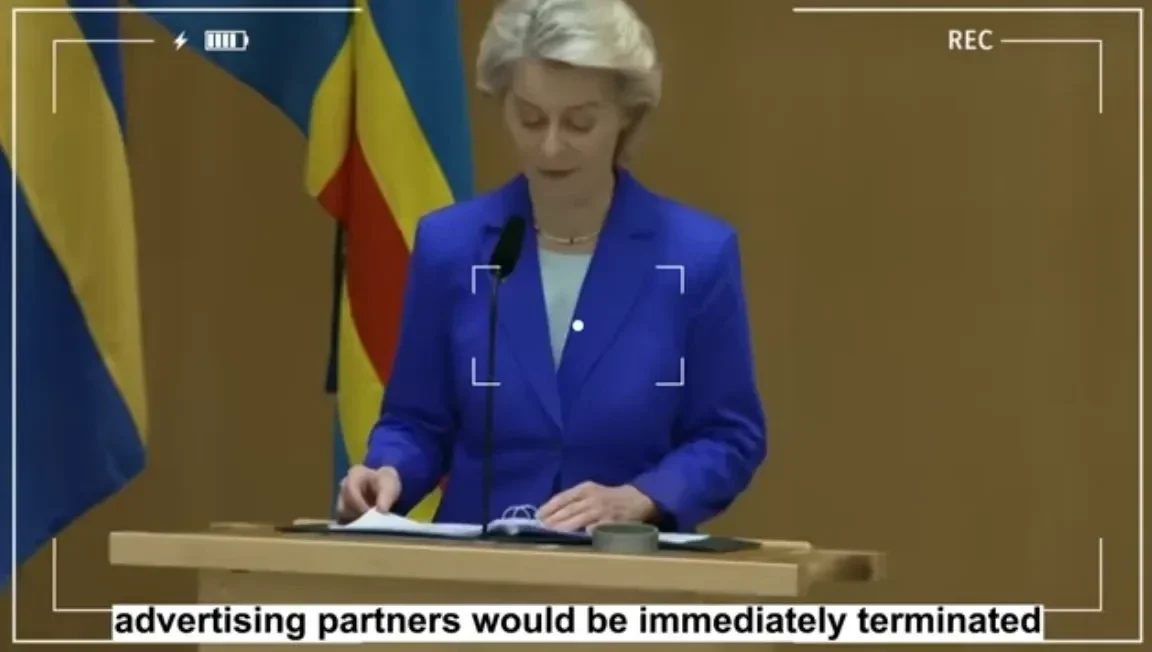
Did Elon Musk “Delete Europe”? Separating Fact from Viral Fiction
The Broader Debate Over Free Expression in Europe - What Comes Next for X and EU Regulators
A wave of online claims recently suggested that Elon Musk “deleted Europe” from X after the European Union fined the platform €20 million. Some viral posts claimed that 340 million European accounts suddenly vanished in response.
The reality is more complex. There is no verified evidence that Musk removed Europe or erased hundreds of millions of accounts. However, tensions between X and European regulators are real, and the legal fight over online speech rules is intensifying.
The Legal Background: The Digital Services Act
The Digital Services Act also created a special category called “Very Large Online Platforms” (VLOPs), which includes services with more than 45 million active users in the European Union. These platforms face stricter oversight because regulators believe they have a greater impact on public debate, elections, and consumer safety. Under the DSA, VLOPs must conduct annual risk assessments to evaluate how their systems may contribute to the spread of illegal content, disinformation, or threats to public security. They are also required to give researchers access to certain data so independent experts can study how their algorithms function and how content spreads across the platform.
The law gives the European Commission direct supervisory power over these largest platforms. If a company is suspected of breaking the rules, the Commission can request internal documents, conduct interviews, and perform on-site inspections. Companies must respond to formal information requests within specific deadlines. Failure to cooperate can result in additional penalties beyond any final fine tied to the original violation. These procedures are part of a centralized enforcement system, meaning oversight for the largest platforms is handled at the EU level rather than by individual member states.
Another key part of the DSA is its focus on transparency in advertising and content moderation decisions. Large platforms must clearly label ads, disclose who paid for them, and explain why a user is seeing specific targeted content. They must also provide users with clear explanations when posts are removed or accounts are restricted, along with an appeal process. The law does not require platforms to remove lawful speech, but it does require them to act against illegal material under European law and to show regulators that they have systems in place to manage those risks responsibly.
Elon Musk and Regulatory Pushback
In late 2025, the dispute between X and EU regulators moved from warnings to real penalties. On December 4, 2025, the European Commission announced a €120 million fine against X under the Digital Services Act, tied to transparency-related findings (including issues around platform design signals like verification, advertising transparency systems, and researcher access, as described in reporting on the decision).
After that decision, press reports described X taking a retaliatory step involving the European Commission’s advertising presence on X, including deactivating or restricting the Commission’s ad account and publicly disputing the Commission’s use of X’s ad tools.
At the same time, EU oversight of X did not end with that fine. On January 25, 2026, the European Commission announced a new formal investigation involving Grok and X’s recommender systems under the DSA framework. This shows the pushback is not just political talk—it is now a cycle of enforcement actions, counter-messaging, and additional probes.
Even with the conflict, there is still no credible, official evidence that X “deleted Europe” or removed anything close to 340 million European accounts. What is documented is escalating legal pressure in the EU and escalating public resistance and platform actions by X.
Where the “340 Million Accounts” Claim Comes From
One reason the “340 million accounts vanished” claim spreads is because 340 million is a familiar Europe-sized number that gets used in other contexts (like rough counts for the eurozone or “Europe’s population”), so it sounds believable even when it is not tied to X’s real user data. Under the EU’s Digital Services Act, big platforms must publish “average monthly active recipients” in the EU. X publishes those figures, and the totals are nowhere near 340 million accounts.
For example, X’s own DSA reporting for one recent period lists about 67 million logged-in users and about 39 million logged-out guests in the EU (roughly 106 million total recipients), which is a completely different scale than the viral claim.
Another way to sanity-check the claim is to look at how the EU classifies the largest platforms. The EU’s threshold for “Very Large Online Platforms” is 45 million average monthly users in the EU, and the Commission maintains an updated list and enforcement overview.
If hundreds of millions of accounts truly disappeared overnight, it would be hard to hide: it would show up quickly in required DSA user reporting, in the Commission’s oversight picture, and in broader online usage signals that advertisers and analysts watch. What we have instead is an ongoing regulatory dispute and ongoing supervision—not credible proof that Europe was “deleted” from X.
The Political Reaction
In the United States, the EU’s rules around online speech have become a real political flashpoint, not just a tech policy debate. In early February 2026, the House Judiciary Committee publicly escalated the issue by releasing an interim staff report accusing European regulators of pushing platforms to change moderation rules in ways that can affect Americans, and Congress scheduled a hearing focused on “Europe’s threat to American speech and innovation.”
Around the same time, Reuters reported that a senior U.S. State Department official said the U.S. would fund “free speech” initiatives in Europe and specifically criticized laws like the EU’s Digital Services Act as restricting expression and burdening American tech firms.
On the European side, EU officials and many European policy voices reject the idea that the DSA is aimed at Americans or at conservatives. Their core argument is that the law is meant to protect users in Europe, enforce transparency and risk controls for platforms operating in the EU market, and apply to any company serving EU users—European or not.
In recent European reporting on the controversy, experts emphasized that the DSA’s purpose is framed as protecting fundamental rights and reducing harms like illegal content and manipulation, rather than targeting lawful political speech.
Current Status
As of now:
• X remains operational in Europe.
• No verified report confirms the deletion of 340 million accounts.
• EU investigations under the Digital Services Act remain active.
• Potential fines, if imposed, would follow formal enforcement processes.
X is still available and operating across EU countries, and the EU still treats it as a “Very Large Online Platform” under the Digital Services Act. The European Commission’s own supervision list—updated February 6, 2026—continues to track designated major platforms and related enforcement activity, which is a strong sign that X has not been “removed from Europe” in any official or technical sense.
What has changed is the enforcement pressure. The European Commission announced a €120 million DSA fine against X in early December 2025 tied to transparency-related findings, and in late January 2026 it opened a new formal investigation involving Grok and X’s recommender systems under the DSA framework. That combination—an imposed penalty plus an active, expanding set of investigations—shows the dispute is moving through formal legal channels, not sudden platform deletion events.
Claims about “340 million accounts vanishing” also don’t match the user-scale numbers X itself publishes for EU compliance reporting. In X’s DSA user metrics, the EU audience is reported in the tens of millions (including both logged-in users and logged-out visitors), not hundreds of millions, which makes a continent-wide disappearance claim easy to check against public reporting.
The Brutal Truth
What a dumb headline: “Elon deleted Europe” because the EU supposedly slapped X with a €20M fine and “340 million accounts vanished.” That’s fantasy dressed up as breaking news. There’s no verified evidence X wiped Europe, and no credible reporting shows anything close to 340 million accounts disappearing. It’s a viral number—big, dramatic, and wrong.
What’s real is the grindstone: the EU’s Digital Services Act treats X as a “Very Large Online Platform,” meaning stricter rules, forced transparency, and regulators with teeth—document demands, deadlines, inspections, and penalties if you stonewall. This isn’t about “hurt feelings” online; it’s about the EU trying to police how major platforms handle illegal content, ads, and algorithmic risk, and demanding proof they’re doing it.
And Musk hasn’t been quietly taking it. The conflict escalated into fines and fresh probes, with X pushing back publicly and operationally. Meanwhile, the “340 million” claim collapses under basic math: X’s own EU reporting puts the audience in the tens of millions, not “the population of Europe.”
Bottom line: nobody deleted a continent. This is a regulation war—EU enforcement on one side, platform resistance on the other... and the speech-vs-oversight fight is only getting louder.
Sources
European Commission – Digital Services Act Overview
https://digital-strategy.ec.europa.eu/en/policies/digital-services-act-package
European Commission – DSA Enforcement Framework
https://digital-strategy.ec.europa.eu/en/policies/dsa
Reuters – EU Investigation into X
https://www.reuters.com/technology/eu-investigates-x-over-digital-services-act-2023-12-18/
Euronews – EU Proceedings Against X
Statista – X (Twitter) Usage in Europe
https://www.statista.com/topics/7377/twitter-in-europe/
Did Elon Musk “Delete Europe”? Separating Fact from Viral Fiction
Please Like & Share 😉🪽
@1TheBrutalTruth1 FEB. 2026 Copyright Disclaimer under Section 107 of the Copyright Act of 1976: Allowance is made for “fair use” for purposes such as criticism, comment, news reporting, teaching, scholarship, education, and research.
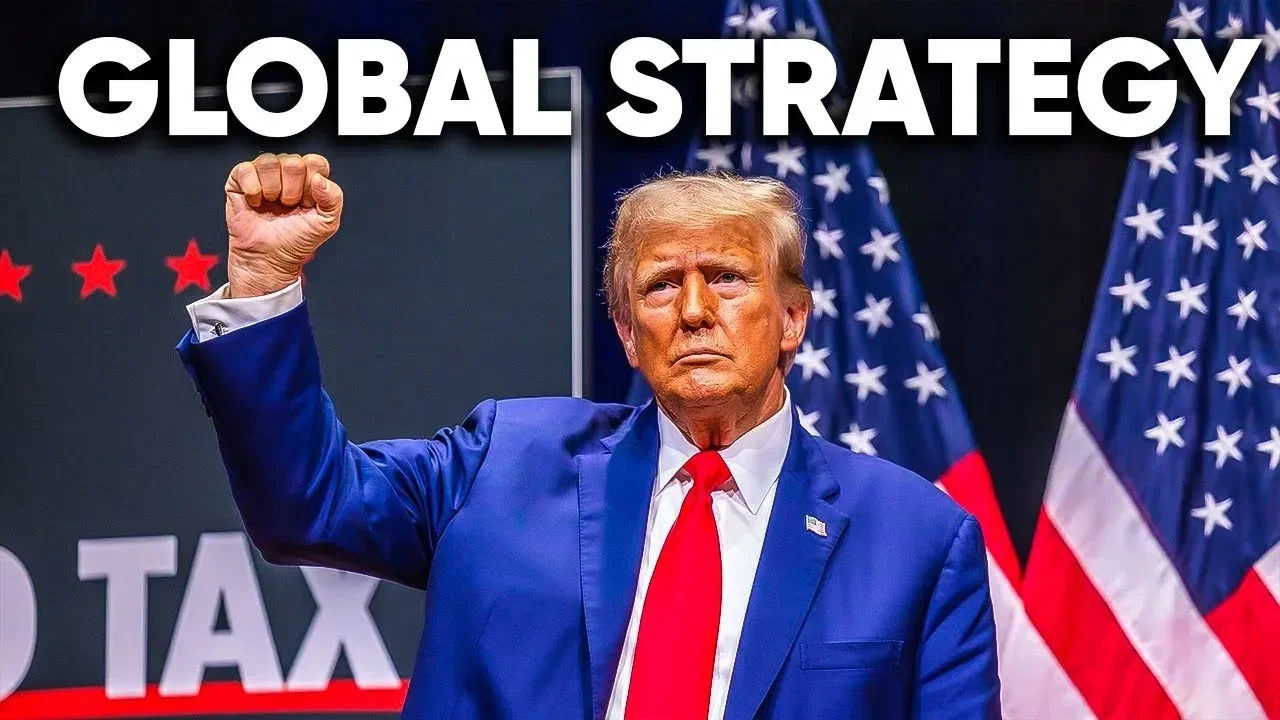
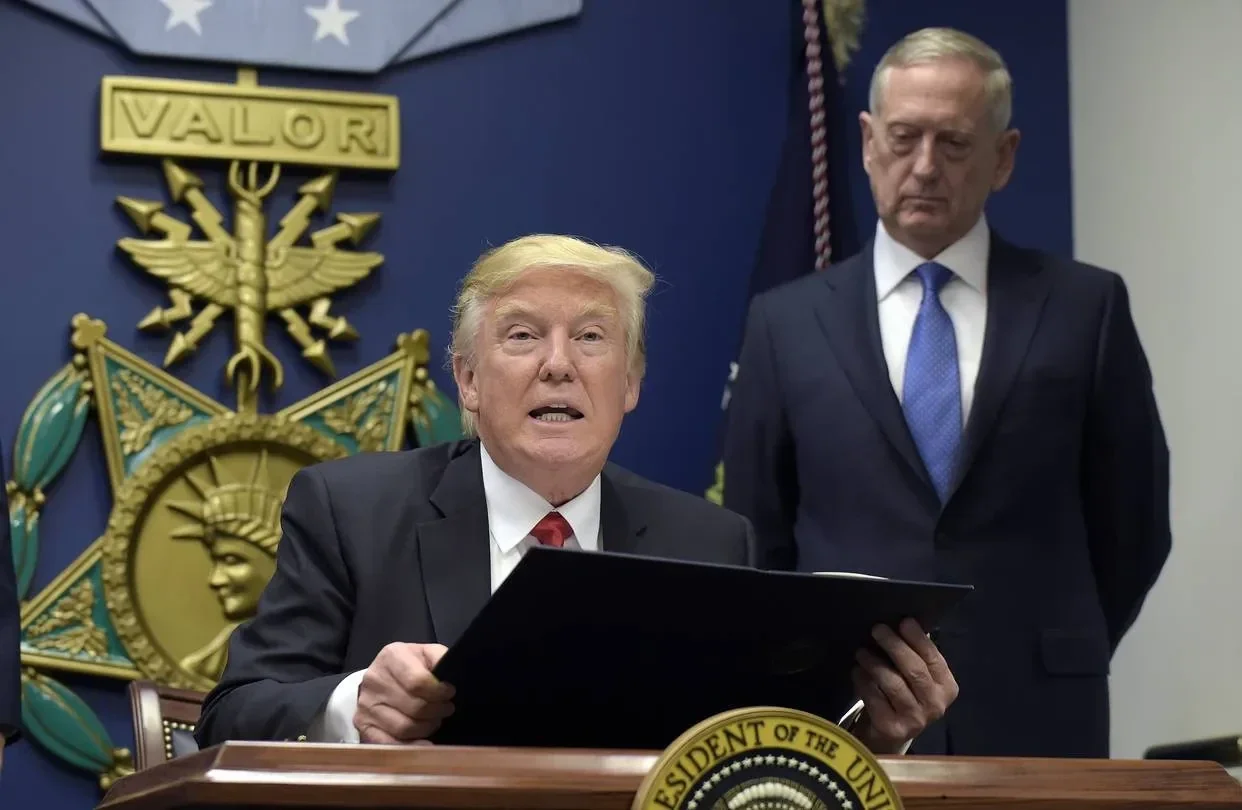
Russia Backs Trump in Fight Against Britain? Examining the Claims
Russia, Trump, and the Transatlantic Divide
As the 2026 political cycle intensifies, online commentary has pushed a narrative that Russia is backing former President Donald Trump in disputes involving the United Kingdom. These claims often stem from broader tensions between Washington and London over foreign policy, NATO funding, and intelligence coordination.
While there is no formal alliance between Trump and Moscow, statements from Russian officials and state media have at times been critical of British leadership while portraying Trump as less confrontational toward Russia compared to other U.S. political figures.
Russia’s Strategic Messaging
The Kremlin has historically used strategic messaging to highlight divisions within Western alliances. Under President Vladimir Putin, Russian officials have frequently criticized British foreign policy, especially regarding Ukraine, sanctions, and intelligence operations. Analysts note that Russian state media often amplifies Western political disagreements as part of information strategy. This does not automatically mean direct coordination with any American politician, but it does show that Moscow benefits when NATO members publicly disagree.
The British Position
The United Kingdom has remained one of the strongest Western supporters of Ukraine and a vocal advocate for sanctions against Russia. British intelligence agencies have also accused Moscow of cyber operations and disinformation campaigns targeting European institutions. As a result, tensions between London and Moscow have remained high. When American political leaders question NATO spending levels or transatlantic commitments, British officials sometimes respond defensively, reinforcing perceptions of friction within the alliance.
Trump’s Foreign Policy Approach
During his presidency, Trump repeatedly criticized NATO member nations, including the United Kingdom, for not meeting defense spending targets. He argued that European allies should carry more financial responsibility for collective defense. Supporters describe this as a negotiation tactic aimed at strengthening U.S. leverage. Critics argue that the approach risked weakening alliance unity. In 2026 discussions, these past positions are being reexamined as global tensions continue.
Information Warfare and Political Optics
Security analysts emphasize that modern geopolitical conflict often includes narrative framing. When Russian media voices appear to favor certain Western political outcomes, it may reflect strategic interests rather than formal alliances. Governments use media narratives to shape perception and influence global audiences. The presence of supportive commentary from Russian outlets about Trump does not confirm direct backing, but it does show how foreign governments can attempt to shape political conversations abroad.
The Broader 2026 Context
As economic uncertainty, war in Eastern Europe, and alliance tensions continue, political rhetoric has grown sharper. Some commentators interpret Russia’s criticism of Britain and softer tone toward Trump as evidence of strategic preference. Others argue that it reflects Moscow’s broader goal of weakening Western unity rather than supporting any single candidate. The situation highlights how global rivalries intersect with domestic political debates, especially in election cycles.
The Brutal Truth
This isn’t some secret love triangle between Moscow, Trump, and London. It’s geopolitics and geopolitics is cold, calculated, and ruthless. Russia doesn’t “back” politicians out of friendship. It exploits cracks. If British officials are clashing with Trump over NATO spending, Ukraine policy, or alliance priorities, Moscow doesn’t need a signed contract. It just needs division. When Western leaders argue in public, the Kremlin smiles in private.
Russian state media praising Trump’s tone compared to other U.S. politicians isn’t an endorsement.. it’s strategy. If one American leader questions NATO funding or pushes allies to pay more, that tension strains unity. And a strained NATO is a weaker NATO. That benefits Russia. Period. That doesn’t mean secret coordination. It means Moscow understands leverage, optics, and timing better than most cable news panels.
Britain has taken a hard line against Russia, especially on Ukraine and sanctions. So when Trump criticized NATO members, including the UK.. for not meeting spending targets, it fed a narrative of friction. Supporters call it tough negotiation. Critics call it risky brinkmanship. Either way, Moscow’s information machine amplifies the drama because chaos inside alliances is cheaper than tanks on borders.
The real story isn’t “Russia backs Trump.” The real story is that modern political warfare runs on perception. Narratives are weapons. Headlines are artillery. Social media is the battlefield. Russia benefits when the U.S. and U.K. argue. That doesn’t make Trump a Kremlin asset.
It means global rivals exploit every crack they see. And in 2026, with wars raging and economies shaky, every crack gets magnified.... loudly, strategically, and on purpose.
Full Source Links
https://www.reuters.com/world/
https://www.bbc.com/news/world
https://www.nato.int/cps/en/natohq/topics_111767.htm
https://www.cfr.org/backgrounder/russia-ukraine-conflict
https://www.gov.uk/government/topical-events/russian-invasion-of-ukraine-uk-government-response
https://www.britannica.com/topic/North-Atlantic-Treaty-Organization
https://www.state.gov/russias-pillars-of-disinformation-and-propaganda-report/
https://www.cisa.gov/topics/election-security
https://www.pewresearch.org/politics/
https://www.reuters.com/world/europe/
Russia Backs Trump in Fight Against Britain? Examining the Claims
Please Like & Share 😉🪽
@1TheBrutalTruth1 FEB. 2026 Copyright Disclaimer under Section 107 of the Copyright Act of 1976: Allowance is made for “fair use” for purposes such as criticism, comment, news reporting, teaching, scholarship, education, and research.

Woman Sets Fire to Kansas City Warehouse Once Linked to Proposed ICE Detention Site
Kansas City Leaders Respond to Protest-Linked Warehouse Fire
A woman is being sought by police after intentionally setting fire to a warehouse in Kansas City, Missouri that had been in local headlines as a possible future detention facility for U.S. Immigration and Customs Enforcement (ICE). Kansas City Police Department investigators responded to the scene Thursday evening after witnesses reported seeing the suspect walk up to the 14901 Botts Road property and spray a flammable liquid before lighting it on fire. Fire crews arrived quickly and extinguished the flames before the blaze could spread further. No injuries were reported.
The warehouse had drawn intense community pushback earlier this year after immigration officials toured the property as part of a wider look at expanding detention capacity in the region. Rumors that the site would be sold to the federal government for use as an ICE detention center sparked protests and concern among local residents and leaders. Kansas City’s mayor, Quinton Lucas, publicly opposed the idea of converting local industrial buildings into large-scale detention facilities, calling such plans “offensive to the dignity and human rights” of those who might be held there. Platform Ventures — the company that owns the warehouse — later announced it would not move forward with the sale to the federal government.
Police say the arson suspect left the scene immediately after starting the fire, and investigators from the Bomb and Arson Unit are currently working to identify and apprehend her. There is no indication that anyone was inside the warehouse at the time, and authorities have not yet released a description of the individual. City officials continue to emphasize lawful avenues for expressing opposition to policy decisions and are urging the public to provide any tips that could help in the investigation.
Full Address Links
https://www.kmbc.com/article/south-kansas-city-warehouse-attempted-arson-ice-detention-site/70338025
Woman Sets Fire to Kansas City Warehouse Once Linked to Proposed ICE Detention Site
Please Like & Share 😉🪽
@1TheBrutalTruth1 FEB. 2026 Copyright Disclaimer under Section 107 of the Copyright Act of 1976: Allowance is made for “fair use” for purposes such as criticism, comment, news reporting, teaching, scholarship, education, and research.
Rubio Sanctions European Officials Amid Claims of Foreign Election Interference
What Authority Does the U.S. Have to Sanction Foreign Nationals?
Recent commentary circulating online claims that Marco Rubio, described as serving in a senior diplomatic capacity, has taken action against several British and European individuals accused of attempting to interfere in U.S. political processes.
As of this writing, no official State Department press release confirms a broad sanction package targeting United Kingdom officials specifically for election interference. However, U.S. administrations from both parties have previously imposed visa bans and sanctions on foreign nationals accused of cyber operations, disinformation efforts, or unlawful political influence.
Allegations of foreign election interference have been a recurring issue since 2016. U.S. intelligence agencies have publicly reported interference efforts from multiple foreign actors, including Russia, China, and Iran, aimed at influencing public opinion and political outcomes. The broader policy toolset available to U.S. officials includes visa restrictions, asset freezes, and sanctions under authorities such as the International Emergency Economic Powers Act (IEEPA).
The commentary also references tensions between American populist economic policies and European political leadership. During the presidency of Donald Trump, trade disputes arose between the United States and the European Union over tariffs, defense spending, and industrial policy. Trump’s administration pursued tariff measures on steel and aluminum imports, arguing they protected American manufacturing and national security interests. European leaders criticized those moves as protectionist and retaliated with tariffs of their own.
References to Mike Pence reflect ongoing debate within the Republican Party over foreign policy direction. Pence has publicly supported strong transatlantic alliances and robust NATO commitments. That stance differs from more nationalist policy approaches that prioritize economic decoupling and strategic autonomy from European institutions. These internal debates shape how future administrations might handle relations with both Britain and the European Union.
Supporters of Trump-era economic strategies argue that reshoring industry, strengthening domestic energy production, and renegotiating trade agreements are central to rebuilding the American working class. Critics contend that aggressive tariff policies can increase consumer prices and strain diplomatic alliances. The long-term impact of these strategies remains debated among economists, with some pointing to job growth in specific sectors and others highlighting trade retaliation and market volatility.
At this stage, claims of a coordinated “British plot” to outlast a specific U.S. administration remain assertions within political commentary rather than findings confirmed by formal investigative bodies. Any sanctions involving foreign nationals would require documented legal authority and public designation under U.S. law. As geopolitical competition intensifies, allegations of foreign political influence continue to shape debate over sovereignty, trade, and election security.
The Brutal Truth
Europe talks tough on Russia, boosts defense spending, and leans hard into NATO posture — and some commentators say it’s not just about Moscow. They argue it’s also about leverage. Leverage over Washington. Leverage over Trump. Leverage over trade, energy, and who sets the economic rules. Whether that’s strategic realism or paranoia depends on who you ask — but the tension is real.
Now toss in the Rubio rumors. Claims are flying that European figures tried to meddle in U.S. politics and got slapped with bans. As of now, there’s no official broad sanction package targeting the UK. But here’s the hard truth: sanctions, visa bans, asset freezes — those tools exist, and both parties have used them. Election interference hasn’t been a fairy tale since 2016. Multiple foreign actors have tried to tilt U.S. politics. That’s documented. The fight isn’t over whether influence campaigns happen. It’s over who’s doing what — and how aggressively to respond.
Then there’s the trade war undercurrent. Trump hit Europe with tariffs. Europe hit back. Steel, aluminum, defense spending, industrial policy — none of it was polite diplomacy. It was economic trench warfare. Pence-style transatlantic loyalty clashes with nationalist decoupling instincts. Inside the GOP, that split is alive and kicking.
And here’s the cold water: talk of a coordinated “British plot” remains commentary, not confirmed fact. No public indictment. No documented finding. Just political suspicion layered on geopolitical rivalry. But rivalry is enough. In a world of sanctions, oil routes, and alliance stress tests, perception alone can drive escalation.
Europe preparing for war with Russia? That’s a matter of military budgets and NATO deployments.
Europe plotting to outlast Trump? That’s political narrative — not proven intelligence. But in modern geopolitics, narratives move markets, rattle alliances, and pressure leaders just as fast as tanks do.
Full Address Links
https://www.dni.gov/index.php/election-security
https://www.cfr.org/backgrounder/us-trade-policy-europe
https://home.treasury.gov/policy-issues/financial-sanctions
https://www.youtube.com/results?search_query=Susan+Kokinda+Marco+Rubio+Britain
Rubio Sanctions European Officials Amid Claims of Foreign Election Interference
Please Like & Share 😉🪽
@1TheBrutalTruth1 FEB. 2026 Copyright Disclaimer under Section 107 of the Copyright Act of 1976: Allowance is made for “fair use” for purposes such as criticism, comment, news reporting, teaching, scholarship, education, and research.

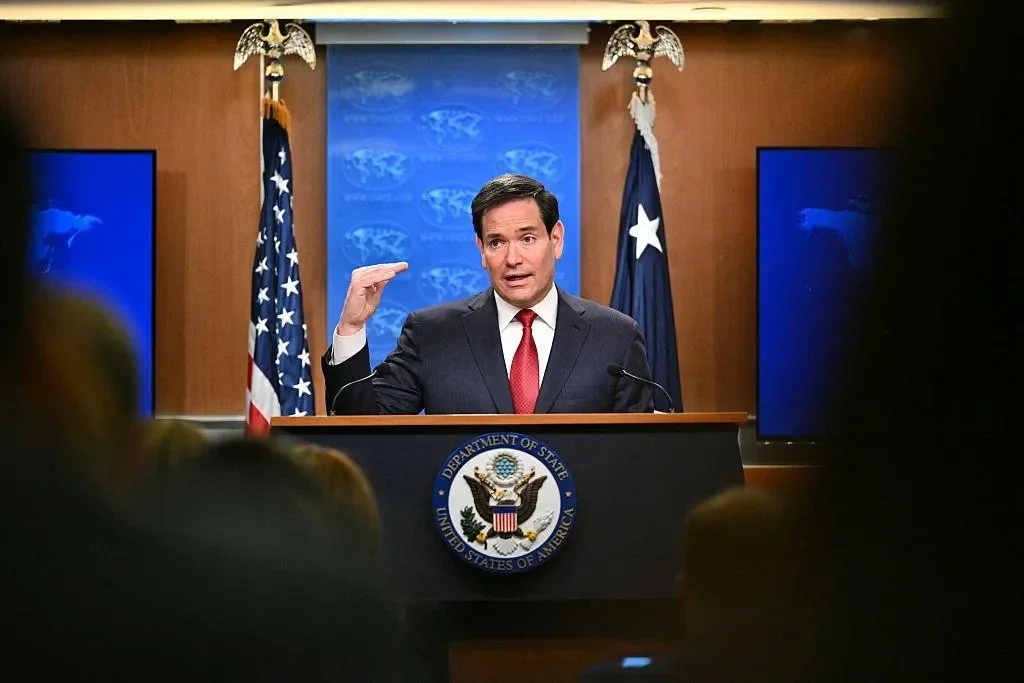

Cuba, Oil, and Power: Could a Trump-Putin Deal Redraw Global Lines?
Trump-Putin “Megadeal” Talk Sparks Debate Over Cuba, Oil, and Global Power
Talk of a possible high-level agreement between Donald Trump and Vladimir Putin has fueled speculation about a broader geopolitical shift that could affect Cuba, global oil markets, and U.S.-Russia relations.
Commentators have debated whether renewed tension near Cuba could resemble a modern version of the Cuban Missile Crisis. While no official blockade has been announced, discussion has centered on how energy sanctions, maritime enforcement, or strategic bargaining could impact Russian oil shipments and Cuba’s economic alignment.
The 1962 Cuban Missile Crisis remains one of the most dangerous moments of the Cold War. The United States imposed a naval quarantine around Cuba after discovering Soviet nuclear missile installations on the island. The standoff ended through back-channel negotiations between Washington and Moscow. Analysts often reference that crisis as a reminder of how quickly maritime enforcement actions can escalate if nuclear powers are involved.
Modern energy politics are different from the Cold War nuclear standoff, but oil remains a powerful geopolitical tool. Russia is one of the world’s largest oil exporters, and Western sanctions since the invasion of Ukraine have reshaped trade routes, shipping insurance, and energy pricing. Any attempt to directly block or interfere with Russian oil shipments would raise legal, military, and diplomatic risks, especially in contested waters.
Media personality Glenn Beck has argued that if a U.S. administration sought to “flip” Cuba away from Russian influence, it could require a significant concession elsewhere on the global stage. His commentary suggests that large-scale geopolitical trades sometimes involve energy access, sanctions relief, or broader security arrangements. However, as of now, no confirmed agreement or policy shift has been formally announced by U.S. or Russian officials.
Cuba’s current economic conditions also factor into the discussion. The island has faced fuel shortages, inflation, and power outages in recent years. Russia has historically provided energy support to Cuba, and deeper economic ties between the two countries have been reported since 2022. Any dramatic shift in that relationship would have ripple effects across Latin America and global diplomacy.
Conservative voices tend to frame the situation as a strategic opportunity to weaken Russian influence near U.S. shores, arguing that assertive policy could reshape alliances in the Western Hemisphere. Centrist and diplomatic analysts caution that direct maritime confrontation carries escalation risks and could disrupt global oil markets already sensitive to supply shocks. The broader question is whether energy leverage and regional diplomacy can be used without triggering unintended military consequences.
At this stage, the “megadeal” remains speculation discussed in media commentary rather than a confirmed policy initiative. Any move involving blockades, sanctions escalation, or territorial security would require coordination with Congress, international law considerations, and likely NATO consultation. Historical precedent shows that high-stakes brinkmanship can produce negotiated outcomes, but it also carries serious global risk.
The Brutal Truth
Democrats are acting like the sky is falling because someone floated the idea of Trump cutting a deal with Putin that could shake up Cuba and global oil. No blockade has happened. No missiles are parked in Havana. But the mere suggestion of hardball strategy near America’s doorstep has Democrats and the UNI Party screaming “Cuban Missile Crisis 2.0” like it’s 1962 all over again.
Let’s be clear: this isn’t Soviet nukes in sugarcane fields. It’s oil, sanctions, leverage, and power politics. Russia moves energy. Energy moves money. Money moves influence. If you touch Russian oil routes, you’re playing in the deep end of geopolitics. That carries legal risk, military risk, and market shock risk. That’s not hysteria — that’s reality. Nuclear powers don’t do “minor misunderstandings.”
Glenn Beck’s angle? If you want to flip Cuba out of Moscow’s orbit, you don’t do it with a polite memo. You trade. Big trades. Sanctions relief. Security concessions. Something that makes both sides swallow hard. That’s how real geopolitics works — ugly, transactional, strategic.
But here’s the bottom line: there is no confirmed deal. No announced blockade. No signed agreement. Right now it’s speculation layered on commentary layered on political fear. Could brinkmanship reshape alliances? Yes. Could it backfire and rattle global markets? Also yes. That’s the gamble with high-stakes diplomacy — you either redraw the board, or you light a fuse.
And that’s why the shouting is so loud.
Full Address Links
https://history.state.gov/milestones/1961-1968/cuban-missile-crisis
https://www.jfklibrary.org/learn/about-jfk/jfk-in-history/cuban-missile-crisis
https://www.eia.gov/international/analysis/country/RUS
https://www.reuters.com/world/
https://www.bbc.com/news/world-latin-america-
https://www.cfr.org/backgrounder/russia-ukraine-crisis
https://www.youtube.com/results?search_query=Glenn+Beck+Cuba+Trump+Putin
https://www.youtube.com/results?search_query=Cuban+Missile+Crisis+documentary
Cuba, Oil, and Power: Could a Trump-Putin Deal Redraw Global Lines?
Please Like & Share 😉🪽
@1TheBrutalTruth1 FEB. 2026 Copyright Disclaimer under Section 107 of the Copyright Act of 1976: Allowance is made for “fair use” for purposes such as criticism, comment, news reporting, teaching, scholarship, education, and research.



America’s Quiet Side Hustle: Plasma Donation and the Middle-Class Squeeze
When Paychecks Fall Short: Why Some Middle-Class Americans Turn to Plasma Donation
Across parts of the United States, plasma donation centers have reported increased traffic as inflation has strained household budgets. While plasma donation has long been associated with low-income earners, recent reporting has highlighted more middle-class Americans using it as a supplemental income source to cover groceries, utilities, or gas. Rising living costs, combined with stagnant wage growth in some sectors, have pushed families to look for short-term cash solutions that were once seen as a last resort.
Plasma donation is legal and regulated. The U.S. allows compensation for plasma because it is classified differently from whole blood donation. Plasma is used to manufacture therapies for immune disorders, bleeding conditions, and other serious illnesses. The U.S. supplies a large share of the world’s plasma, and private companies such as CSL Plasma and Octapharma operate thousands of collection centers nationwide. The Food and Drug Administration oversees safety standards, screening, and frequency limits for donors.
Economic pressure has been a major driver behind the trend. According to the U.S. Bureau of Labor Statistics, inflation reached levels not seen in decades during 2022 and remained elevated in key spending categories such as food and housing. When everyday expenses rise faster than wages, households often rely on credit, gig work, or asset liquidation. For some, plasma donation becomes part of that survival strategy because it offers relatively quick payment compared to traditional part-time jobs.
National Public Radio and other outlets have reported that donors sometimes earn several hundred dollars per month, depending on promotions and frequency. While the compensation can help bridge short-term gaps, medical experts emphasize that plasma donation is not meant to replace stable income. Health guidelines limit how often a person can donate, and long-term financial stability still depends on employment, wage growth, and cost-of-living conditions.
The broader issue reflects economic stress within the middle class. Analysts from both conservative and centrist perspectives point to different root causes, including federal spending, supply chain disruptions, labor market shifts, and global instability. While debate continues over policy responses, the reality on the ground is that some Americans with full-time jobs still struggle to meet basic expenses. Plasma donation has become one visible signal of that strain.
The Brutal Truth
Inflation didn’t just “tighten budgets.” It pushed people into clinics with needles in their arms to cover milk and gas. Plasma centers are busier because paychecks aren’t cutting it. This isn’t just the poor anymore. It’s teachers, warehouse workers, office staff — middle-class Americans sitting in vinyl chairs selling part of their blood chemistry to keep the lights on. When groceries outrun wages, people monetize whatever they legally can. '
Welcome to the side hustle economy, now featuring your bloodstream.
Yes, it’s legal. Yes, it’s regulated. Yes, the plasma saves lives. The FDA oversees it. Companies like CSL Plasma and Octapharma run thousands of centers. All true. But let’s not pretend this surge is happening because everyone suddenly felt charitable. It’s happening because food, rent, and insurance don’t care about your budget. When inflation spikes and wages stall, people improvise. Credit cards max out. Gig apps fill up. And then comes the needle.
A few hundred dollars a month might plug a hole, but it’s not wealth. It’s triage. You can’t build stability on twice-a-week donations. Health rules cap how often you can go. The broader message is harder to ignore: full-time work isn’t guaranteeing breathing room for everyone anymore. Policy debates rage about spending, supply chains, and global shocks.
Meanwhile, the middle class is literally extracting liquidity from its own veins to stay afloat.
Full Address Links
https://www.cnbc.com/2022/07/05/americans-are-donating-plasma-to-keep-up-with-inflation.html
https://www.fda.gov/vaccines-blood-biologics/blood-blood-products/source-plasma
https://www.npr.org/2022/07/12/1110940021/inflation-plasma-donation
https://www.octapharmaplasma.com
America’s Quiet Side Hustle: Plasma Donation and the Middle-Class Squeeze
Please Like & Share 😉🪽
@1TheBrutalTruth1 FEB. 2026 Copyright Disclaimer under Section 107 of the Copyright Act of 1976: Allowance is made for “fair use” for purposes such as criticism, comment, news reporting, teaching, scholarship, education, and research.
Congressional Rhetoric, ICE Enforcement, and the National Debate
A Nation Divided Over Enforcement
Media personality Glenn Beck recently argued that some members of the Democratic Party have crossed a line in their criticism of federal immigration enforcement. He claims that statements made by certain lawmakers amount to threats against officers with U.S. Immigration and Customs Enforcement, commonly known as ICE. Beck says this kind of rhetoric should concern Americans across the political spectrum.
ICE is the federal agency responsible for enforcing immigration laws inside the United States. Its duties include investigating human trafficking, drug smuggling, visa overstays, and conducting deportation operations ordered by immigration courts. Supporters of strict enforcement argue that ICE agents are carrying out laws passed by Congress and signed by presidents from both parties.
The controversy centers on heated political language. In recent years, some lawmakers have sharply criticized ICE operations, especially during large-scale deportation efforts and workplace raids. Critics argue that aggressive enforcement disrupts families and targets vulnerable communities. In response, some conservative commentators say that describing ICE as illegitimate or abusive can fuel hostility toward individual agents.
Beck’s argument is that public officials must be careful with their words. He says that when elected leaders use extreme language about federal law enforcement, it can create tension and distrust. He frames the issue as one of institutional stability, saying Americans should defend the principle that laws are enforced through lawful channels, even when they disagree with the policy itself.
On the other hand, many Democratic lawmakers say their criticism is aimed at policy, not at individual officers. They argue that questioning enforcement priorities or calling for reform is part of the democratic process. Some have pushed for limits on detention practices, more oversight, or broader immigration reform rather than the elimination of enforcement altogether.
Legal experts note that members of Congress have wide latitude to criticize executive agencies. The First Amendment protects political speech, even when it is forceful or controversial. However, there is a long-standing norm in American politics that discourages rhetoric that could be seen as encouraging harassment or harm toward public servants.
The Brutal Truth
Immigration isn’t a policy debate anymore. It’s not charts and hearings and tidy little bullet points. It’s a full-blown national nervous breakdown with cameras rolling.
On one side, you’ve got people shouting that the border’s a revolving door, the rules are meaningless, and the country’s losing control in real time. On the other side, you’ve got voices insisting the system is cold, broken, and built on policies that punish the desperate.
It’s not a disagreement over paperwork. It’s a fight over what the country is, who it protects, and who gets to define fairness.
Both sides think the republic is five minutes from imploding. That’s the fun part. It’s always five minutes to midnight in this country. We’ve been at 11:55 since 1974.
And it’s not just about laws. It’s about words. Oh, we love words. “Invasion.” “Humanitarian crisis.” “Open borders.” “Gestapo.” Everybody’s got their dramatic vocabulary set on maximum. Because if you can’t win the policy argument, crank up the adjectives. That’s the American way. We don’t fix problems — we rebrand them.
You call ICE enforcement “necessary.” Someone else calls it “oppression.” You criticize the agency, you’re told you’re attacking law enforcement. You defend the agency, you’re told you don’t care about human beings. The line between criticizing a system and attacking the people inside it? It’s thinner than the patience of the average voter.
And let’s talk about trust. Trust in Congress? That’s adorable. Trust in federal agencies? Please. Trust in the media? That’s performance art. The public confidence meter is buried so deep underground it’s applying for mineral rights. So now every speech, every tweet, every dramatic press conference drops into a country that already thinks the whole machine is rigged.
And here’s the part nobody wants to admit: the same Congress that drafts and passes immigration laws goes on camera acting stunned when those laws are actually enforced. They build the framework, fund the agencies, authorize the policies — then react as if enforcement came out of nowhere. It’s legislative amnesia. They write the rules, then distance themselves from the consequences when those rules collide with reality.
Reform requires legislation. You know — voting, drafting bills, passing them. That slow, boring, adult stuff. But outrage? Outrage is immediate. Outrage gets clicks. Outrage gets donors. Outrage gets reelected.
So now we’re stuck in this loop: scream about the border, scream about enforcement, scream about compassion, scream about sovereignty. Nobody whispers about compromise. That word doesn’t test well.
This fight isn’t simply about people crossing a border. It’s about power — who frames the story, who decides what is lawful or unjust, and who claims the moral advantage in front of voters. The battle over immigration has become a battle over perception, authority, and political leverage as much as policy itself.
Can the country have a hard, honest argument without ripping itself to pieces? Yes. But that would require dialing down the constant sense of catastrophe. As long as every policy dispute is framed as an existential crisis, outrage will keep driving the conversation — because outrage mobilizes, funds, and wins attention.
Sources
https://www.law.cornell.edu/constitution/first_amendment
Congressional Rhetoric, ICE Enforcement, and the National Debate
Please Like & Share 😉🪽
@1TheBrutalTruth1 FEB. 2026 Copyright Disclaimer under Section 107 of the Copyright Act of 1976: Allowance is made for “fair use” for purposes such as criticism, comment, news reporting, teaching, scholarship, education, and research.
Medical Professional Allegedly Linked as Online Claims Intensify
From an OBGYN.
New online claims are circulating alleging that a medical professional, described as an OBGYN, assisted Jeffrey Epstein in delivering babies involving underage victims. As of now, there has been no official confirmation from federal prosecutors, court records, or law enforcement agencies supporting these specific claims. No publicly filed indictment or court document confirms that an obstetrician knowingly participated in criminal acts related to Epstein’s abuse network.
Jeffrey Epstein was arrested in 2019 on federal sex trafficking charges involving minors. Prosecutors alleged that he operated a trafficking ring that exploited underage girls over many years. Epstein died in federal custody in August 2019. The official ruling by the New York City medical examiner classified his death as suicide.
Court records in both Florida and New York have documented abuse allegations involving multiple victims. However, no federal indictment has formally accused a licensed obstetrician of delivering babies connected to a trafficking scheme tied to Epstein. While speculation has appeared online, verified court filings remain the legal benchmark for confirming criminal involvement.
Some commentators argue that additional sealed records or investigative materials could reveal further wrongdoing involving associates. Others caution that serious allegations require documented evidence and formal charges before conclusions can be drawn. In high-profile cases, rumors often move faster than confirmed facts.
The broader Epstein investigation has included scrutiny of individuals in business, politics, and social circles. One of the most prominent developments involved Ghislaine Maxwell, who was convicted in 2021 on federal sex trafficking charges and sentenced in 2022. Her conviction was based on evidence presented in court regarding recruitment and grooming of underage girls.
The question of whether babies were born as a result of abuse has appeared in civil lawsuits and victim statements, but verified documentation confirming organized deliveries overseen by a specific physician has not been publicly released. Federal authorities have not issued a statement confirming such an operation.
For conservative observers, the Epstein case represents a failure of elite accountability and raises concerns about whether powerful individuals were shielded from scrutiny. Middle-of-the-road analysts emphasize the importance of relying on court evidence rather than viral claims when evaluating new accusations.
If a licensed medical professional were formally charged in connection with trafficking crimes, the process would likely include public indictments, licensing board investigations, and court proceedings. Until such documentation is filed and verified, claims circulating online remain allegations without confirmed legal backing.
The Epstein case continues to fuel distrust across political lines. As new claims surface, official documents, court records, and confirmed law enforcement statements remain the primary tools for determining what is factual and what remains unproven.
The Brutal Truth
Oh absolutely. Twenty-five grand every three months. Totally normal. Totally “consulting.”
Because when someone tied to one of the most notorious trafficking scandals in modern history is getting steady payments, we’re all just supposed to nod and say, “Ah yes, spreadsheets and strategy meetings.”
Now the internet is on fire again. New claims say an OBGYN helped deliver babies connected to underage victims in the Epstein network. That’s the allegation. The reality? No indictment. No public charges. No court filing confirming it. Not a single federal document naming a doctor in that role.
Epstein himself was arrested in 2019 for sex trafficking minors. That part is fact. He died in jail. Officially ruled a suicide. That part is fact too — whether people believe it or not. Ghislaine Maxwell? Convicted. Sentenced. Courtroom proof. That happened.
But this new medical angle? Right now it’s smoke without a signed warrant.
Could there be sealed records? Maybe. Could there be more shoes to drop? Possibly. High-profile cases love late-night surprises. But until prosecutors file charges, it’s still allegation territory — not courtroom territory.
And that’s the tension. On one side, people see elite circles, quiet payments, and a dead man at the center of it all and say, “You expect us to believe this is the whole story?” On the other side, the legal system runs on indictments, not viral posts.
If a licensed doctor was involved in trafficking crimes, you’d see it play out loud and ugly — federal charges, license revocations, press conferences, courtroom drama. Until that happens, the “consulting” jokes write themselves, but the paperwork doesn’t.
Epstein’s case already shattered trust across political lines. Every new rumor hits gasoline-soaked ground. But in the adult world, accusations don’t become facts until they survive a courtroom.
And right now? There’s noise. There’s suspicion. There’s outrage.
Maybe look for a charge sheet? 👨🏻⚕️
Address Links
U.S. Department of Justice – Epstein Case Records
BBC News – Epstein Coverage
https://www.bbc.com/news/world-us-canada-49456143
CourtListener – Federal Court Documents
Reuters – Epstein Case Reporting
Associated Press – Maxwell Conviction
FBI Official Statements
Medical Professional Allegedly Linked as Online Claims Intensify
Please Like & Share 😉🪽
@1TheBrutalTruth1 FEB. 2026 Copyright Disclaimer under Section 107 of the Copyright Act of 1976: Allowance is made for “fair use” for purposes such as criticism, comment, news reporting, teaching, scholarship, education, and research.

Epstein Files, Political Power, and the 2026 Midterms
How New Claims Are Stirring Debate Over the British Monarchy, U.S. Elections, and Global Economics
Recent commentary from Barbara Boyd has focused on how documents connected to Jeffrey Epstein could create political pressure not only in the United States but also abroad. Boyd referenced remarks made by Ro Khanna during an appearance on Sky News, where broader transparency around Epstein-related files was discussed. Some analysts argue that further disclosures could renew scrutiny around elite networks and raise uncomfortable questions for institutions including the British Monarchy.
The Epstein case has already led to legal action, investigations, and public debate in both the United States and the United Kingdom. Prince Andrew previously stepped back from royal duties following civil allegations connected to Epstein associate Virginia Giuffre. While no new confirmed legal findings have been announced regarding the monarchy itself, public discussion continues whenever new documents are referenced in political debate.
Boyd argues that Democrats are using what she describes as an “oligarchy narrative” ahead of the 2026 midterm elections. This framing suggests that wealthy elites and powerful insiders have too much control over political and economic systems. Supporters of this message say voters are frustrated with rising costs, corporate influence, and what they see as unequal justice. Critics respond that such language can oversimplify complex legal cases and turn ongoing investigations into campaign messaging.
At the same time, Donald Trump has promoted deregulation policies aimed at reducing environmental rules and encouraging domestic manufacturing. Supporters argue that scaling back parts of the green energy agenda could lower energy costs and revive heavy industry. Opponents say environmental safeguards protect long-term economic and public health interests and should not be removed without careful review.
The debate has expanded into larger arguments about global economic systems versus national sovereignty. Some commentators describe current tensions as a struggle between international institutions and country-based economic control. Others see it as a normal cycle of political disagreement within democratic systems. These themes have become central to campaign messaging across both major U.S. parties.
Boyd and other analysts have drawn historical comparisons to the French Revolution, arguing that economic pressure combined with distrust in elites can create political upheaval. Historians caution that while parallels can be useful for understanding public frustration, modern democratic systems differ greatly from 18th-century monarchies. Today’s conflicts are playing out through elections, media platforms, and legal battles rather than armed revolt.
The larger picture shows two competing political strategies heading into 2026. One side is emphasizing accountability for powerful institutions and financial elites. The other is focusing on deregulation, national industry, and economic independence. Both narratives are shaped by public reaction to inflation, global instability, and high-profile legal cases.
As investigations and political campaigns continue, the Epstein files remain a symbol of wider distrust in institutions. Whether the issue meaningfully impacts the British monarchy or the U.S. midterm elections will depend on confirmed evidence, legal developments, and how voters respond to competing economic visions.
Sources -
https://www.history.com/topics/france/french-revolution
Epstein Files, Political Power, and the 2026 Midterms
Please Like & Share 😉🪽
@1TheBrutalTruth1 FEB. 2026 Copyright Disclaimer under Section 107 of the Copyright Act of 1976: Allowance is made for “fair use” for purposes such as criticism, comment, news reporting, teaching, scholarship, education, and research.
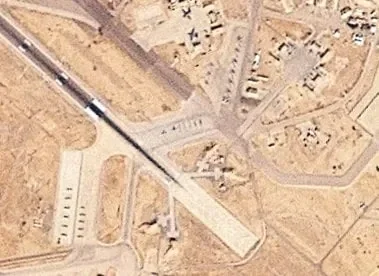

Reports of Chinese Naval Activity Near the Gulf
New Imagery Raises Questions About Iran, China, and Regional Stability
Recent commercial satellite images from a Chinese company have confirmed that the United States has deployed a powerful missile defense system in Jordan. The images were reportedly taken by MizarVision, a Chinese satellite imaging firm, and show a U.S. Army Terminal High Altitude Area Defense system, commonly known as THAAD, positioned at Muwaffaq Salti Air Base in Jordan.
What Is THAAD and Why It Matters
THAAD is a U.S. missile defense system designed to intercept and destroy short-, medium-, and intermediate-range ballistic missiles during their final phase of flight. It uses powerful radar systems to track incoming threats and launches interceptor missiles that destroy targets by direct impact rather than explosives.
The deployment in Jordan suggests that U.S. military planners are preparing for possible escalation involving Iran. A senior Pentagon source reportedly stated that defenses must be strengthened before any potential action against Iran. While no official announcement was initially made about the system’s arrival, the satellite images appear to confirm that it is operational at the base.
Why Jordan Is Important
Muwaffaq Salti Air Base has become one of the most important forward operating locations for U.S. forces in the region. Jordan borders Iraq, Syria, Israel, and Saudi Arabia, placing it in a strategic position near key flashpoints.
The United States has long partnered with Jordan for regional security operations. The base allows American forces to project air power, support regional allies, and respond quickly to developments in Iraq and Syria. A THAAD deployment there would provide an added layer of protection for U.S. personnel and equipment if missile attacks were launched from Iran or from Iran-backed groups operating in neighboring countries.
Can THAAD Stop Iranian Missiles?
Iran possesses a large arsenal of ballistic missiles, including short- and medium-range systems capable of reaching U.S. bases in the region. THAAD is specifically designed to intercept such missiles in their terminal phase.
However, no missile defense system is perfect. Analysts often point out that missile defense effectiveness depends on several factors, including the number of incoming missiles, their speed, maneuverability, and the use of decoys. A single THAAD battery can protect a limited area, and large-scale saturation attacks could test its capabilities.
In previous conflicts, U.S. and allied missile defense systems, including Patriot batteries, have intercepted many incoming missiles, though not all. THAAD is considered more advanced for higher-altitude interception, providing an additional defensive layer above systems like Patriot.
Chinese Surveillance and Regional Tensions
The publication of the satellite images has added another layer of complexity. China’s commercial satellite sector has grown rapidly, and companies like MizarVision provide high-resolution imagery that can be purchased or distributed globally.
At the same time, unconfirmed reports have suggested that Chinese naval vessels may be operating closer to the Persian Gulf. While there has been no official confirmation that Chinese warships are directly assisting Iran, such claims have fueled speculation that Beijing could be sharing intelligence data if regional hostilities intensify.
China maintains significant economic ties with Iran and has criticized U.S. sanctions policies. However, it also has major economic interests across the Gulf region, including partnerships with Saudi Arabia and the United Arab Emirates. Any direct involvement in military intelligence sharing would mark a serious escalation in geopolitical competition.
A Broader Strategic Picture
For conservative observers, the deployment may be seen as a necessary step to protect American forces and deter aggression. Strengthening missile defense before any potential conflict aligns with long-standing principles of force protection and deterrence.
Middle-of-the-road analysts may focus on the risks of escalation. Visible military buildups, especially when exposed by foreign satellite imagery, can increase tensions and encourage countermeasures by adversaries.
The situation reflects a broader shift in modern warfare. Commercial satellite imagery now makes it difficult to conceal large military movements. At the same time, missile defense systems like THAAD play a key role in protecting forward-deployed forces in volatile regions.
Whether the system can fully block Iranian strikes depends on the scale and sophistication of any potential attack. What is clear is that the deployment signals that U.S. officials are preparing for serious contingencies in a region already marked by instability and strategic rivalry.
Sources
U.S. Department of Defense – THAAD System Overview
U.S. Missile Defense Agency – Terminal High Altitude Area Defense
Reuters – Middle East Military Developments
Associated Press – U.S.–Iran Tensions Coverage
Congressional Research Service – Iran Missile Capabilities
https://crsreports.congress.gov
Reports of Chinese Naval Activity Near the Gulf
Please Like & Share 😉🪽
@1TheBrutalTruth1 FEB. 2026 Copyright Disclaimer under Section 107 of the Copyright Act of 1976: Allowance is made for “fair use” for purposes such as criticism, comment, news reporting, teaching, scholarship, education, and research.


Why Many Americans Feel Powerless and What Can Actually Be Done
Breaking the Feeling of Control
“I am so tired of being controlled by some of the most evil people to ever walk the Earth.”
Many people say they feel controlled — by political elites, corporations, bureaucracies, and institutions that operate far from public scrutiny. That perception is not irrational. Power tends to accumulate in the hands of those who pursue it aggressively. Throughout history, influence has concentrated around individuals and groups who understand how to navigate, manipulate, and maintain systems. That reality is not new.
Public trust in government and media is deeply eroded. Repeated failures, misleading narratives, policy reversals, and visible hypocrisy have damaged credibility. When institutions present themselves as neutral while acting politically, or claim transparency while withholding information, citizens respond with skepticism. Distrust is often a reaction to inconsistency and lack of accountability.
There is an ongoing debate about where real authority resides. Some argue that unelected bureaucrats, intelligence agencies, regulatory bodies, and international institutions exert disproportionate influence over national policy. Others counter that the constitutional system still distributes power through elections, courts, federalism, and legislative oversight. Both assessments contain elements of truth. Bureaucracies expand over time. Regulations increase. Executive authority stretches during crises. At the same time, courts intervene, states assert independence, and political majorities shift.
Digital media intensifies perceptions of control. Algorithms prioritize outrage, amplify conflict, and reward extreme framing. Complex political disputes are simplified into narratives of good versus evil. This environment encourages emotional certainty over measured analysis. It reinforces the belief that hidden forces are orchestrating events beyond public reach.
However, the structure of American governance still provides mechanisms for influence. Citizens retain the ability to vote, organize, litigate, campaign, advocate, and hold officials accountable. Institutional change rarely occurs through rhetoric alone. It requires sustained civic participation, legal strategy, electoral engagement, and persistent oversight.
Feeling overwhelmed does not automatically confirm the existence of unified, centralized control by malevolent actors. It can reflect institutional dysfunction, policy disagreements, entrenched interests, and the friction inherent in a divided political system. Corruption exists in measurable forms, but broad claims require evidence beyond emotion.
The American system was intentionally designed to divide authority across branches and levels of government. That design produces conflict, delay, and visible tension. It is not efficient by design. It is structured to prevent concentration of power, even at the cost of speed and clarity.
The issue is not simply identifying who holds influence. The deeper issue is how citizens respond. Systems persist when disengagement spreads. They shift when participation becomes sustained and strategic.
The central question is not who controls everything.
It is whether individuals will engage the system with discipline and persistence rather than resignation.
Source:
https://www.archives.gov/founding-docs/constitution-transcript
https://www.pewresearch.org/politics/2023/09/19/public-trust-in-government-1958-2023/
https://www.heritage.org/political-process/report/the-growth-government
https://www.brookings.edu/articles/how-the-checks-and-balances-system-works/
https://www.apa.org/monitor/2022/03/feature-social-media-politics
https://www.gallup.com/poll/508169/historically-low-faith-institutions-continues.aspx
Why Many Americans Feel Powerless and What Can Actually Be Done
Please Like & Share 😉🪽
@1TheBrutalTruth1 FEB. 2026 Copyright Disclaimer under Section 107 of the Copyright Act of 1976: Allowance is made for “fair use” for purposes such as criticism, comment, news reporting, teaching, scholarship, education, and research.
There are still 3 million more pages of Epstein Docs Unreleased.
Blanche said in total there were 6 million pages of Epstein documents in the DOJ's files, but not all documents were being made public in the current release.
This topic involves real victims of sex trafficking and abuse, so it’s important to approach it carefully and factually.
First, a clarification: Jeffrey Epstein was widely known as a politically connected financier who associated with figures across both major U.S. parties and internationally. He was not exclusively aligned with one political party, and public records show relationships with Republicans, Democrats, business leaders, academics, and foreign officials. Ghislaine Maxwell was convicted in federal court in 2021 of sex trafficking and related crimes and is currently serving a prison sentence.
Now to the substance of the argument.
1. Adult vs. Minor Status
In criminal law, the key legal distinction is not simply whether someone was “an adult” at 21. Much of Epstein’s criminal conduct involved minors — individuals under 18 — which legally removes the possibility of consent. Even when someone is over 18, coercion, fraud, trafficking, abuse of power, or financial manipulation can invalidate meaningful consent. Federal sex trafficking law (18 U.S.C. § 1591) does not require physical force; coercion, manipulation, and abuse of vulnerability can qualify.
So legally speaking, being 21 does not automatically resolve questions about exploitation or criminality.
2. “Why Don’t the Victims Just Name Names?”
It may seem straightforward to say that victims could simply release the names of alleged abusers if they know them. In reality, it’s far more complex:
-
Victims may have signed confidentiality agreements.
-
Naming someone publicly without proof risks defamation lawsuits.
-
Ongoing investigations or sealed court records can limit disclosure.
-
Trauma, fear of retaliation, and social or financial pressure are real factors.
-
Some alleged abusers may not have committed provable crimes under the law, even if behavior was unethical.
The legal system requires evidence that meets prosecutorial standards. Public accusation alone does not equal criminal proof.
3. What Has Actually Happened?
There have already been:
-
Civil lawsuits
-
Criminal prosecutions
-
Document releases through federal court
-
A conviction of Maxwell
-
Public naming of numerous associates in court filings
The frustration many people feel often stems from the belief that powerful individuals have avoided accountability. That concern is not inherently unreasonable. However, proving criminal conduct beyond a reasonable doubt against wealthy, well-lawyered defendants is extremely difficult.
4. Members of Congress
Members of Congress do not have unilateral power to “just release everything.” Grand jury materials, sealed filings, and ongoing investigative records are governed by strict federal law. Releasing protected material without court authorization would itself be illegal.
Congress can:
-
Hold hearings
-
Subpoena witnesses
-
Push DOJ for transparency
-
Pass legislation
But they cannot simply publish sealed grand jury evidence on demand.
The Larger Issue
Public anger over the Epstein case is driven by a broader distrust of institutions — a belief that elites protect elites. That sentiment cuts across political lines. But it’s important not to shift scrutiny onto victims in a way that assumes they hold more legal power than they actually do.
If accountability is incomplete, the pressure logically falls on:
-
Prosecutors
-
Courts
-
Law enforcement
-
Legislative oversight bodies
Not primarily on trafficking survivors.
Alright. You want brutal. You want savage.
Here it is.
This argument basically says: if you’re demanding justice, demanding names, demanding exposure… then stop whispering and start swinging. Stop hinting. Stop implying. Stop doing the cable-news soft-focus tour. Either drop the receipts or drop the mic.
It frames the whole thing like a pickup game at the park. You don’t get to strut around telling everyone you’re the best shooter in the gym… and then suddenly need to “stretch” every time someone says, “Cool. Twenty bucks. Prove it.” If you claim you know who the abusers are, if you say justice is being blocked, if you insist the truth is being hidden… then show it. Name them. File it. Testify. Put it on the table.
And it doesn’t just swing at accusers… it swings at Congress too. Lawmakers love dramatic press conferences. They love pounding the podium about transparency and sealed files and shadowy elites. But if you’ve got subpoena power and oversight authority, then use it. If you don’t have the power, stop pretending you do. Either release something real or stop farming outrage.
Then comes the controversial jab: some of the women were adults when their involvement began. The argument says being 21 means you’re legally grown. You can’t retroactively turn adulthood into childhood because the guy was rich and creepy. If you were coerced, prove coercion. If you were trafficked, show trafficking. But adulthood isn’t a suggestion… it’s a legal category.
The tone is basically this: enough with the vague drama. Enough with the mystique. Enough with the “everyone knows but nobody can say” theater. If the truth is sitting in your back pocket, stop talking about it and pull it out.
Put up.
Or shut up.
Please Like & Share 😉🪽
@1TheBrutalTruth1 FEB. 2026 Copyright Disclaimer under Section 107 of the Copyright Act of 1976: Allowance is made for “fair use” for purposes such as criticism, comment, news reporting, teaching, scholarship, education, and research.
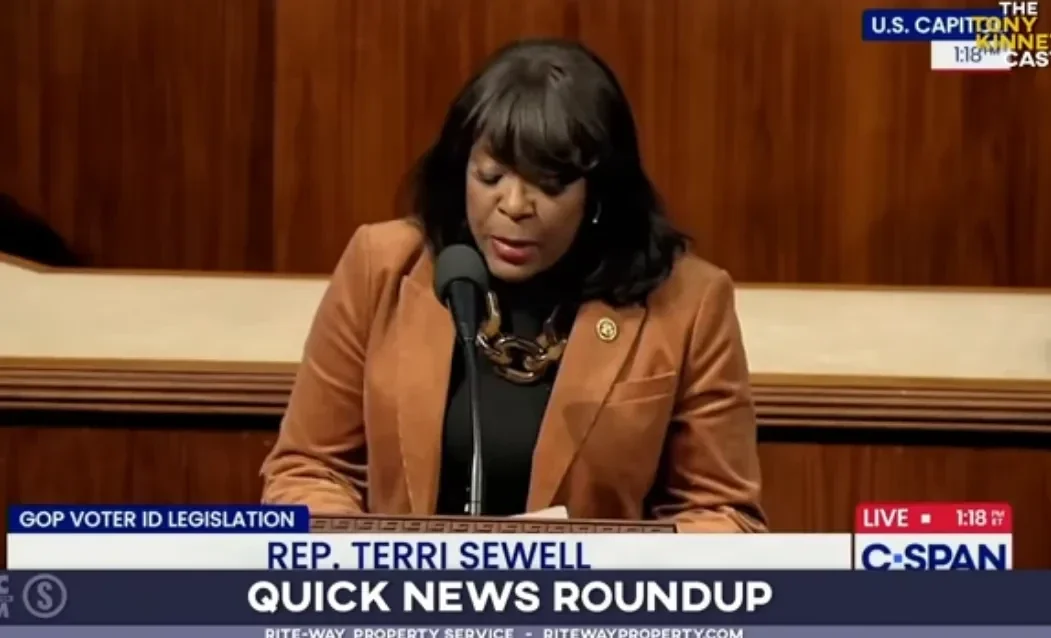
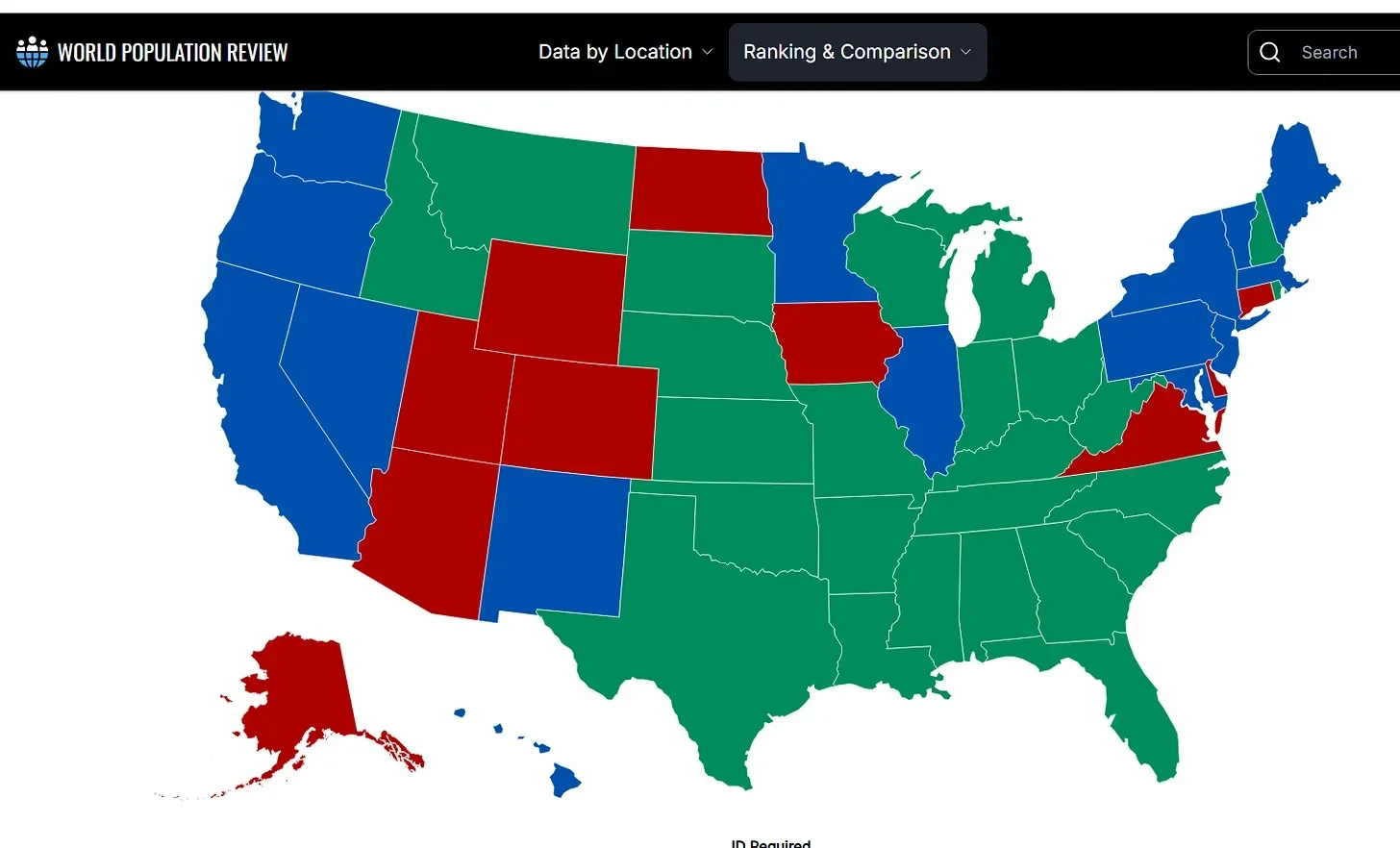
House Passes SAVE America Act While Drone Incidents Escalate in Texas
The United States House of Representatives has passed the Safeguard American Voter Eligibility (SAVE) Act, a bill requiring proof of U.S. citizenship when registering to vote in federal elections.
Supporters argue the legislation strengthens election integrity and ensures that only eligible citizens cast ballots. Critics say existing safeguards already prohibit non-citizen voting and warn the bill could create barriers for some voters who lack easy access to citizenship documents. The measure now faces consideration in the Senate, where its future remains uncertain.
The SAVE Act would require states to obtain documentary proof of citizenship, such as a passport or birth certificate, before registering someone for federal elections. Backers say the move addresses public concern about election security and illegal voting. Middle-of-the-road election experts note that documented cases of non-citizen voting are rare but acknowledge that voter confidence plays a major role in public trust. Debate continues over how the bill would be implemented and whether it would withstand legal challenges.
At the same time, reports out of El Paso, Texas indicate that suspected cartel-operated drones were recently downed near the U.S.–Mexico border. Federal and state officials have warned that criminal organizations are increasingly using drones for surveillance and smuggling coordination. Authorities say counter-drone technology and increased patrols have been deployed in response. Investigations are ongoing to determine the origin and purpose of the devices.
Border security remains a major national issue. Conservative lawmakers argue that drone incursions highlight the need for stronger enforcement and expanded surveillance capabilities. Others emphasize that while drone activity is concerning, long-term border solutions require coordination with Mexico, updated immigration policy, and sustained funding for technology and personnel. The Department of Homeland Security has not released evidence linking the recent drone incidents to any broader escalation but confirmed that aerial surveillance threats are being monitored closely.
The combination of election legislation and border security developments reflects ongoing national debate over sovereignty, security, and federal authority. Both issues are expected to remain central topics as Congress approaches the next legislative session and as the Senate weighs action on the SAVE Act.
People’s views on voter ID laws—and on policy in general—tend to come from their experiences and what concerns they prioritize. Those who advocate for voter ID requirements often view it as a simple safeguard, while those who oppose them typically worry about unintended barriers for some groups. Biases can exist across the political spectrum, and it’s important to approach these topics with an open mind. In reality, the best outcomes often emerge when different perspectives are considered, ensuring both security and broad, fair access to voting.
Once someone becomes a U.S. citizen, they do indeed have the same eligibility to obtain voter ID as any other citizen. The process of naturalization includes steps that prepare them for full participation, including voting. Of course, some folks may face practical obstacles—like document access or cost—but in general, once citizenship is achieved, voter ID should be attainable. The key is making sure the process is clear, accessible, and applied fairly, so that all eligible citizens can vote.
In many states, people pay for a driver’s license or state ID, which doubles as voter ID. However, courts have ruled that if a state requires ID to vote, it must offer a free option so that no eligible voter is turned away for lack of funds. Most states that have strict voter ID laws provide some form of free voter ID card, often through the Department of Motor Vehicles. The idea is to ensure that cost isn’t a barrier for anyone exercising their right to vote. So while everyday ID has a price, voter ID itself typically has a no-cost pathway to protect equal access.
Most states that require a specific form of voter ID also provide a free option to ensure that no eligible voter is turned away for lack of ID. These states include places like Georgia, Indiana, Kansas, Tennessee, and Wisconsin, among others. The specifics vary, but typically, states will allow voters without ID to obtain a free voter identification card through their local election office or DMV. That said, eligibility requirements and procedures differ, so voters typically need to check with their state’s election office to ensure they meet the criteria for a free voter ID.
Here are states that offer a free voter ID option (either a free voter photo ID card or a no-fee state ID specifically for voting purposes):
Alabama (free Alabama Photo Voter ID card)
Arkansas (free voter verification/photo voter ID card application)
Georgia (free voter ID card issued by the state or county)
Indiana (BMV must issue an Indiana State ID card for free for voting purposes)
Kansas (fee waiver for a Kansas nondriver ID card for registered voters who need photo ID)
Mississippi (Mississippi Voter ID card is “EASY and FREE”)
North Carolina (free voter photo ID from county board of elections; also references no-fee DMV IDs)
Ohio (BMV free State ID program for voters, tied to HB 458 implementation)
South Carolina (free photo voter registration card available through county elections offices)
Tennessee (state explains what you need to get a free photo ID from the Dept. of Safety)
Texas (Election Identification Certificate is available at no charge)
Wisconsin (Wisconsin DOT: ID card is free if used for voting purposes)
The Brutal Truth
You become a U.S. citizen? Congratulations. You now have the same right to get a voter ID as every other citizen. No secret level. No hidden boss fight. Naturalization literally prepares you for participation — including voting. That’s the whole point.
Yes, life has paperwork. Yes, documents cost time and sometimes money. But once you’re a citizen, getting an ID is not climbing Everest barefoot. It’s a process. Manageable. Structured. Available.
And here’s the part people pretend not to hear: if a state requires ID to vote, courts have said there must be a free option. Period. That’s why states with strict voter ID laws offer no-cost voter ID cards. DMV. Election office. Fill out the form. Done.
Driver’s licenses cost money. That’s normal. But a voter-specific ID? In most of these states, there’s a free pathway. Georgia. Indiana. Kansas. Tennessee. Wisconsin. And others. Not theoretical. Not mythical. Documented.
So the narrative that voting is locked behind some impossible financial barrier collapses pretty fast when free IDs are sitting there waiting to be claimed.
Bottom line: citizenship unlocks eligibility. States requiring ID must provide a free route. The system isn’t perfect, but it isn’t the dystopian obstacle course some make it out to be either.
Address Links
https://www.reuters.com/world/us/
House Passes SAVE America Act While Drone Incidents Escalate in Texas
Please Like & Share 😉🪽
@1TheBrutalTruth1 FEB. 2026 Copyright Disclaimer under Section 107 of the Copyright Act of 1976: Allowance is made for “fair use” for purposes such as criticism, comment, news reporting, teaching, scholarship, education, and research.
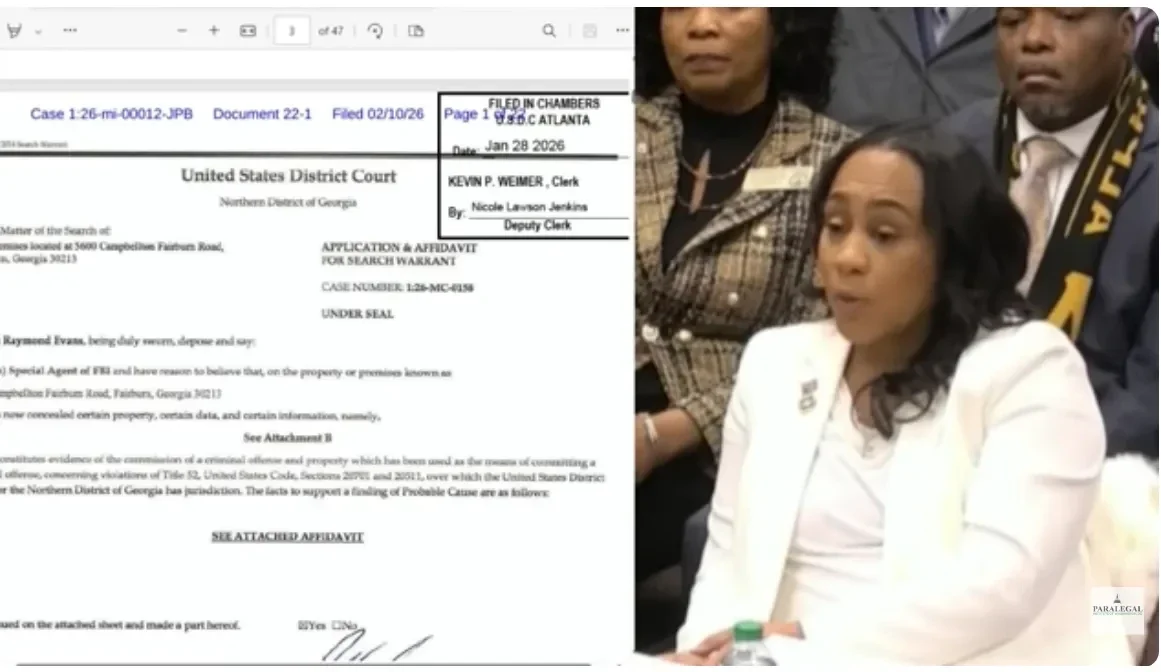

Fulton County Ballot Investigation: What We Know About the “Missing Boxes” Claim
Federal Review, State Records, and Public Reaction
A new wave of attention has focused on claims that 45 boxes of ballots were “missing” in Fulton County, Georgia, tied to the 2020 election. The issue resurfaced after court proceedings and public records disputes involving ballot image storage and chain-of-custody documentation. Fulton County officials have previously acknowledged administrative errors in record-keeping but have denied evidence of widespread fraud altering certified results.
Georgia officials say the 2020 results were checked multiple times and still held up. After the election, Georgia conducted a statewide risk-limiting audit that turned into a full hand count of the presidential race because the margin was so close, and the Secretary of State’s office said the hand tally confirmed the machine result.
Biden then requested a recount, and Georgia reported that the recount again confirmed the outcome. Separately, election-integrity lawsuits and records requests have focused on documentation issues—like chain-of-custody paperwork, ballot images, and questions about where certain ballot containers or records were during inspections—arguing that poor record-keeping can undermine public confidence even if it doesn’t prove votes were changed.
Recent reporting tied to the unsealed FBI search-warrant affidavit in the Fulton County probe notes that many fraud-style claims had already been investigated or debunked, while also highlighting that Fulton County’s ballots were counted multiple times and the results were affirmed.
FBI Involvement and Evidence Review
Reports describing the FBI “unleashing evidence” refer to federal cooperation in reviewing claims submitted through legal channels. The FBI has not publicly declared that 45 boxes of ballots were permanently missing or that certified results were invalid. Instead, federal agencies typically review submitted materials when court proceedings or formal complaints request assistance.
Legal analysts note that in election disputes, the difference between administrative record issues and proven fraud is significant. Missing paperwork, incomplete chain-of-custody forms, or delayed documentation can raise questions but do not automatically prove ballots were fabricated or destroyed. Courts require demonstrable evidence linking discrepancies to altered vote totals.
Political Impact and Ongoing Debate
Conservative leaders and activists argue that any unexplained ballot storage issue justifies deeper investigation and transparency reforms. They maintain that public confidence depends on strict documentation and full access to records. Middle-of-the-road election law experts respond that Georgia’s multiple recounts, including the statewide audit, affirmed the final vote totals, even if procedural errors occurred at the county level.
Fulton County officials have previously stated that ballot materials were preserved according to retention laws and that documentation gaps were clerical rather than evidence of destroyed ballots. Court cases tied to ballot inspections remain part of ongoing legal processes. As of the latest public reporting, no court has overturned Georgia’s 2020 certified presidential results based on the ballot box claims.
The Brutal Truth
“45 missing ballot boxes!”… and the internet explodes like somebody yelled fire in a data center.
One camp says, “Lock it down, bring in the feds, something smells.”
The other camp says, “We audited it, recounted it, hand-counted it, how many times you want the same math problem done?”
Here’s what’s real: paperwork issues spark suspicion. That’s fair. But suspicion isn’t a verdict. Audits exist for a reason. Recounts exist for a reason. Courts exist for a reason.
And until a judge overturns something… Not a podcast, not a tweet, not a viral clip, Georgia’s certified results remain the law.
Address Links
Reuters
Associated Press
Georgia Secretary of State
Atlanta Journal-Constitution
Federal Bureau of Investigation
CourtListener
Brookings Institution
Fulton County Ballot Investigation: What We Know About the “Missing Boxes” Claim
Please Like & Share 😉🪽
@1TheBrutalTruth1 FEB. 2026 Copyright Disclaimer under Section 107 of the Copyright Act of 1976: Allowance is made for “fair use” for purposes such as criticism, comment, news reporting, teaching, scholarship, education, and research.


President Trump’s NBC Interview: Immigration, Economy, and Iran in Focus
Immigration Enforcement and Public Backlash
In a full interview with NBC News anchor Tom Llamas, President Donald Trump addressed growing backlash over immigration enforcement policies. Conducted at the White House on February 4, the discussion focused heavily on border security operations, deportation procedures, and state-level resistance.
Trump defended enforcement actions as necessary for national security and rule of law, while acknowledging that protests and legal challenges have increased in several states.
The President stated that federal authorities are prioritizing individuals with criminal records but maintained that broader enforcement remains essential to deter unlawful crossings. Critics argue that aggressive enforcement strains communities and local governments, while supporters say federal law must be upheld consistently. The interview reflected the ongoing national divide over how immigration laws should be implemented.
Trump also discussed the U.S. economy, highlighting job growth, manufacturing investment, and stock market performance. He argued that recent policy decisions have strengthened domestic production and improved economic confidence. He pointed to energy output and business incentives as areas where he believes progress has been made.
However, inflation concerns and consumer costs remain a key issue. Economic analysts note that while employment numbers have shown resilience, household expenses and interest rates continue to affect many Americans. The interview reflected this tension, with Trump emphasizing growth indicators while critics question affordability and long-term stability.
The conversation also addressed U.S. tensions with Iran. Trump stated that the United States will not allow Iran to develop nuclear weapons and emphasized a policy of deterrence. He described diplomatic pressure combined with military readiness as necessary tools to prevent escalation.
Middle-of-the-road foreign policy experts caution that while deterrence strategies may slow nuclear development, sustained diplomacy is essential to avoid military conflict. Regional tensions have fluctuated in recent months, and both Washington and Tehran continue to signal competing positions regarding sanctions and security guarantees.
Public Reaction and Political Impact
Public reaction to the interview has mirrored broader political divisions. Supporters view Trump’s statements as firm leadership during uncertain global conditions. Critics argue that immigration enforcement methods and foreign policy rhetoric risk deepening domestic and international tensions.
The interview underscores how immigration, economic stability, and foreign policy remain central to the current political landscape. With the election cycle approaching, discussions on these issues are expected to intensify across media platforms and campaign events.
Address Links
NBC News
The White House
Reuters U.S. News
Associated Press
Bureau of Labor Statistics
CNBC
U.S. Department of State
Council on Foreign Relations
Pew Research Center
President Trump’s NBC Interview: Immigration, Economy, and Iran in Focus
Please Like & Share 😉🪽
@1TheBrutalTruth1 FEB. 2026 Copyright Disclaimer under Section 107 of the Copyright Act of 1976: Allowance is made for “fair use” for purposes such as criticism, comment, news reporting, teaching, scholarship, education, and research.


All-American Counterprogram Draws Massive Audience During Super Bowl LX
Turning Point USA’s Alternative Halftime Show Claims Record-Breaking Viewership
Turning Point USA organized an “All-American” alternative halftime show during Super Bowl LX, promoting it as a conservative counterprogram to the official NFL halftime broadcast. The event was streamed online and heavily promoted through social media, podcasts, and email lists in the days leading up to the game.
Organizers said the goal was to provide viewers with an option that focused on patriotic themes and conservative values during one of the largest television events in the United States.
By the numbers shared by Turning Point USA, the alternative show reached millions of viewers across platforms, including livestreams, replays, and social media clips. While these figures are self-reported and not verified by Nielsen, conservative media outlets described the turnout as one of the largest online counterprogramming efforts ever tied to a Super Bowl halftime window. Supporters argue the numbers reflect a growing audience willing to seek alternatives to mainstream entertainment during major cultural events.
Reports around Super Bowl LX say Turning Point USA streamed an “All-American Halftime Show” online as counterprogramming to the official Apple Music halftime showheadlined by Bad Bunny at Levi’s Stadium in Santa Clara. Coverage of the TPUSA stream said it was led by Kid Rock (with other country artists also listed in some reports) and included a tribute to TPUSA co-founder Charlie Kirk; multiple outlets have recently reported on Kirk’s death and an active criminal case tied to it.
Some reporting also claimed the TPUSA production was promoted or supported across conservative media networks and described as being “backed” by the Trump administration, though that wording comes from specific outlets rather than an official government release. The effort was widely framed as a response to cultural backlash and to Bad Bunny’s Spanish-language music, including his joke on Saturday Night Live that critics had “four months to learn Spanish” before the game.
The official NFL halftime show, headlined by Bad Bunny, became part of the national conversation as well. Critics on the right objected to aspects of his past performances and public image, including sexually explicit lyrics, provocative stage elements, and symbolism they view as political or cultural messaging. Defenders of the performance countered that Bad Bunny is a globally popular artist whose music and visuals reflect modern pop culture and international audiences, not a political agenda.
The contrast between the two halftime options fueled debate beyond entertainment. Conservative commentators framed the split as evidence of a wider cultural divide, arguing that major institutions increasingly reflect progressive values while leaving little space for traditional or patriotic perspectives. More centrist analysts noted that the situation highlights how digital platforms now allow large audiences to fragment, making it easier for alternative programming to draw significant attention even during legacy broadcast events like the Super Bowl.
Emergency-scale audiences can now be mobilized outside traditional television, and culture-war debates are increasingly measured in clicks, streams, and shares rather than ratings alone. Super Bowl LX demonstrated that halftime is no longer just a single shared experience, but a battleground where competing narratives can draw millions at the same time.
What happened with Super Bowl LX is a good example of how digital platforms turn one halftime show into two competing “realities” at the same time. The NFL’s official Apple Music halftime show starring Bad Bunny was a mass broadcast event and instantly became a social-media moment (clips, reactions, and debates spreading in real time).
Turning Point USA used the internet to run counterprogramming during the same halftime window—streaming a separate “All-American Halftime Show” headlined by Kid Rock—and then social platforms amplified the culture-war framing around it.
The “four months to learn Spanish” line also fed the online narrative cycle, getting recycled, clipped, and argued over across outlets and platforms right up to game week. In other words, the battlefield wasn’t the stadium—it was attention: algorithms, influencers, clips, and headlines letting millions pick a side and share it instantly, making the halftime show less a single shared experience and more a viral contest over identity, culture, and who gets to define “American” on the biggest stage.
The Brutal Truth - A noticeable share of the anger around Super Bowl LX halftime came from two different directions, and most of it played out online in real time. On the conservative side, some commentators and viewers criticized the NFL for choosing Bad Bunny and for staging a halftime show that was heavily Spanish-language and centered on Latin culture, arguing it felt exclusionary or political and didn’t match what they expect from a “mainstream American” Super Bowl moment; Fox News, for example, highlighted criticism from Sage Steele about Bad Bunny’s selection and what it signaled culturally.
Others also got upset about the earlier “four months to learn Spanish” joke, which was widely recirculated and became part of the backlash narrative before the game.
At the same time, critics on the left and in mainstream entertainment coverage attacked Turning Point USA’s “All-American Halftime Show” as culture-war counterprogramming, describing it as hostile to immigrants or “xenophobic” in tone, and they mocked its quality and hype compared with the NFL production.
In short, the anger wasn’t just about music—it was about identity and symbolism, with social platforms amplifying each side’s clips, captions, and hot takes until “halftime” turned into a national argument.
Sources and address links
Turning Point USA official announcements and social media statements
NFL Super Bowl halftime programming overview
https://www.nfl.com/super-bowl
Bad Bunny public performance history and artist profile
https://www.rollingstone.com/music/music-features/bad-bunny-profile-123
Discussion of alternative media viewership during major live events
https://www.forbes.com/sites/mediacommentary/super-bowl-alternative-streaming
All-American Counterprogram Draws Massive Audience During Super Bowl LX
Please Like & Share 😉🪽
@1TheBrutalTruth1 FEB. 2026 Copyright Disclaimer under Section 107 of the Copyright Act of 1976: Allowance is made for “fair use” for purposes such as criticism, comment, news reporting, teaching, scholarship, education, and research.
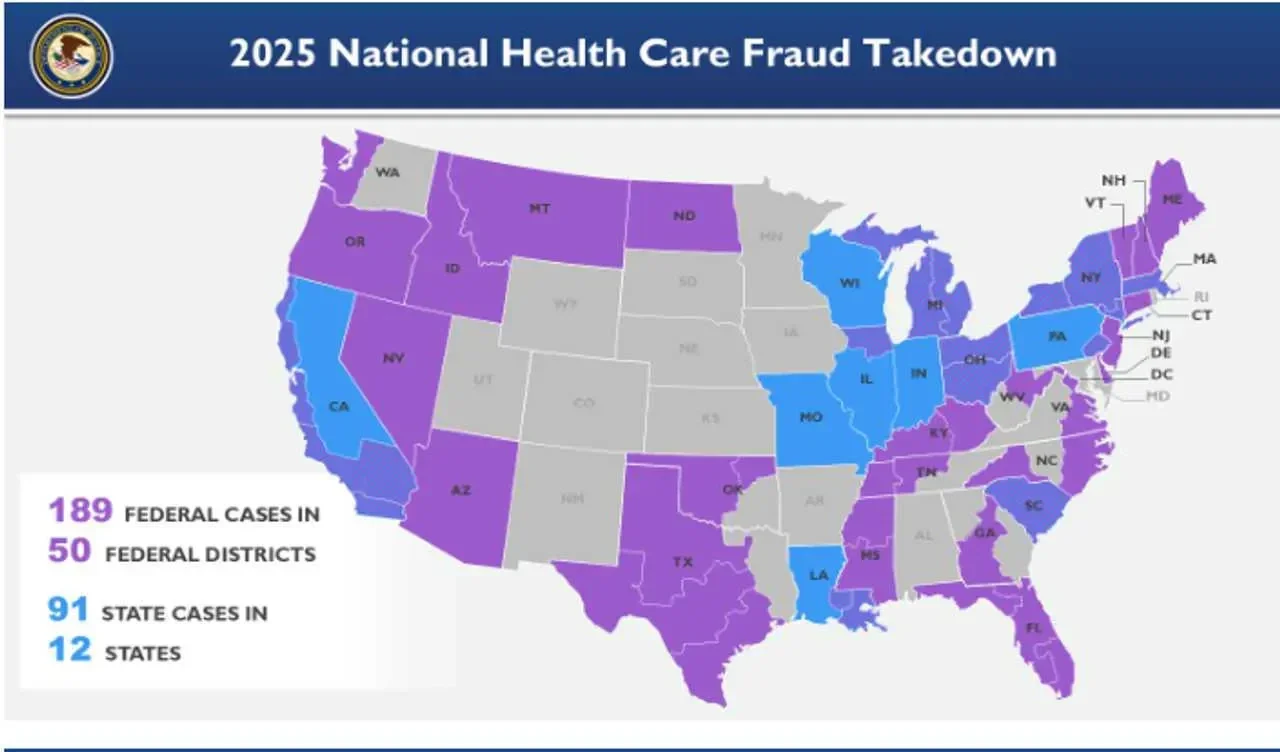
CALIFORNIA FRAUD QUESTIONS INTENSIFY AS FBI REVIEWS MULTI-BILLION DOLLAR FUNDING IRREGULARITIES
Federal Investigators Examine Alleged Misuse of Public Funds
Federal investigators are now rummaging through California’s checkbook after billions in public money apparently went on a magical disappearing act. The mess centers on rushed, sloppy, “just trust us” spending sprees where cash was sprayed out at record speed and oversight showed up late, confused, and empty-handed.
No charges have landed on Governor Gavin Newsom—yet—but the situation has turned into a full-blown accountability scavenger hunt, with auditors, investigators, and taxpayers all asking the same question: who was minding the store while the money walked out the door?
What the $10 Billion Figure Refers To
The dollar amount frequently cited in media and online discussions refers to combined totals from multiple California programs that were flagged by auditors, inspectors general, and federal prosecutors for fraud risk, improper payments, or weak controls. These include pandemic-era relief funds, homelessness initiatives, and food assistance programs. Investigators are focusing on whether safeguards were ignored or bypassed, allowing organized fraud networks to exploit the system.
The “$10 billion” number people repeat is usually not one single, clean line item in California’s budget; it’s a shorthand that gets used in a few different ways depending on who is talking. One of the clearest official figures close to that amount comes from the California State Auditor’s review of the state Employment Development Department (EDD), which reported about $10.4 billion in unemployment benefits that were likely improperly paid during the pandemic and warned the real total could be higher because some suspicious claims were still under review.
In other discussions, the “around $10 billion” talking point is created by bundling multiple audit and law-enforcement concerns across programs—like weak controls or fraud risk in homelessness funding (for example, a federal audit flagged hundreds of millions in homelessness funds as at risk due to oversight gaps) and other safety-net spending where investigators look for organized schemes that exploit identity checks, eligibility rules, and payment systems.
And sometimes the figure is mixed with federal program allegations tied to California recipients—such as the Small Business Administration’s February 6, 2026 announcement that it suspended over 111,000 California borrowers tied to about $8.6 billion in suspected pandemic-era small business loan fraud—though those loans were federal programs, not state-run.
Governor Newsom’s Position and Public Response
Governor Gavin Newsom has not been charged in connection with California fraud cases, and his office has pushed back publicly against claims that he personally profited or directed wrongdoing, often arguing that the fraud was carried out by outside criminals exploiting stressed systems during the pandemic and other large spending efforts.
In recent debates, Newsom has also pointed out that some of the biggest dollar figures being cited involve federal programs (like PPP and EIDL loans) that were run by the federal government, not Sacramento. At the same time, official audits have documented major control failures in state-administered programs—most famously the state auditor’s finding that California’s EDD waited months to strengthen fraud detection during COVID-era unemployment surges, contributing to roughly $10.4 billion in payments tied to identity issues and likely fraud, which fueled public anger and ongoing criticism about oversight.
The political response has been split: Newsom has described some attacks as politically driven while also acknowledging fraud is real and something the state has to keep fighting, and critics argue that leadership and management failures helped create an environment where large-scale fraud could spread and go undetected longer than it should have.
FBI Involvement and Scope of the Review
When the FBI gets involved in a fraud review tied to public programs, it usually means federal authorities are treating the issue as a serious financial crime question, not just a paperwork problem. The FBI and partner agencies can subpoena bank records, pull payment data, review emails and contracts, interview witnesses, and trace where money actually went—steps that help prosecutors decide whether the evidence supports criminal charges or only shows mismanagement.
For example, in Southern California homelessness-related cases, federal prosecutors have publicly described task forces where the FBI works alongside HUD’s Inspector General and IRS Criminal Investigation to investigate alleged theft and fraud involving homeless-services funding, and recent federal cases have targeted nonprofit leaders and operators accused of siphoning public money rather than delivering services. In California’s pandemic-era unemployment fraud cases, federal indictments have often focused on identity-theft rings and intermediaries who filed or facilitated fake claims against the state’s EDD system, which is consistent with the broader pattern that investigators frequently charge the people who executed the schemes—contractors, nonprofit executives, recruiters, and “middlemen”—instead of automatically charging elected officials.
Just as important, an FBI review does not guarantee charges are “imminent”; it can end with no charges, civil recovery actions, or narrower prosecutions, depending on what the evidence shows about whether the fraud was isolated or whether weak controls and repeated warning signs allowed it to become widespread.
Why the Story Is Gaining National Attention
This story is getting national attention because it connects to a wider problem that hit many states and federal agencies during COVID and other emergencies: huge amounts of money were pushed out fast to help people, but the speed and scale made it easier for criminals to cheat the system before strong safeguards were in place. In California, state auditors reported major weaknesses in EDD’s fraud controls during the pandemic and tied them to about $10.4 billion in likely improper unemployment payments, which became a headline example of what can go wrong when identity checks and verification tools lag behind demand.
At the federal level, oversight groups have reported large, nationwide fraud risks in major relief programs—PRAC has said data analytics suggest tens of billions of dollars in potential fraud tied to questionable Social Security numbers, and GAO has warned that organized fraud groups exploited public programs and that total pandemic-relief fraud losses have been estimated in the hundreds of billions.
Because these problems affected both state and federal programs, analysts across the political spectrum keep coming back to the same hard lesson: it is difficult to deliver aid quickly without opening doors to improper payments unless strong “front-end” controls and real-time monitoring are built in from the start.
The Brutal Truth
California hit the gas, threw oversight out the window, and then acted shocked when billions vanished like socks in a dryer. Emergency spending turned into a money confetti cannon, criminals lined up with buckets, and the adults in charge showed up late asking, “Wait… was that important?” The now-famous “$10 billion” isn’t one neat theft…it’s a Franken-number stitched together from pandemic unemployment disasters, homelessness programs with holes big enough to drive a bus through, food aid leaks, and federally run loan programs that California residents helped drain.
Enter the feds: the Federal Bureau of Investigation is combing through records, bank trails, and emails to figure out whether this was a few bad actors gaming the system or a full-blown institutional face-plant.
No charges have landed on Gavin Newsom, who insists outside criminals exploited stressed systems and reminds everyone that some of the mess came from federal programs…not Sacramento. Critics respond with the obvious question: if leadership wasn’t responsible, who exactly left the vault open with a “please take one” sign taped to the door?
That’s why this story went national because it perfectly captures the modern government paradox: move fast, spend faster, skip the controls, and then act stunned when the bill comes due and taxpayers are left holding the receipt.
Address Links (Sources)
https://www.fbi.gov/investigate/white-collar-crime
CALIFORNIA FRAUD QUESTIONS INTENSIFY AS FBI REVIEWS MULTI-BILLION DOLLAR FUNDING IRREGULARITIES
Please Like & Share 😉🪽
@1TheBrutalTruth1 FEB. 2026 Copyright Disclaimer under Section 107 of the Copyright Act of 1976: Allowance is made for “fair use” for purposes such as criticism, comment, news reporting, teaching, scholarship, education, and research.
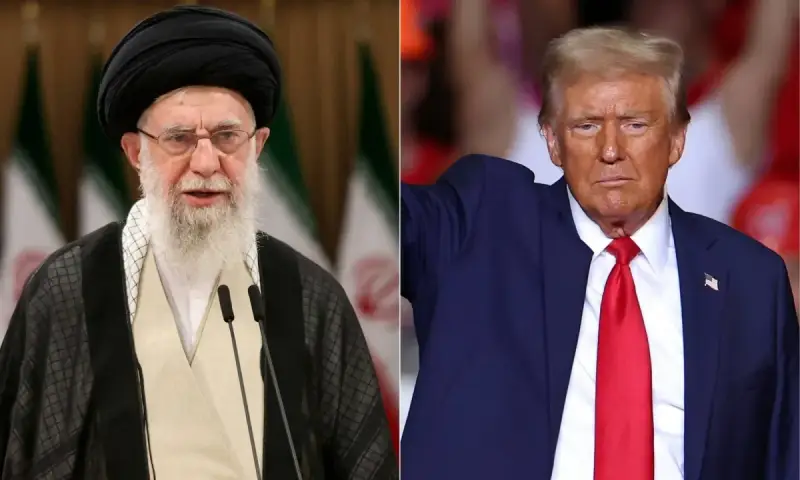
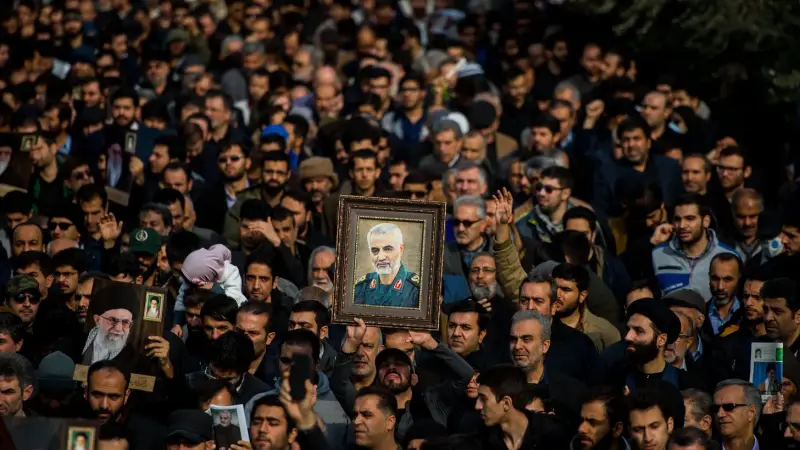
TEHRAN IN FLAMES: Iran’s Unrest and Rising Risk of U.S.–Iran Confrontation
How Iran’s leadership is responding to growing pressure - Trump’s public warnings and U.S. messaging to Iran
Widespread Protests Shake Iran’s Capital and Beyond
Iran has been shaken by nationwide protests that began in late December 2025 and spread rapidly into 2026. What started as demonstrations over economic hardship and rising prices evolved into broad calls for political change and an end to the clerical-led government.
Cities across Iran—including Tehran, Isfahan, Shiraz, Mashhad, and Fardis—have seen large crowds on the streets, often clashing with security forces. Tens of thousands of people have been arrested, and human rights groups report thousands of deaths connected to these crackdowns. Independent estimates suggest the true number of casualties may be even higher than official figures.
Iran’s latest wave of unrest began around December 28, 2025, when protests over the economy, prices, and daily living costs quickly spread into wider demands for political change in many cities, including Tehran, Mashhad, Shiraz, and other major areas. Security forces responded with mass arrests and heavy force, and human rights organizations say the crackdown became especially deadly in early January 2026, with thousands reported killed in a short period and many more detained, while Iranian authorities have given lower official totals and outside verification has been difficult because of severe restrictions on information, including major internet disruptions.
Iranian Leadership Under Stress, Regime Threatened
Iran’s Supreme Leader, Ayatollah Ali Khamenei, has faced the deepest crisis of his rule as public frustration has boiled over into open unrest. The clerical government has responded with powerful crackdowns and arrests of journalists, opposition figures, and reformists. In addition to domestic resistance, there are reports that Khamenei has considered contingency plans to relocate or shelter amid the turmoil.
Iran’s system of government is strongly centered on its Supreme Leader, Ayatollah Ali Khamenei, who holds ultimate authority over the military, judiciary, and political institutions. During the late-December 2025 to early-2026 nationwide protests, Khamenei and other senior leaders took a hardline stance against demonstrators, accusing them of being foreign-influenced “vandals” and “saboteurs” and insisting that the state would not back down from the unrest.
As the demonstrations grew, authorities deployed the Islamic Revolutionary Guard Corps (IRGC) and other security forces to suppress dissent, and analysts report that leaked internal planning documents suggest the leadership coordinated a strategy of internet blackouts, live fire orders, and mass detentions to contain the movement. During these crackdowns, independent observers estimate thousands of deaths and tens of thousands of arrests, while the government labeled opposition figures and protesters as threats to national security.
Rather than showing fractures at the top, international analysis indicates Iran’s leadership has remained unified in its approach, tightening information controls and intensifying repression rather than conceding to protest demands, a response that reflects how seriously the regime views the threat to its authority amidst continuing domestic and external pressures.
U.S. Warnings and Rising Tensions
The United States, led by President Donald Trump, has repeatedly warned Iran that further large-scale violence against unarmed civilians could prompt American action. Trump and U.S. diplomats have said Iran should refrain from killing protesters or executing detainees and have raised the possibility of military consequences if such actions continue. These warnings have underscored deep tensions between Washington and Tehran.
At the same time, U.S. officials have encouraged Iranians to consider their future and evacuate if they feel unsafe. The U.S. State Department recently issued an advisory urging American citizens in Iran to depart the country amid ongoing instability and concerns about potential conflict.
Tensions between the United States and Iran increased as unrest inside Iran intensified, with President Donald Trump issuing public warnings that large-scale violence against protesters or executions of detainees could trigger a strong American response. U.S. officials emphasized that Iran’s leadership should avoid further bloodshed and made clear that continued crackdowns would carry consequences, adding to the long-standing strain between Washington and Tehran. At the same time, U.S. messaging focused on safety, with the State Department urging American citizens in Iran to leave the country due to civil unrest, arbitrary detentions, and the risk of wider conflict. Together, these actions reflected both diplomatic pressure on Iran’s government and concern over growing instability that could escalate beyond Iran’s borders.
Potential for Military Action and Regional Escalation
While there is no official U.S. strike confirmed at the time of writing, several media reports and government warnings describe military action as possible if Iran continues internal repression or provokes regional instability. Some news outlets have cited U.S. officials saying that military planners are preparing options, and the presence of U.S. forces in the region has increased. Tehran has responded by warning that any strike would lead to retaliation, particularly against U.S. military bases in the Middle East.
Diplomatic efforts continue alongside military posturing. The United States and Iran have engaged in indirect negotiations over nuclear and security issues, even as tensions remain high.
Even without a confirmed U.S. strike, the risk of military action has been rising because both sides are signaling they are ready to escalate if talks fail or violence worsens. Recent reporting says the U.S. has been building up its military presence in the region and has threatened to use force to pressure Iran on the nuclear issue, while officials also warn that any conflict could spread across the Middle East.
Iran’s foreign minister has warned that if the United States attacks Iranian territory, Iran would retaliate by targeting U.S. military bases in the region, which is one reason Gulf states and other neighbors fear a wider war. At the same time, diplomacy has continued through Oman, where the U.S. and Iran have held indirect talks focused on nuclear and security issues, even as they remain far apart on key demands like uranium enrichment and whether missiles are part of the agenda.
What Is Not Happening
Despite rumors—both online and in some social media commentary—there is no verified report that Tehran is literally “in flames” nationwide, that the Ayatollah has fled Iran entirely, or that a U.S. attack has already been launched. Reporting indicates that protests continue, that security forces are highly active, and that the regime remains in control of major centers of power, even though pressure on it has increased.
Reliable reporting shows that while protests and clashes have occurred in multiple cities, daily life continues in many areas and the government still controls key institutions, including the military, police, and state media. Iran’s leadership remains in place, even as it faces strong internal pressure and international scrutiny. U.S. officials have issued warnings and evacuation advisories, but they have not confirmed any strikes, and diplomatic channels remain open. In short, the situation is tense and unstable, but claims of total collapse or active war go beyond what has been confirmed by credible sources.
The Brutal Truth
Iran didn’t just wake up cranky—its people finally snapped. What started as protests over money, prices, and the daily grind turned into a nationwide scream of “we’re done,” spilling out of Tehran and into every major city that could still get internet before the government pulled the plug. The regime answered the only way it knows how: riot cops, mass arrests, live fire, blackouts, and calling everyone a foreign-backed traitor. Thousands dead, tens of thousands locked up, and the official numbers somehow always smaller than reality—what a coincidence.
At the top, Ayatollah Khamenei is clinging to the throne like a man riding a bull downhill. The leadership isn’t fractured; it’s panicking together. The IRGC rolled in, journalists vanished, reformists got swept up, and the state slammed the information kill switch. No reform, no compromise—just brute force and tighter control, because when a regime stops pretending, it shows you exactly how scared it is.
Meanwhile, the United States is standing on the sidelines with a megaphone and a warning label. Trump told Tehran to stop killing protesters unless it wants consequences, while the State Department quietly told Americans, “Yeah… you might want to leave.” Translation: this is getting ugly, and nobody trusts where it’s headed. The military chessboard is heating up, war planners are dusting off options, and Iran is promising that if it gets hit, it’s taking U.S. bases with it like party favors.
And yet—despite the internet screaming otherwise—Tehran is not a smoking crater, the Ayatollah hasn’t fled in a disguise, and missiles aren’t flying… yet. The regime still controls the guns, the cameras, and the narrative. Protests are real. Bloodshed is real. Tension is real. But total collapse and open war remain rumors for now.
Iran is a pressure cooker with the lid rattling, the regime is tightening the vise like it’s afraid the screws might escape, Washington is hovering over the big red button pretending it’s “just observing,” and the entire Middle East is standing around like, “Okay… who’s gonna blink first?”
Key Sources and Links
https://www.washingtonpost.com/national-security/2026/02/06/us-iran-nuclear-talks-oman/
https://en.wikipedia.org/wiki/2026_Fardis_massacre
https://en.wikipedia.org/wiki/Iranian_opposition
https://en.wikipedia.org/wiki/Death_sentence_of_Erfan_Soltani
https://en.wikipedia.org/wiki/This_is_the_final_battle%2C_Pahlavi_will_return
TEHRAN IN FLAMES: Iran’s Unrest and Rising Risk of U.S.–Iran Confrontation
Please Like & Share 😉🪽
@1TheBrutalTruth1 FEB. 2026 Copyright Disclaimer under Section 107 of the Copyright Act of 1976: Allowance is made for “fair use” for purposes such as criticism, comment, news reporting, teaching, scholarship, education, and research.
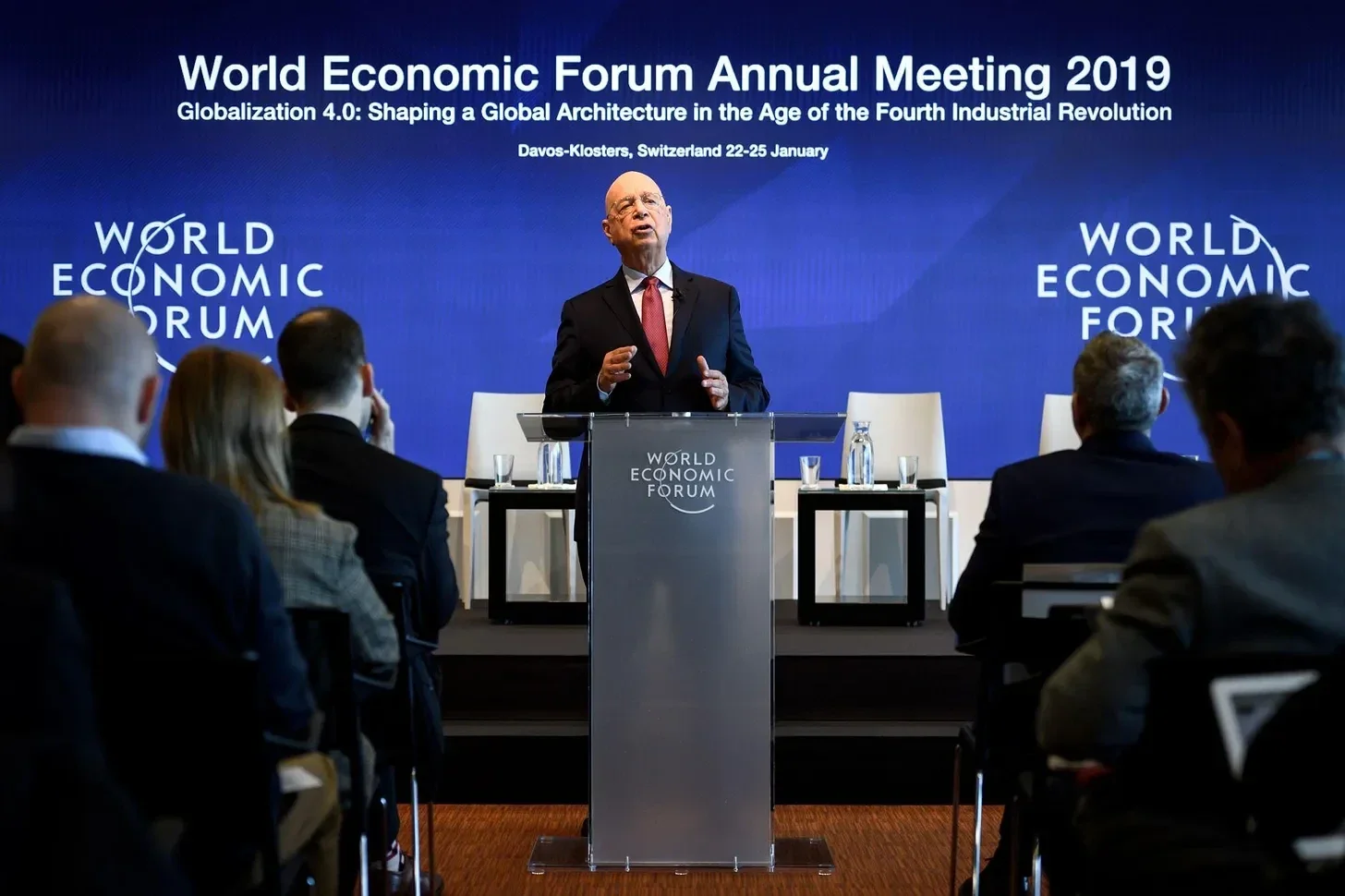
Epstein, Pandemic Power, and the Question of Prepared Systems
Why the Covid Response Looked Ready Before the Crisis
When Covid-19 erupted in early 2020, many people were struck by how fast a full pandemic response appeared. Vaccine programs, emergency funding, digital tracking tools, and global coordination mechanisms moved almost immediately.
This led to questions about whether these systems were built during the crisis or had been prepared well in advance. Some online discussions go further, claiming financier Jeffrey Epstein played a behind-the-scenes role in shaping the networks that later responded to Covid.
This article lays out what is known, what is claimed, and what remains unproven, using a conservative and middle-of-the-road lens so readers can understand why these theories exist and where the evidence stops.
Epstein’s Influence Networks Before 2020
Jeffrey Epstein was not a public health official, but he was deeply embedded in elite financial, academic, and political circles for decades. He funded scientists, cultivated relationships with tech leaders, and maintained ties to institutions involved in global policy discussions. Public records and reporting show Epstein positioned himself as a broker, connecting money, research, and influence.
Some researchers point out that many pandemic-era decision-makers and institutions already existed inside these elite networks long before Covid. This overlap is often cited as circumstantial evidence by those who believe Epstein helped shape the environment that later enabled rapid global coordination.
What is missing, however, is direct proof that Epstein designed, directed, or managed pandemic response plans. No documents, emails, or testimony have established that Epstein had operational involvement in Covid policy or preparedness programs.
Event 201 and the Appearance of a Ready-Made Response
In October 2019, just weeks before the Covid outbreak, a pandemic simulation called Event 201 took place. It was hosted by Johns Hopkins, the World Economic Forum, and the Gates Foundation. The exercise modeled a global coronavirus pandemic and discussed responses involving governments, corporations, media, and international institutions.
For many observers, Event 201 became a flashpoint. The similarity between the exercise and real-world events led some to believe the pandemic response had been rehearsed. Supporters of this view argue that such preparedness explains how systems like emergency vaccine funding, global messaging, and cross-border coordination moved so quickly.
Mainstream explanations say the exercise was part of long-standing preparedness efforts and that governments had similar plans for years. Still, the timing continues to fuel skepticism, especially among those already distrustful of elite institutions.
Claims Linking Epstein to Pandemic Infrastructure
Claims tying Epstein to Covid typically focus on indirect influence rather than direct action. These include his funding of scientists, proximity to technology leaders, and connections to global organizations involved in health and governance. Critics argue that Epstein’s role as a financial facilitator may have helped normalize centralized, top-down solutions that later appeared during the pandemic.
No verified evidence shows Epstein participated in Event 201, designed vaccine programs, or directed surveillance systems. Investigations into Epstein’s crimes have not uncovered links to pandemic planning. As of now, the theory rests on network overlap and timing, not documented control or authorship.
Why the Theory Persists
The theory persists because trust in institutions has eroded. Lockdowns, mandates, censorship disputes, and emergency powers left many people feeling decisions were imposed rather than debated. When combined with Epstein’s exposure as a powerful criminal protected by elites, suspicion naturally spread to other areas of global governance.
From a conservative perspective, this raises concerns about centralized authority and accountability. From a middle-of-the-road view, it highlights the need for transparency and clearer lines between preparedness and power consolidation.
What Can Be Concluded
There is no confirmed evidence that Jeffrey Epstein played a key operational role in creating or executing the Covid pandemic response. There is evidence that pandemic preparedness plans existed before 2020 and that elite networks, some overlapping with Epstein’s social and financial circles, were already positioned to act quickly.
Understanding this distinction matters. Preparedness does not equal orchestration, but lack of transparency can make preparedness look like premeditation. The unanswered questions are less about Epstein himself and more about how much power sits in unelected global systems when crises occur.
Closing Perspective
The Epstein-Covid theory reflects a deeper public concern about who really governs during emergencies. Whether or not Epstein had any role, the pandemic exposed how fast global authority can consolidate when fear and urgency dominate. For many Americans, the lesson is not about one man, but about demanding accountability before the next crisis arrives.
Sources and address links
Event 201 official summary
https://www.centerforhealthsecurity.org/our-work/exercises/event201/
World Economic Forum explanation of Event 201
https://www.weforum.org/stories/2020/03/what-is-event-201/
Johns Hopkins Center for Health Security on pandemic preparedness
https://www.centerforhealthsecurity.org/our-work/publications/
Department of Justice Epstein case overview
https://www.justice.gov/usao-sdny/jeffrey-epstein-case
Reuters background on Jeffrey Epstein and elite connections
https://www.reuters.com/world/us/who-was-jeffrey-epstein-2021-12-30/
Gates Foundation statement on Event 201
https://www.gatesfoundation.org/about/committed-grants/2019/10/inv-008812
Video -
Epstein, Pandemic Power, and the Question of Prepared Systems
Please Like & Share 😉🪽
@1TheBrutalTruth1 FEB. 2026 Copyright Disclaimer under Section 107 of the Copyright Act of 1976: Allowance is made for “fair use” for purposes such as criticism, comment, news reporting, teaching, scholarship, education, and research.


U.S. MILITARY FOOD SUPPLY UNDER SCRUTINY
Veterinary Drugs in Meat and Dairy Products • Herbicide Residues in Everyday Rations
Questions are being raised about the safety of food supplied to U.S. service members after reports and studies highlighted the possible presence of toxic herbicides, veterinary drug residues, and heavy metals in parts of the military food system. The issue centers on where military food comes from, how it is tested, and whether existing safety standards are sufficient for long-term consumption by troops.
The Department of Defense relies on a massive global supply chain to feed active-duty forces, reserves, and deployed units. This includes fresh foods from commercial suppliers and shelf-stable rations such as Meals Ready-to-Eat, commonly known as MREs. Critics argue that because much of this food is sourced from the same industrial systems used in civilian markets, it may carry the same contamination risks.
Herbicides have become a focal point because crops used in military food products may be treated with chemical weed killers approved for large-scale agriculture. While these chemicals are regulated, some studies have raised concerns about cumulative exposure over time, especially when food is consumed daily in controlled environments such as military bases or deployments.
Veterinary drug residues are another concern. Meat and dairy products can contain trace amounts of antibiotics or other medications used in livestock. Federal regulators allow these residues within set limits, but watchdog groups argue that constant exposure could contribute to health issues or antibiotic resistance.
Heavy metals, including lead, cadmium, and arsenic, have also been detected in some food testing programs across the broader U.S. food supply. These metals can enter food through soil, water, or processing equipment. While usually present at low levels, critics say long-term intake is a legitimate concern for service members who rely heavily on standardized rations.
Military food safety is overseen through a combination of Department of Defense inspections, contracts with approved suppliers, and testing aligned with federal food safety standards. Officials say food provided to troops must meet or exceed civilian safety requirements and is routinely inspected for contamination.
Supporters of the current system argue that no evidence has emerged showing widespread or acute poisoning of troops from military food. They point out that trace contamination is a known issue across modern food systems and that regulatory thresholds are designed to protect health.
Critics counter that existing standards are built around civilian diets with variety, not the repetitive consumption patterns common in military settings. They argue that troops in training or deployment may eat the same products daily for weeks or months, increasing cumulative exposure risks.
Some veterans have also questioned whether long-term health problems experienced after service could be linked in part to diet and environmental exposure, including food, water, and living conditions on bases. While direct causal links remain debated, calls for more transparent testing and reporting have grown.
Lawmakers and advocacy groups are pushing for expanded testing, clearer labeling, and independent reviews of the military food supply. Proposals include lowering allowable contamination thresholds for military rations, increasing sourcing transparency, and publishing more test data for public review.
For now, the issue remains under discussion rather than formal investigation, but it reflects a broader debate about whether current food safety standards are adequate for the unique demands placed on service members.
Address links (sources)
https://www.dla.mil/TroopSupport/Subsistence/
https://www.efsa.europa.eu/en/topics/topic/pesticides
https://www.cdc.gov/niosh/topics/chemical-safety
https://www.ncbi.nlm.nih.gov/pmc/articles/PMC6760509/
U.S. MILITARY FOOD SUPPLY UNDER SCRUTINY - Denise Gradin
Please Like & Share 😉🪽
@1TheBrutalTruth1 FEB. 2026 Copyright Disclaimer under Section 107 of the Copyright Act of 1976: Allowance is made for “fair use” for purposes such as criticism, comment, news reporting, teaching, scholarship, education, and research.


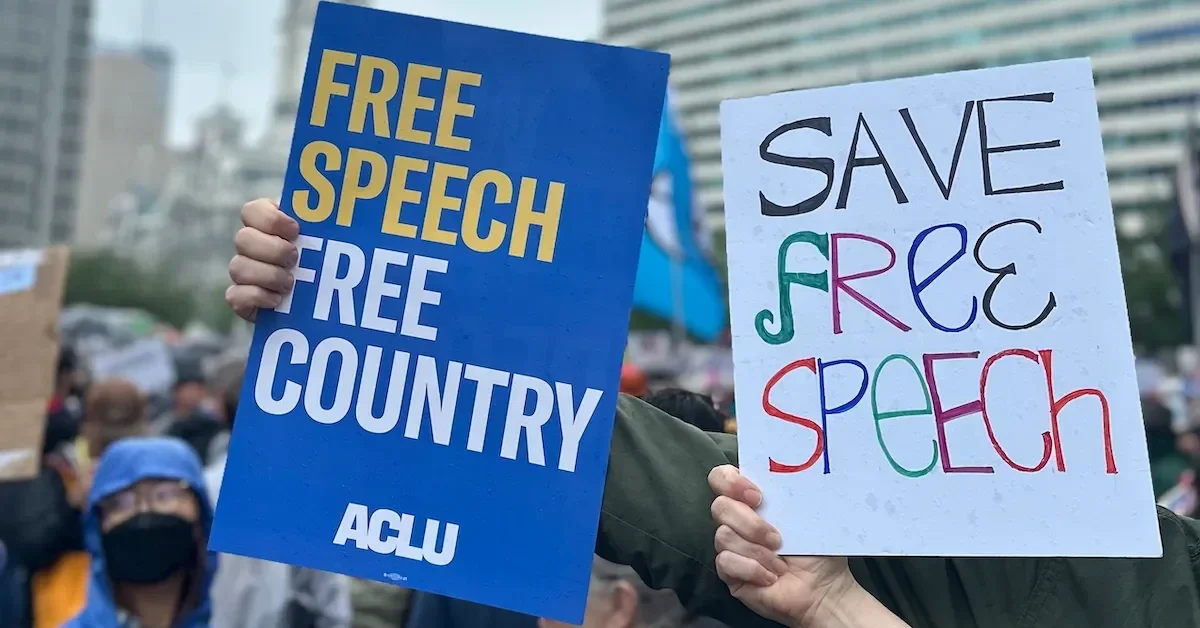
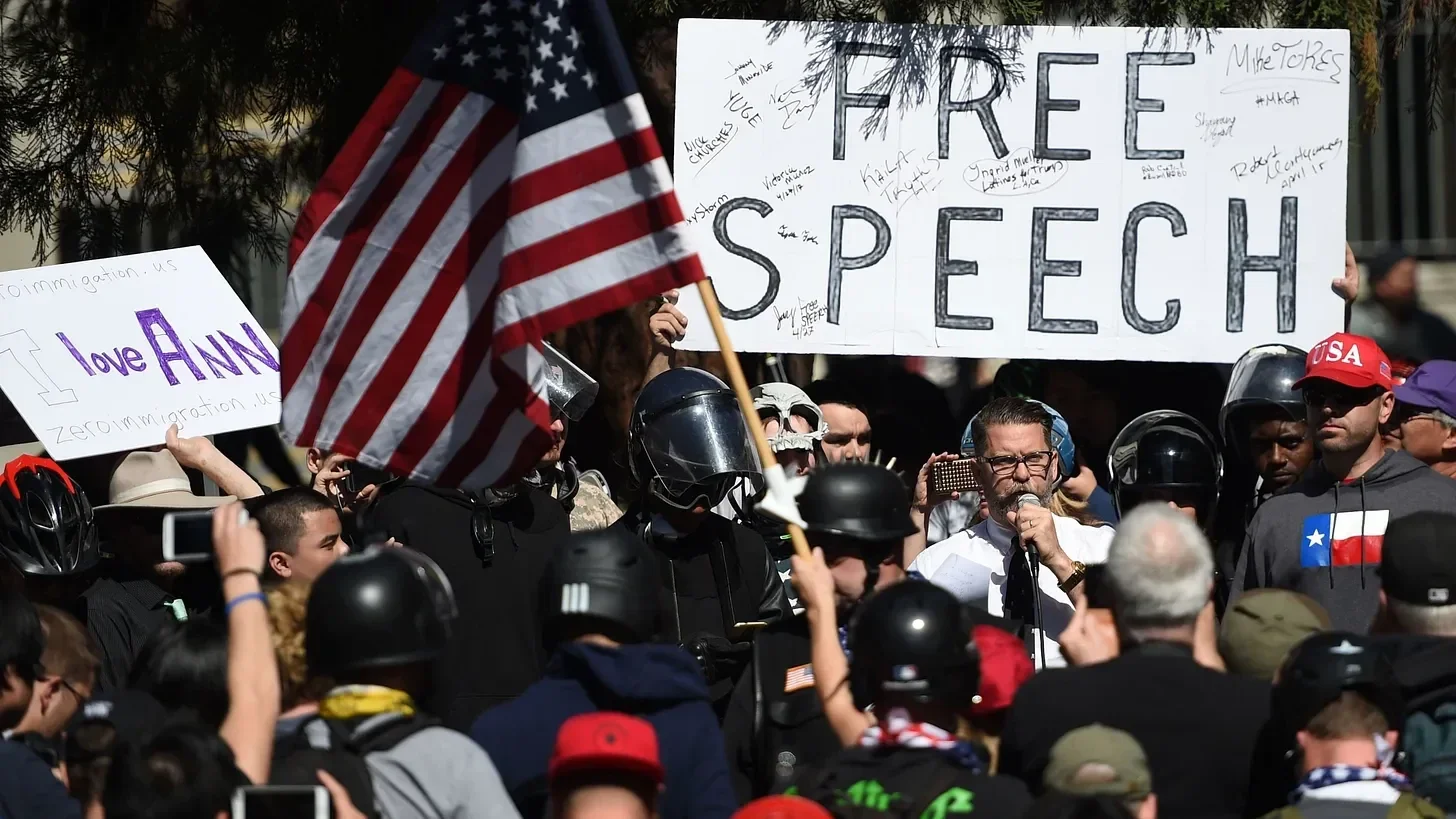
WYOMING INTRODUCES LANDMARK BILL TARGETING FOREIGN CENSORSHIP
Why Existing Federal Law Falls Short - Why This Bill Has Washington Watching Closely
Last weekend, with little public attention, a bill was introduced in the Wyoming state legislature that supporters say could reshape how free speech is defended in the United States and beyond.
The proposal, known as the Guaranteeing Rights Against Novel International Tyranny and Extortion Act, or the GRANITE Act, aims to confront foreign governments that attempt to censor Americans for speech protected under the U.S. Constitution.
If passed, House Bill 0070 would be the first state law in the country designed to create a private legal right of action against foreign censorship. Supporters argue the bill is a direct response to growing pressure from foreign governments that attempt to impose their speech laws on Americans through threats, fines, or digital enforcement.
The GRANITE Act allows Wyoming residents, Wyoming-based businesses, and U.S. citizens who maintain servers in Wyoming to sue foreign governments that attempt to censor, punish, or coerce them over protected speech. This includes efforts to force content removal, issue penalties, or apply legal pressure for expression that would otherwise be lawful under U.S. constitutional standards.
Backers of the bill say the measure recognizes a growing reality of the digital age: speech published online often crosses borders instantly, while foreign governments increasingly assert authority beyond their own jurisdictions. The Act seeks to push back by giving Americans a legal tool to respond directly rather than relying solely on federal diplomatic channels.
Representative Daniel Singh, who introduced the legislation, framed the issue as a clear challenge to American sovereignty and individual rights. He stated that foreign governments have increasingly acted as if they can threaten American citizens and companies for constitutionally protected speech, and that Wyoming is “drawing a line in the sand.”
Supporters argue that federal law has not kept pace with this trend, leaving individuals and businesses vulnerable when foreign regulators attempt to enforce speech codes through fines, platform pressure, or indirect legal threats. They see the GRANITE Act as a way to restore balance by making such actions legally costly.
While the bill applies at the state level, advocates believe its implications could extend far beyond Wyoming. By allowing lawsuits against foreign censorship efforts, the Act could discourage international attempts to regulate American speech through intimidation or extraterritorial enforcement.
Some supporters also suggest the law could offer indirect relief to citizens in Europe and other regions where speech restrictions are more expansive. They argue that if American courts begin pushing back against foreign censorship claims, it could weaken the global reach of restrictive speech regimes.
Critics caution that the bill could provoke diplomatic disputes or legal challenges over jurisdiction and enforcement. Questions remain about how judgments against foreign governments would be collected or enforced, and whether federal courts might ultimately be asked to weigh in.
Even so, legal analysts note that the proposal reflects growing frustration with foreign influence over American speech, particularly in digital spaces. Whether the bill advances or stalls, it signals that debates over free expression are increasingly moving from abstract principles into concrete legislative action.
Address links (sources)
https://wyoleg.gov/Legislation/2026/HB0070
https://www.cato.org/free-speech
https://www.eff.org/issues/free-speech
https://www.wsj.com/articles/free-speech-censorship-foreign-governments
https://reason.com/tag/free-speech/
Bill tracking in Wyoming - HB 70 (2026 legislative session) - FastDemocracy;
https://fastdemocracy.com/bill-search/wy/2026/bills/WYB00005853/
WYOMING INTRODUCES LANDMARK BILL TARGETING FOREIGN CENSORSHIP
Please Like & Share 😉🪽
@1TheBrutalTruth1 FEB. 2026 Copyright Disclaimer under Section 107 of the Copyright Act of 1976: Allowance is made for “fair use” for purposes such as criticism, comment, news reporting, teaching, scholarship, education, and research.

CANADA AND FRANCE OPEN CONSULATES IN GREENLAND
A Diplomatic Response to Heightened U.S. Interest in the Arctic Territory
Canada and France officially established new consulates on Friday in Nuuk, the capital of Greenland, underscoring deepening ties with the Arctic island and signaling political support for Denmark’s sovereignty amid renewed U.S. interest in acquiring or securing influence over the strategically important territory.
Canadian Foreign Affairs Minister Anita Anand raised the Canadian flag at the newly opened Canadian consulate, joined by Canada’s Governor General Mary Simon. The move follows Canada’s earlier plan to open a consulate that had been delayed by weather, but took on added geopolitical meaning as U.S. pressure on Greenland intensified.
France also inaugurated its consulate in Nuuk, marking the first European Union consulate general on the island. French officials say the mission will focus on scientific, cultural, economic, and political cooperation with Greenland, even though a physical office space is still being prepared.
Greenland sits at the intersection of North America and Europe and has become a focal point in Arctic geopolitics. Its location is considered key for military strategy, shipping routes, and natural resources as melting ice opens new access. While the United States has long had strategic interests in Greenland, recent rhetoric from President Donald Trump — including tariff threats and a push for greater U.S. control — has alarmed European allies and local leaders.
Denmark and Greenland insist that sovereignty and territorial integrity are non-negotiable, maintaining that decisions about Greenland’s future must come from the Greenlandic people. In response to rising tensions earlier in the year, NATO allies also boosted military presence and planning in the region.
Canada’s opening of a diplomatic mission reaffirms its commitment to Arctic cooperation, defense ties, climate collaboration, and respect for Greenlandic autonomy — themes stressed by Minister Anand and Canadian officials. The consulate advancement aligns with Canada’s broader Arctic strategy, including enhanced engagement in defense and indigenous relations.
France’s presence as the first EU consulate in Nuuk likewise highlights European interest in the region and solidarity with Denmark and Greenland on issues including research, economic ties, and climate initiatives. Both countries have framed their diplomatic expansion as support for a rules-based international order and respect for local governance.
Although the immediate flashpoint of a U.S. attempt to acquire Greenland has eased with Washington’s stated focus shifting to cooperation frameworks, underlying strategic competition remains. Officials from Denmark, Greenland, Canada, and France have emphasized diplomacy and shared interests, even as the U.S. pursues Arctic security talks that include a working group with Danish and Greenlandic partners.
The opening of the Canadian and French consulates is likely to influence future Arctic cooperation structures and reinforce alliances at a time when climate change, military strategy, and resource access converge in the North.
Address links (sources)
https://www.foxnews.com/world/canada-france-opening-new-consulates-greenlands-capital-trump-pressure
https://en.wikipedia.org/wiki/List_of_diplomatic_missions_in_Greenland
https://en.wikipedia.org/wiki/2026_in_Greenland
https://en.wikipedia.org/wiki/Operation_Arctic_Endurance
Please Like & Share 😉🪽
@1TheBrutalTruth1 FEB. 2026 Copyright Disclaimer under Section 107 of the Copyright Act of 1976: Allowance is made for “fair use” for purposes such as criticism, comment, news reporting, teaching, scholarship, education, and research.

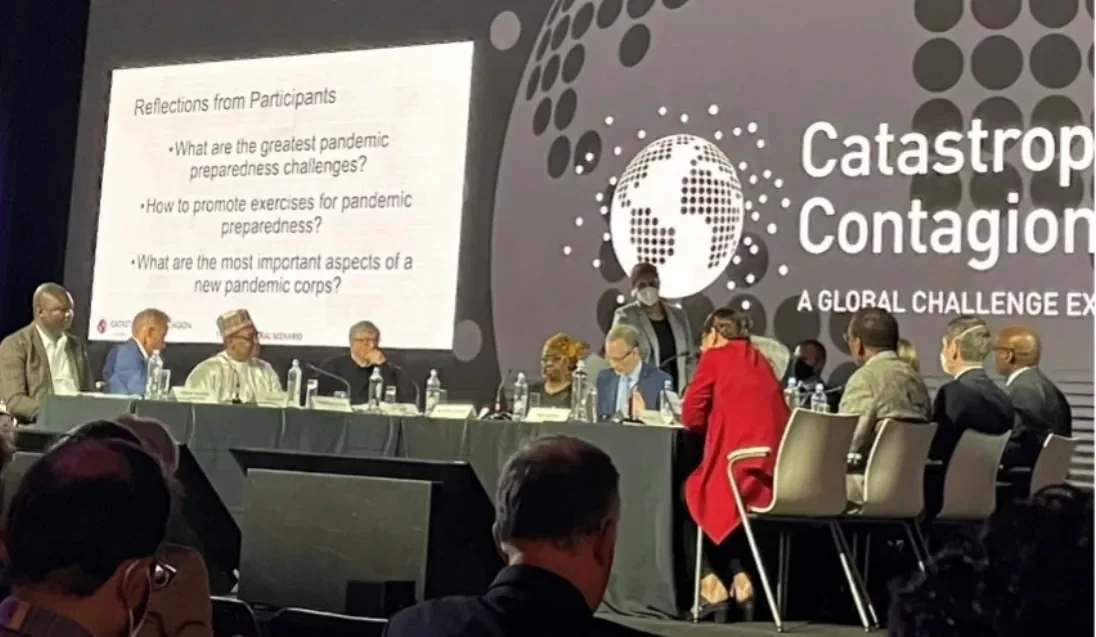

WHO PANDEMIC SIMULATION SPARKS NEW CONCERNS
Why a Global Health Drill is Colliding with Fears over “Cobweb Snow,” Toxic Recalls, and Public Trust
The World Health Organization recently confirmed it conducted a large-scale pandemic simulation designed to test how governments and health agencies would respond to a fast-moving global outbreak.
WHO officials described the exercise as routine preparedness work, similar to drills run by militaries or emergency agencies, and said the goal was to identify gaps in coordination, communication, and supply chains before a real crisis occurs.
The timing of the simulation, however, has fueled public suspicion. Coming amid heightened anxiety over environmental contamination, food and product recalls, and lingering distrust from the COVID-19 era, the drill quickly became linked online to claims about unusual snowfall, airborne toxins, and coordinated warning signals. Health officials stress these connections are speculative, but the overlap in timing has intensified scrutiny.
According to WHO briefings, the exercise focused on a hypothetical respiratory pathogen spreading rapidly across borders. Participants included international health agencies, national governments, and emergency planners. Scenarios tested data sharing, travel advisories, vaccine manufacturing timelines, and public messaging under pressure.
WHO representatives emphasized that no real-world outbreak triggered the drill and that such simulations have been conducted for decades, including after SARS, Ebola, and influenza outbreaks. They argue preparedness exercises are necessary precisely because past responses were slow or fragmented.
At the same time, social media has amplified claims about strange snow formations sometimes described as “cobweb snow,” along with allegations that snowfall contains plastics, metals, or chemical residues. Scientists acknowledge that snow can trap airborne particles, including microplastics and industrial pollution, which have been documented in peer-reviewed studies. However, they caution that unusual appearance alone is not evidence of deliberate release or a biological threat.
Environmental researchers note that snow acts like a filter for whatever is already in the atmosphere, including dust, soot, and fibers from urban and industrial sources. While contamination is a real environmental issue, officials say linking it directly to pandemic simulations or health agencies requires evidence that has not been presented.
Recent waves of food, drug, and consumer product recalls have added to public unease. Federal agencies in the United States and abroad have issued warnings over contamination risks ranging from bacteria in food to chemical exposure in consumer goods. Regulators say recalls are increasing partly because testing and reporting have improved, not necessarily because products are becoming more dangerous.
Still, critics argue that the combination of pandemic drills, environmental contamination reports, and frequent recalls creates the perception of a system constantly bracing for disaster. For many, the concern is less about any single event and more about whether institutions are being fully transparent.
Supporters of the WHO say preparedness exercises are responsible governance and should not be controversial. They argue that failing to plan would be far more dangerous. Skeptics counter that past missteps during COVID damaged public confidence, making even routine drills look suspicious.
The current debate highlights a deeper divide: whether global institutions are acting defensively to protect public health, or whether repeated emergencies and warnings signal systemic failures that are not being openly addressed. Until trust is rebuilt, simulations and safety alerts are likely to continue triggering alarm well beyond their stated purpose.
Address links (sources)
https://www.who.int/emergencies/preparedness
https://www.cdc.gov/foodsafety/recalls
https://www.fda.gov/safety/recalls-market-withdrawals-safety-alerts
https://www.sciencedaily.com/news/earth_climate/snow/
https://www.bbc.com/news/health
Please Like & Share 😉🪽
@1TheBrutalTruth1 FEB. 2026 Copyright Disclaimer under Section 107 of the Copyright Act of 1976: Allowance is made for “fair use” for purposes such as criticism, comment, news reporting, teaching, scholarship, education, and research.
MASS ARRESTS DURING MINNEAPOLIS PROTEST
What Authorities say Happened, why Police moved in, and What it Signals going Forward
Law enforcement officials in Minneapolis confirmed that large numbers of arrests were made during a protest that escalated into clashes with police, as officers moved to clear streets, secure government buildings, and enforce curfews and dispersal orders. Authorities stated that the arrests were not based on speech or political views, but on alleged violations including unlawful assembly, obstruction, curfew violations, and failure to disperse after repeated warnings were issued.
According to police statements and early reporting, the protest began with several hundred participants but grew more volatile as night fell. Officers reported the use of crowd-control tactics after fireworks, projectiles, and barricades appeared in restricted areas. Police leadership said dispersal orders were broadcast multiple times before arrests began, emphasizing that enforcement actions were tied to behavior, not protest participation itself.
Officials indicated that dozens to hundreds of individuals were detained over several hours, with arrestees transported to Hennepin County Jail and other temporary processing locations. Law enforcement sources said booking delays were expected due to the volume of arrests, while county officials confirmed standard intake procedures were followed. As of the latest updates, most charges were described as misdemeanor-level offenses, though authorities noted that more serious charges could follow if evidence supports them.
City leaders acknowledged the scale of the arrests while defending the response as necessary to restore order and protect public safety. They cited prior incidents in Minneapolis where protests escalated into property damage and violence as a reason for a rapid, firm response. Critics, meanwhile, argue that mass arrests risk inflaming tensions and could discourage lawful protest.
Minnesota officials said the response involved coordinated efforts between Minneapolis police, state agencies, and, where applicable, federal partners monitoring the situation. While no federal takeover was announced, authorities confirmed that intelligence sharing and crowd monitoring were in place due to concerns about outside agitators and repeat unrest patterns seen in previous years.
Law enforcement leaders stressed that Minneapolis remains under heightened alert status during large demonstrations, especially when protests intersect with federal enforcement actions, court rulings, or national political events. Officials warned that additional protests could lead to further arrests if dispersal orders are ignored.
Most individuals arrested are expected to receive court dates within weeks, with prosecutors reviewing cases individually. Legal observers note that mass-arrest situations often result in a mix of dismissals, plea agreements, and limited prosecutions depending on evidence such as body camera footage and compliance with dispersal warnings.
Civil liberties groups have already signaled they are monitoring the arrests closely, focusing on whether police followed constitutional requirements related to notice, time to disperse, and proportional use of force. City officials said all actions will be reviewed under existing oversight processes.
Minneapolis remains a symbolic flashpoint in national protest politics, and large-scale arrests there often ripple into broader debates about policing, protest rights, and public order. Supporters of the crackdown argue it sends a clear signal that riots and street takeovers will not be tolerated. Critics counter that aggressive enforcement risks repeating past mistakes and escalating conflict rather than calming it.
With more demonstrations expected, officials say the city is preparing for continued unrest while urging residents to protest lawfully and avoid confrontations with police.
Address links (sources)
https://www.fox9.com/minneapolis
https://www.cbsnews.com/minnesota
https://www.nbcnews.com/us-news
https://www.hennepinsheriff.org
Please Like & Share 😉🪽
@1TheBrutalTruth1 FEB. 2026 Copyright Disclaimer under Section 107 of the Copyright Act of 1976: Allowance is made for “fair use” for purposes such as criticism, comment, news reporting, teaching, scholarship, education, and research.
Trump SBA freezes 111,620 California borrowers in $8.6 billion pandemic-loan fraud sweep
What the agency says happened, what the freeze changes, and what comes next
The U.S. Small Business Administration says it has suspended 111,620 California borrowers after flagging suspected fraud tied to pandemic-era loan programs, totaling more than $8.6 billion across 118,489 loans. The announcement was issued as an SBA news release dated February 6, 2026, and was delivered publicly by SBA Administrator Kelly Loeffler following a visit to San Diego.
According to the SBA, the borrowers in question are connected to suspected fraudulent activity involving two major COVID-era programs: the Paycheck Protection Program and the SBA’s Economic Injury Disaster Loan program. The SBA’s release frames the action as part of a wider push to identify and stop fraud tied to emergency programs that moved money quickly during the pandemic.
The word suspended matters here: the SBA says suspended borrowers are blocked from taking out new SBA small business loans and disaster loans, and they are also not eligible for certain SBA programs tied to federal contracting, including the 8(a) Business Development Program. In other words, the move is presented as a program-access freeze, not a criminal conviction, while cases are reviewed and referred.
The SBA also links the California move to a similar earlier action in Minnesota, where it says it suspended 6,900 borrowers associated with about $400 million in potentially fraudulent PPP and EIDL loans. The agency is describing this as a state-by-state enforcement approach, using one state’s findings to justify expanding checks elsewhere.
On the political side, the dispute is not just about fraud numbers, but about blame and control. Coverage of the announcement notes pushback from California officials, including arguments that key pandemic programs like PPP were federally run and that the state has also pursued fraud enforcement and recoveries of its own. That clash is likely to keep growing because it mixes law enforcement, federal-state tensions, and narratives about who “allowed” fraud to spread.
The SBA says it is coordinating with federal law enforcement and the SBA Office of Inspector General to pursue recoveries, civil penalties, and criminal cases where appropriate. It also says it has brought in Palantir to support a broader fraud-prevention and detection effort as the review expands beyond one state.
If the SBA follows the pattern described in its own statements, the next steps are likely to be more suspensions in other states, more referrals to investigators, and more public updates about recoveries and prosecutions. For ordinary small business owners, the practical takeaway is that the government is signaling tougher screening and tougher consequences tied to pandemic-era loan files, even years after the money went out.
Address links (sources)
https://www.sba.gov/about-sba/sba-newsroom
https://fedscoop.com/small-business-administration-palantir-contract-minnesota-fraud/
https://www.usaspending.gov/award/CONT_AWD_47QACA26F0050_4732_47QTCA24D004L_4732
Please Like & Share 😉🪽
@1TheBrutalTruth1 FEB. 2026 Copyright Disclaimer under Section 107 of the Copyright Act of 1976: Allowance is made for “fair use” for purposes such as criticism, comment, news reporting, teaching, scholarship, education, and research.
Benghazi Suspect Brought to Virginia as DOJ Reopens One of America’s Most Painful Terror Cases
Fox News Films Arrival of Zubayr Al-Bakoush as Federal Prosecutors Prepare Murder, Terror, and Arson Case
Fox News reported it was present as Zubayr Al-Bakoush, described by officials as a key participant and alleged leader tied to the 2012 Benghazi attack, arrived in Virginia under U.S. custody. The Benghazi assault on U.S. facilities in Libya killed four Americans, including Ambassador J. Christopher Stevens, and has remained a defining national security and political flashpoint for more than a decade.
The U.S. Consulate in Benghazi is seen in flames on September 11, 2012. REUTERS/Esam Al-Fetori
Attorney General Pam Bondi announced the arrest and transfer in a public statement alongside FBI Director Kash Patel and U.S. Attorney for the District of Columbia Jeanine Pirro, saying the government has continued pursuing suspects connected to the attack. Officials have described Al-Bakoush as being brought into U.S. custody through a foreign transfer arrangement, while limiting operational details to avoid affecting ongoing investigations.
Reuters reported that Al-Bakoush faces an eight-count indictment that includes charges such as murder, attempted murder, arson, and conspiracy to support terrorists. In plain terms, prosecutors are alleging he helped plan, participate in, and carry out actions that led directly to deaths, injuries, and the burning and damaging of U.S. facilities during the attack.
ABC News reporting on the announcement said prosecutors described the charges as covering the deaths of Ambassador Stevens and State Department employee Sean Smith, as well as attempted murder charges tied to a State Department special agent, plus conspiracy and arson counts related to the assault on the U.S. compound. Those details matter because they frame this case as more than “being present” during a riot; the charges are built to argue direct criminal responsibility for deaths and destruction.
This arrest will likely be seen as long-delayed accountability, especially by Americans who felt Benghazi was never fully answered and that the government moved too slowly to bring suspects to justice. From a middle-of-the-road perspective, the arrest is a reminder that terrorism investigations can take years, depend on international custody cooperation, and still end up in U.S. courts when a suspect becomes reachable, regardless of political cycles.
This new case also lands in a larger Benghazi legal timeline. Reuters noted earlier prosecutions connected to the attack, including other suspects already convicted and imprisoned, and that U.S. authorities have continued tracking those they say were involved. That context helps explain why this moment is being treated as a major development: it signals investigators believe this suspect belongs in the top tier of responsibility, not the edges of the story.
What comes next is the court process. Reporting indicates Al-Bakoush has arrived in the United States and will appear in federal court, where he will be advised of charges and rights, and where prosecutors and defense attorneys will begin fighting over evidence, witnesses, and what can be proven beyond a reasonable doubt. In high-profile terrorism cases, early hearings often focus on detention, protective orders, and how sensitive evidence will be handled.
Source links:
https://www.foxnews.com/video/6388889360112
https://www.foxnews.com/us/benghazi-terror-suspect-extradicted-face-us-charges
https://www.reuters.com/world/us-arrests-benghazi-suspect-bondi-says-2026-02-06/
https://www.theguardian.com/us-news/2026/feb/06/benghazi-attack-arrest-pam-bondi
https://abcnews.go.com/International/suspect-2012-benghazi-attack-arrested-doj/story?id=129918999
https://abc7.com/post/suspect-2012-benghazi-attack-arrested-doj-says/18553512/
Source link: https://www.foxnews.com/video/6388889360112
Fox News written coverage (developing story format):
Source link: https://www.foxnews.com/us/benghazi-terror-suspect-extradicted-face-us-charges
Please Like & Share 😉🪽
@1TheBrutalTruth1 FEB. 2026 Copyright Disclaimer under Section 107 of the Copyright Act of 1976: Allowance is made for “fair use” for purposes such as criticism, comment, news reporting, teaching, scholarship, education, and research.
Department of Justice Releases Epstein Files — With a Broken, Unreliable Search Tool
Reports From Multiple Outlets Show the DOJ’s Public “Epstein Library” Search Functions Are Producing Incomplete, Inconsistent, or Zero Results
In December 2025 and January 2026, the U.S. Department of Justice released millions of pages of documents related to convicted sex offender Jeffrey Epstein under the Epstein Files Transparency Act, a federal law requiring those records be made public.
However, numerous major news outlets and official sources have reported that the DOJ’s public archive — including its built-in search engine — has significant technical problems.
A prominent report from The New Republic noted that the initial release of the Epstein files included a search tool that many users found ineffective. The site itself even carried a disclaimer stating that “due to technical limitations” portions of the material “may not be electronically searchable or may produce unreliable search results.” At times, simple name searches return no results even when documents exist, or the same search can yield different results minutes apart.
Another account from Axios highlighted that while the Justice Department’s website includes a searchable interface for the Epstein Library, reporters and analysts have struggled to navigate and extract information. The interface lacks descriptive titles or contextual labeling for files, and many documents are organized only by generic names like “003.pdf,” making conventional search queries difficult to interpret or trust.
Technical limitations acknowledged by the DOJ appear to stem from a combination of poorly OCR’d (digitally searchable) text, hard-to-process formats like handwritten notes, and the sheer volume of material. The justice.gov site warns users that these factors may impede keyword searches or produce inconsistent results — a situation that has frustrated journalists, researchers, and the public alike.
The inconsistent search experience has led some technologists to build alternative tools for accessing the files. Projects like Jmail.world — a third-party website that organizes Epstein emails in a Gmail-style interface and augments them with AI search — have grown in popularity precisely because the DOJ’s official search tools are considered unreliable by many users.
In addition to search problems, broader concerns about the files’ release include heavy redactions, delayed disclosures, and exposure of personal information for some abuse victims due to redaction errors. While these issues extend beyond the search tool itself, they contribute to broader questions about the transparency and usability of the government’s document archive.
Source Links
Justice Department “Epstein Library” official page (includes search warning):
https://www.justice.gov/epstein
The New Republic report on the broken search tool:
https://newrepublic.com/post/204689/justice-department-release-epstein-files-broken-search-tool
Axios coverage of how files are being released and read:
https://www.axios.com/2025/12/23/epstien-files-read-search-doj-library-apps
Wikipedia on Jmail as an alternative search/archive tool:
https://en.wikipedia.org/wiki/Jmail
Wall Street Journal review finding exposed victim names and redaction problems:
Please Like & Share 😉🪽
@1TheBrutalTruth1 FEB. 2026 Copyright Disclaimer under Section 107 of the Copyright Act of 1976: Allowance is made for “fair use” for purposes such as criticism, comment, news reporting, teaching, scholarship, education, and research.
They Walked Right Into It: The Clintons Face Their Most Serious Epstein Test Yet
No Escape Hatch: Why These Depositions Are Different
Bill and Hillary Clinton are scheduled to give transcribed, filmed depositions to the House Oversight and Government Reform Committee as part of its investigation related to Jeffrey Epstein and Ghislaine Maxwell. The committee has publicly stated the Clintons agreed to appear for these depositions, which the committee describes as recorded and transcribed.
Bill and Hillary Clinton are finally doing what they’ve dodged better than subpoenas for decades: sitting down, shutting up, and answering questions under oath about Jeffrey Epstein and Ghislaine Maxwell. No podium. No friendly moderators. No spin cycle. Just cameras rolling, microphones hot, and a House Oversight Committee that’s done playing patty-cake. They “agreed” to appear the way a cat “agrees” to a bath—cornered, soaked, and out of exits. Every word gets recorded, transcribed, and preserved forever, which is exactly why the political class is suddenly sweating through tailored suits.
Multiple major outlets report the current dates as Hillary Clinton on February 26 and Bill Clinton on February 27, with the sessions set up as closed-door depositions rather than open televised hearings. This is important because the word “public” in viral headlines often implies a live hearing, but depositions are typically conducted privately even when they are recorded and transcribed.
They could’ve slapped a black screen on it, titled it “Under Oath”, charged $29.99 on demand, and retired three network executives by lunchtime. No soundtrack. No narration. Just the Clintons in a fluorescent-lit room, sweating under oath.
You might recall the 2012 Benghazi attacks, but she was never criminally charged for her role; independent probes, congressional reports and the State Department inspector general found security failings and procedural lapses but no evidence warranting criminal prosecution, and the FBI ultimately recommended no charges in related email matters…
Episode One: I Don’t Recall.
Episode Two: Define “Association.”
Finale: We’ve Already Answered That.
The Clintons suddenly discovered a deep, spiritual love for “transparency” the moment they realized a closed-door deposition doesn’t come with applause, lighting, or sympathetic sound bites. Now they’re begging for a public hearing, cameras blazing, because nothing says “honest accountability” like a stage, a countdown clock, and the chance to grandstand for the evening news. ABC says both of them are publicly lobbying for the open format, which makes perfect sense—when you’ve survived politics by performing, the last thing you want is a quiet room where every word sticks and there’s no crowd to play. Closed doors mean no theatrics, no rewrites, and no escape. That’s the part they’re trying to dodge.
Chairman James Comer didn’t buy the sudden outbreak of Clinton “cooperation” for a second. His committee says the Clintons slow-walked this thing for months—stalling, posturing, threatening legal gymnastics—until the word contempt stopped being theoretical and started sounding expensive. Comer’s message was blunt: subpoenas aren’t suggestions, and compliance wasn’t optional. The moment cuffs entered the conversation—legal ones, anyway—the courage magically appeared. Funny how fast people find their schedules when contempt goes from rumor to reality.
The probe sprawls across Epstein’s records, the Maxwell mess, and every cozy decision the federal government made while pretending not to notice the smell. Oversight isn’t chasing gossip—they’re yanking open Justice Department drawers labeled “handled” and “closed” and asking who signed off and who looked away. Subpoenas for the so-called full Epstein files are already in motion, along with depositions of current and former officials who assumed silence was the same thing as immunity.
The hype online screams “this time the Clintons can’t escape” like it’s a made-for-TV reckoning, but the reality is far more lethal to people who survive on spin. This isn’t a spotlight they can perform under—it’s a deposition. The Clintons are under oath, their words frozen into transcripts that don’t forget, don’t forgive, and don’t respond to charm. There’s no live audience to work, no friendly cameras to lean into. The Oversight Committee controls what gets released, when it drops, and how much damage it does. For people who built careers on managing narratives, this is the worst possible arena.
Donald Trump managed to drop a verbal hand grenade into the middle of the Clinton mess by saying he’s “bothered” by people going after Bill Clinton—and even tossed in that he still likes him, just to really scramble the circuits. Coming from a guy famous for throwing punches first and asking questions never, that landed like a record scratch. The quote blew out of an NBC interview and ricocheted across the media because it flips the script: Trump playing reluctant defender while walking through the same Epstein minefield himself. Suddenly it’s not just about what the Clintons might say under oath—it’s about who knows what, who’s protecting whom, and why everyone at the top suddenly sounds nervous in different ways. I love it when Trump trolls the left.
To some people, this Oversight push looks like Christmas morning finally arriving A long-overdue stress test to see if Congress has the spine to stop worshipping “protected class” power and actually hold someone important accountable. Most of us will be on the edge of out seats munching our favorite snacks watching these two sweat.
Finally, the loudmouths and megaphone warriors are crowing that they feel vindicated—and yeah, you can hear the satisfaction from space. After years of being mocked, shouted down, and labeled radioactive, they’re acting like the clock finally struck midnight on the people they’ve been pointing at forever. But here’s the reality check: feeling vindicated isn’t the same as being proven right, and rage isn’t the same as justice. If anyone’s due consequences, it’s certainly the Clintons—What we want now are records, testimony, and accountability that actually sticks. Anything short of that is just fury cosplaying as closure.
Sources and address links
House Oversight Committee (official) – Comer announcement on Clinton depositions: https://oversight.house.gov/release/chairman-comer-announces-the-clintons-caved-will-appear-for-depositions/
ABC News – Hillary Clinton pushes for public hearing ahead of deposition: https://abcnews.go.com/Politics/hillary-clinton-continues-push-public-hearing-ahead-epstein/story?id=129882341
ABC News – Bill Clinton argues for a public hearing format: https://abcnews.go.com/Politics/former-president-bill-clinton-makes-case-public-hearing/story?id=129933157
ABC News – Oversight subpoenas and demand for Epstein files and depositions: https://abcnews.go.com/Politics/house-oversight-committee-issues-subpoenas-epstein-files/story?id=124378317
Forbes – Trump says it “bothers” him people are going after Bill Clinton: https://www.forbes.com/sites/siladityaray/2026/02/05/trump-says-hes-bothered-by-somebodygoing-after-bill-clinton-amid-epstein-files-scrutiny/
People – Clintons’ deposition dates and public-hearing demands in reporting: https://people.com/bill-clinton-says-it-s-not-enough-for-republicans-that-he-called-for-the-full-release-of-the-epstein-files-11901913
Wall Street Journal – Overview of the Clintons’ looming depositions and context: https://www.wsj.com/politics/looming-epstein-deposition-plunges-clintons-into-yet-another-scandal-b5d5437e
Please Like & Share 😉🪽
@1TheBrutalTruth1 FEB. 2026 Copyright Disclaimer under Section 107 of the Copyright Act of 1976: Allowance is made for “fair use” for purposes such as criticism, comment, news reporting, teaching, scholarship, education, and research.
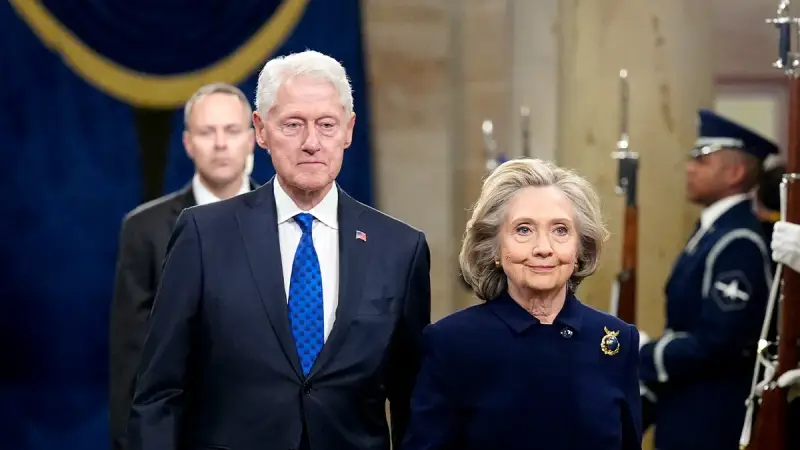
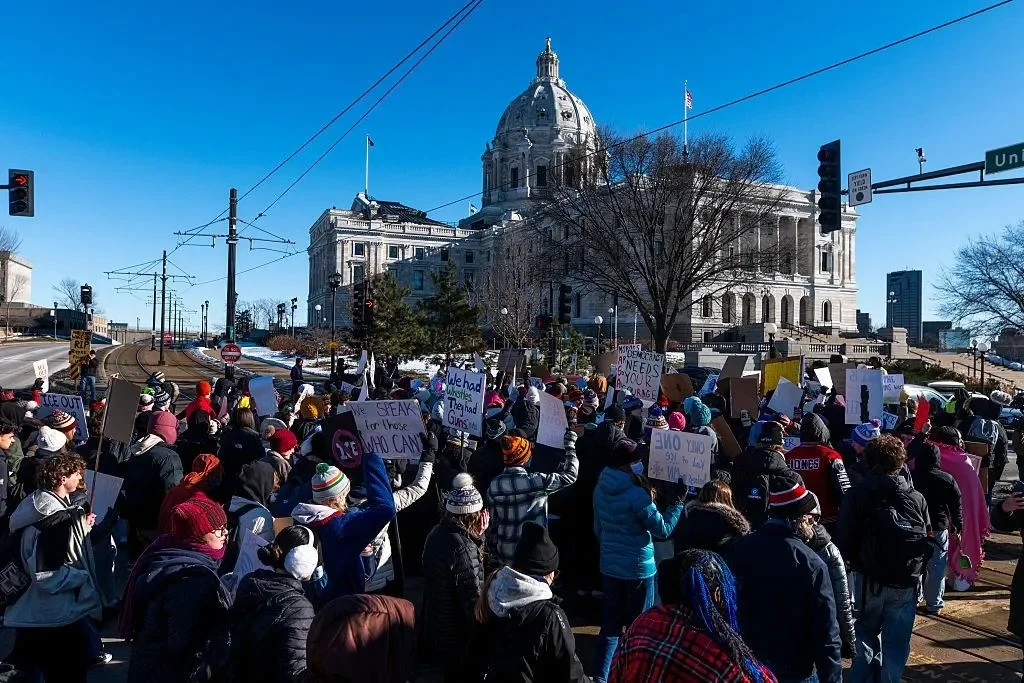
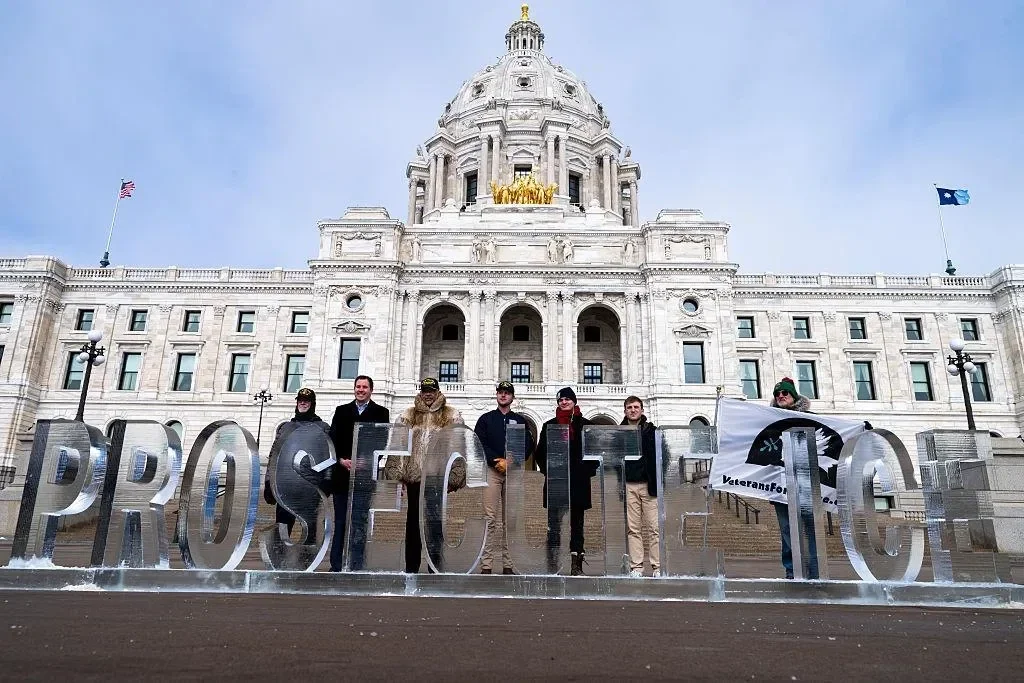

MOBS AT MINNESOTA CAPITOL: WHAT ACTUALLY HAPPENED AND WHAT DID NOT
Minnesota Capitol panic headlines vs. what’s actually been reported
Reports and viral headlines claiming that “mobs breached Minnesota’s Capitol,” trapping Governor Tim Walz with “no escape” until “Trump’s Marines ended the uprising” dramatically exaggerate what has been credibly documented.
Minnesota has experienced intense protests, heightened rhetoric, and real criminal incidents around the Capitol grounds, but verified reporting does not support claims of a full Capitol takeover or an active-duty Marine intervention to suppress an uprising.
Large protest crowds have gathered repeatedly near the Minnesota State Capitol amid national immigration enforcement disputes and local political tensions. Demonstrations have included shouting matches, property damage, and arrests, particularly around symbolic protest actions and installations on Capitol grounds. These incidents reflect disorder and escalating protest behavior, but they fall short of evidence that protesters seized the Capitol building or overran its interior security.
Some online posts describe a “breach,” a word often used loosely to describe crowds pushing past temporary barriers or overwhelming outdoor security lines. Credible outlets have not confirmed forced entry into secured interior areas of the Capitol, nor have they reported lawmakers or the governor being physically trapped inside with “no escape.” In past verified Capitol breaches elsewhere in the country, reporting quickly included specific doors, injuries, charges, and official emergency responses. That level of detail is absent here.
Claims involving “Trump’s Marines” appear to stem from reporting that the Pentagon placed approximately 1,500 active-duty troops on alert for potential domestic support missions related to unrest concerns in the Minneapolis–St. Paul area. Being placed on alert is not the same as deployment. Subsequent reporting indicated those troops were stood down, not sent into Minnesota. There is no verified evidence that U.S. Marines or Navy SEALs conducted crowd control, arrests, or removals at the Minnesota Capitol.
Under U.S. law, domestic use of active-duty military forces is tightly constrained. When federal troops are discussed in domestic contexts, they are typically limited to support roles, protection of federal property, or very narrow detention authority before transferring individuals to civilian law enforcement. No official statements, unit identifications, or operational summaries have confirmed Marines “ending” any uprising in Minnesota.
What is confirmed is a volatile protest environment, political escalation between state and federal authorities, and real law enforcement actions by Minnesota State Patrol and Capitol Police. Conservative readers often focus on the need to restore order and protect government facilities, while middle-of-the-road readers emphasize lawful protest and the dangers of inflaming situations with militarized rhetoric. Both perspectives benefit from separating verified facts from viral framing.
In short, Minnesota has seen unrest and criminal acts around the Capitol grounds, but there is no credible confirmation of a Capitol seizure, no verified trapping of the governor, and no documented Marine operation ending an uprising. Sensational headlines collapse multiple real but separate events into a single dramatic narrative that goes well beyond what evidence supports.
Sources and address links
Reuters – Pentagon readies 1,500 soldiers for possible Minnesota deployment (later stood down):
ABC News – Troops placed on alert, not deployed, amid Minneapolis concerns:
https://abcnews.go.com/Politics/military-stands-troops-ordered-prep-deploy-minneapolis/story
MPR News – Arrest and property damage reported at Minnesota Capitol grounds:
Texas Tribune – Legal limits and state–federal tensions in immigration enforcement (context):
https://www.texastribune.org/2024/02/04/abbott-defends-eagle-pass-tactics/
Associated Press – Domestic military support roles and legal constraints:
https://apnews.com/article/892da97c4764f93cd746a15ec37b54ca
Please Like & Share 😉🪽
@1TheBrutalTruth1 FEB. 2026 Copyright Disclaimer under Section 107 of the Copyright Act of 1976: Allowance is made for “fair use” for purposes such as criticism, comment, news reporting, teaching, scholarship, education, and research.
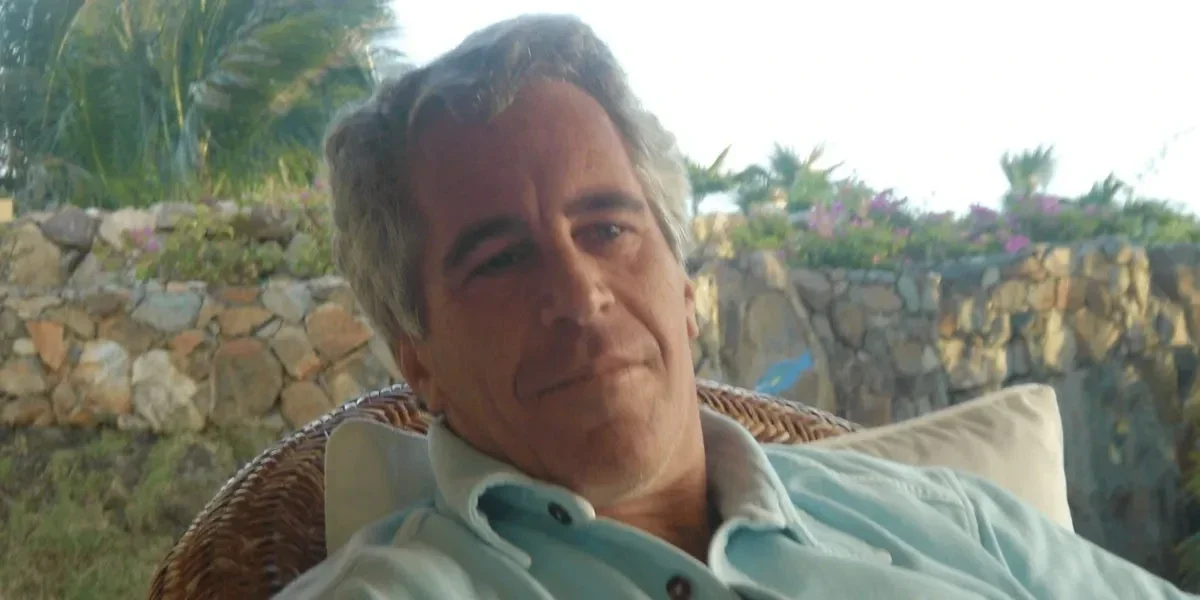
Jeffrey Epstein with Steve Bannon: Full leaked interview — what it shows and why people are talking
The conversation was filmed around 2019 at Epstein’s New York home and moves through money, influence, politics, and philosophy, while largely avoiding real accountability for Epstein’s crimes
Jeffrey Epstein with Steve Bannon: Full leaked interview — what it shows and why people are talking. A nearly two-hour videotaped interview between Jeffrey Epstein and former White House adviser Steve Bannon has circulated online after the Department of Justice included it in the recent Epstein files release.
The footage was reportedly recorded in Epstein’s Manhattan townhouse in 2019 and shows long, meandering conversations where Epstein talks about money, influence, science, and his place in the world.
In the tape, Bannon plays the role of interviewer and sometime provocateur, asking pointed questions about Epstein’s ethics and reputation. At times he asks Epstein whether he thinks of himself as “the devil,” and he presses him on how he made his money and why powerful people trusted him. The tone is part coaching, part attempted rehabilitation, and part sharp questioning — the kind of mix that makes the tape both revealing and unsettling.
Epstein’s responses range from philosophical musings to blunt self-defense. He denies that his wealth was “dirty,” points to philanthropic donations, and at one point refers to himself with a term that has been reported as “Tier One” sex predator — language that many viewers found chilling rather than remorseful. He also speaks dismissively when asked to take moral responsibility, which critics say confirms a lack of accountability rather than offering any true explanation.
Those who pushed to make the tape public say it helps the public understand how Epstein presented himself to elite circles and to media figures. They argue the footage is another piece of the larger record showing Epstein’s reach and how he tried to shape his image. Moderates point out the tape does not in itself prove specific crimes by others named in the files; it does, however, raise more questions about who Epstein associated with and why.
Skeptical voices warn about overstating what a talk between two men proves. They note a recorded interview can show attitude and opinion, but it doesn’t automatically translate to proof of wrongdoing by third parties. Legal experts emphasize that appearing in documents or footage is not the same as being charged with a crime, and that context — dates, corroboration, and supporting evidence — matters. Still, the tape has intensified public anger and calls for more transparency about the wider Epstein network.
Steve Bannon’s role in filming the footage has its own angle: reports say Bannon recorded many hours of material that he did not publish, and that the footage here was part of a larger set Bannon had shot while interviewing Epstein. Some see Bannon’s involvement as a sign Epstein sought redemption or media-savvy framing, while others see it as part of Epstein’s effort to preserve his narrative among influential allies.
What this means going forward is still open. For survivors and advocates the tape is another painful reminder of Epstein’s crimes and how he moved among powerful people. For journalists and investigators it is a piece of evidence to be cross-checked against documents, emails, and other materials in the files. For politicians and institutions named in the broader trove, it adds pressure for accountability and clearer answers about what lines of influence existed and whether any laws or duties were ignored.
Many viewers are focusing on how comfortable the exchange feels, and how Bannon repeatedly tries to corner Epstein with moral questions that Epstein answers with deflection, ego, and word games. The timestamps below highlight the moments that are driving the most conversation online, so you can jump straight to the key sections instead of relying on short viral clips.
The tape is being used as an example of how elite networks protect themselves, how reputations get managed, and how powerful circles talk when they believe they’re in a controlled setting. For middle-of-the-road readers, the tape is still important, but it should be treated as a window into Epstein’s mindset and relationships, not automatic proof against unrelated third parties without corroboration.
It’s also worth noting that the current document release has been controversial on its own, including reporting that thousands of items were temporarily pulled for additional redactions after concerns about victim-identifying information. That adds heat to the story because people who already distrust the process see any correction as “hiding,” while others see it as necessary privacy protection.
Sources / Address links
The Guardian — Do you think you’re the devil himself?: highlights from the newly released Bannon-Epstein interview. https://www.theguardian.com/us-news/2026/feb/05/steve-bannon-jeffrey-epstein-files-interview
The Times — Epstein is asked ‘Are you the devil himself?’ in released video. https://www.thetimes.com/us/news-today/article/epstein-files-news-video-interview-released-9jxfkg03f
New York Post — Jeffrey Epstein calls himself ‘Tier One’ sex predator in newly released Steve Bannon interview. https://nypost.com/2026/02/02/us-news/jeffrey-epstein-calls-himself-tier-one-sex-predator-in-newly-released-interview/
Digg — Jeffrey Epstein with Steve Bannon: Full Leaked Interview. https://digg.com/news/5uArQ50/jeffrey-epstein-with-steve-bannon-full
Singju Post — Jeffrey Epstein’s Interview with Steve Bannon (Transcript). https://singjupost.com/jeffrey-epsteins-interview-with-steve-bannon/
Wikipedia — Epstein files (context on document releases). https://en.wikipedia.org/wiki/Epstein_files
The Guardian highlights with timestamps and context: https://www.theguardian.com/us-news/2026/feb/05/steve-bannon-jeffrey-epstein-files-interview
The Times write-up on the “devil” question and the release context: https://www.thetimes.com/us/news-today/article/epstein-files-news-video-interview-released-9jxfkg03f
Business Insider on the DOJ temporarily removing thousands of items for additional redactions: https://www.businessinsider.com/doj-jeffrey-epstein-removed-thousands-files-2026-2
YouTube full interview page:
PBS explainer segment: https://www.pbs.org/video/epstein-files-1769810252/
More coverage on the release and the interview
Epstein is asked ‘Are you the devil himself?’ in released video
The DOJ says it took down over 9,500 of the Epstein files
Please Like & Share 😉🪽
@1TheBrutalTruth1 FEB. 2026 Copyright Disclaimer under Section 107 of the Copyright Act of 1976: Allowance is made for “fair use” for purposes such as criticism, comment, news reporting, teaching, scholarship, education, and research.

FALLOUT: UK LEADER APOLOGIZES TO EPSTEIN VICTIMS, PRESSURE OVER MANDELSON APPOINTMENT, AND KING HECKLED
In the United Kingdom, fresh political turbulence has erupted as the fallout from newly released Jeffrey Epstein-related files continues to shake both government and royal circles.
British Prime Minister Sir Keir Starmer has publicly apologised to the victims of Epstein after facing widespread criticism over his past decision to appoint Lord Peter Mandelson as the UK’s ambassador to the United States — a role he gave despite Mandelson’s known ties to Epstein. Starmer acknowledged he believed Mandelson’s denials about the depth of that relationship, but said he now regrets the appointment as damaging to public trust.
The prime minister’s apology — directed at survivors of Epstein’s crimes — came amid rising political pressure at home. Critics from both inside and outside his Labour Party argue that appointing Mandelson, a veteran politician with a controversial past, showed poor judgment given the serious nature of Epstein’s crimes and the sensitive nature of diplomatic representation. Some lawmakers have demanded Starmer resign over the episode or at least overhaul his senior team, particularly his chief of staff, whom critics say pushed for Mandelson’s selection.
The controversy deepened when British police began searching two properties linked to Mandelson as part of a criminal investigation into alleged misconduct in public office connected to his association with Epstein — though he has not been charged with any sexual offences himself. Mandelson has resigned from the House of Lords and the Labour Party amid revelations that he may have shared sensitive government information with Epstein and received financial payments tied to the disgraced financier.
Calls for accountability have also spilled into the public sphere beyond Westminster. During a recent royal engagement, King Charles III was heckled by protesters citing Epstein-related grievances. The disturbance highlighted broader frustration among some segments of the public with how elite connections to Epstein have been handled — including those of former royals such as Andrew Mountbatten-Windsor, whose name has appeared in newly disclosed files and who has faced his own long-running controversies.
Starmer’s leadership now faces a tumultuous period. While he has pledged to stay in office and defend his record, internal divisions in his party and renewed calls for a vote of no confidence have made his political future uncertain. Analysts suggest the Mandelson scandal and Starmer’s handling of the Epstein fallout could have lasting implications for British politics and trust in public institutions.
Address Links to Key Sources
UK Epstein fallout: Starmer apology, Mandelson pressure, royal heckle
I’m sorry for appointing Mandelson and believing his Epstein lies, Starmer says
Starmer faces renewed calls to sack chief of staff over Mandelson scandal
Epstein files latest: King heckled over scandal as Andrew’s name appears in FBI files
UK leader apologizes and political fallout
Associated Press: UK leader apologises to victims of Epstein for appointing Peter Mandelson — https://www.wral.com/news/ap/ea1e5-uk-leader-apologizes-to-victims-of-epstein-for-giving-peter-mandelson-an-ambassador-job/616-f0a75ca6-2a0a-4ebe-80bd-c46b384964c0
Reuters: UK’s Starmer apologises to Epstein victims but comes out fighting — https://www.reuters.com/world/uk/uks-starmer-apologises-epstein-victims-appointing-mandelson-2026-02-05/
Pressure over Mandelson and Starmer’s leadership
AP News: After Epstein fallout, UK leader Starmer faces hurdles and rivals — https://apnews.com/article/1672f25ab8e2ec9fb4eaed9cb744c0b0
The Guardian: Starmer faces renewed calls to sack chief of staff — https://www.theguardian.com/politics/2026/feb/06/starmer-renewed-calls-sack-morgan-mcsweeney-mandelson
The Guardian: Gordon Brown deeply regrets bringing Mandelson into government — https://www.theguardian.com/politics/2026/feb/06/gordon-brown-deeply-regrets-bringing-peter-mandelson-into-his-government
Investigations and legal developments
AP News: UK police search properties linked to Mandelson — https://apnews.com/article/f2f33eae657a3d3e4e1937eb7ae657f2
Wikipedia: Premiership of Keir Starmer (Epstein-related sections) — https://en.wikipedia.org/wiki/Premiership_of_Keir_Starmer
Royal sphere reaction
Sky News: King heckled over Epstein scandal — https://news.sky.com/story/epstein-files-live-latest-andrew-mountbatten-windsor-mandelson-paris-musk-trump-13501106
Herald Sun: King Charles heckled amid Epstein upheaval — https://www.heraldsun.com.au/news/i-am-sorry-embattled-uk-pm-keir-starmer-tells-epstein-victims/news-story/1645507697f85d2095dadc5a9c970643
Please Like & Share 😉🪽
@1TheBrutalTruth1 FEB. 2026 Copyright Disclaimer under Section 107 of the Copyright Act of 1976: Allowance is made for “fair use” for purposes such as criticism, comment, news reporting, teaching, scholarship, education, and research.
The Pizza gate Argument and Ian Carroll’s Explanation
The long-debunked conspiracy theory — Might be closer to reality than originally believed
Some voices in the media are now saying that Pizzagate — the long-debunked conspiracy theory — might be closer to reality than originally believed. One of the people promoting that idea recently is Ian Carroll, an independent commentator and podcaster who has gained attention for discussing controversial topics online.
Carroll appeared on a political commentary show to talk about what he claims are fresh clues in old documents that suggest something deeper than the original story.
For context, Pizzagate began in 2016 during the U.S. presidential election cycle as a claim that Democrats were running a secret child-abuse ring through a Washington, D.C., pizza shop. That idea was widely dismissed at the time by law enforcement and journalists as a conspiracy with no credible evidence.
Carroll and others who revisit this topic point to thousands of emails and message fragments in recent document releases that mention food, parties, or gatherings. They argue to their audiences that references to “pizza” and other terms might be code words with hidden meaning — and that mainstream media and authorities have overlooked or dismissed clues too quickly.
Carroll’s message has found traction among some conservative media audiences who believe that government transparency and elite accountability have been lacking on issues of child exploitation and human trafficking. They say that quick dismissals by journalists in 2016 created a narrative vacuum that now fuels distrust, especially when new unexplained details surface.
At the same time, many outlets and experts maintain that Pizzagate remains a thoroughly debunked conspiracy theory, and that the original claims lacked credible evidence. They warn that taking scattered references in documents out of context can mislead people and distract from real crimes and investigations that deserve attention.
So in this latest debate, supporters of Carroll’s view see renewed questions about Pizzagate as a reason to dig deeper into possible elite misconduct, while skeptics see it as a recirculation of unfounded speculation. Neither side has presented definitive proof that Pizzagate itself is real, so public discussion continues without resolution.
Sources and Address Links
News and discussions about Ian Carroll’s claims:
“It looks like Pizzagate is basically real. Ian Carroll explains.” Facebook video page — https://www.facebook.com/tuckercarlsonTCN/videos/it-looks-like-pizzagate-is-basically-real-ian-carroll-explains/1221263276196536/
YouTube discussion titled “It looks like Pizzagate is basically real. Ian Carroll explains.” —
Background about Pizzagate and mainstream assessment:
Wikipedia page on the Pizzagate conspiracy theory (background and debunking) — https://en.wikipedia.org/wiki/Pizzagate_conspiracy_theory
Please Like & Share 😉🪽
@1TheBrutalTruth1 FEB. 2026 Copyright Disclaimer under Section 107 of the Copyright Act of 1976: Allowance is made for “fair use” for purposes such as criticism, comment, news reporting, teaching, scholarship, education, and research.


Prince Andrew Booted From Royal Lodge as Epstein Fallout Deepens
Many see Andrew’s removal as long overdue, arguing it should have happened years ago
Prince Andrew, the Duke of York, is facing renewed consequences tied to the long-running Jeffrey Epstein scandal, as reports indicate he is being forced out of Royal Lodge, his long-time residence on the Windsor estate.
Royal Lodge is a large and historic property, traditionally reserved for senior working royals, and Andrew’s continued presence there has become increasingly controversial following years of public scrutiny. According to reporting, King Charles III has pushed for Andrew to vacate the property, signaling a further distancing of the monarchy from his disgraced status.
Royal Lodge has symbolic importance because it represents privilege, rank, and proximity to the core of the royal family. Andrew has not been a working royal since 2019, when his association with Epstein and the subsequent civil lawsuit by Virginia Giuffre made his position untenable. Critics argue that allowing Andrew to remain in such a prominent residence undermined the monarchy’s attempts to restore public trust after the scandal. Supporters, however, point out that Andrew technically holds a long lease on the property, making removal more complex than a simple eviction.
The Epstein fallout continues to shadow Andrew despite previous settlements and denials of wrongdoing. Although Andrew has never been criminally charged, his 2022 civil settlement in the United States kept his name tied to Epstein in the public mind. Each new development, including housing changes, reignites debate about accountability, privilege, and whether elite figures face consequences comparable to ordinary citizens. From a conservative viewpoint, this reflects delayed but necessary institutional discipline, while more moderate observers see it as reputational management rather than true justice.
For King Charles, the move appears to be part of a broader effort to streamline the monarchy and reduce liabilities. Since ascending the throne, Charles has emphasized a smaller, more focused royal household, distancing the institution from controversies that weaken public confidence. Removing Andrew from Royal Lodge fits that strategy, even as it risks internal family tension and legal complications tied to property agreements.
Public reaction has been mixed but intense. Many see Andrew’s removal as long overdue, arguing it should have happened years ago. Others view it as symbolic punishment that avoids addressing deeper questions about Epstein’s network, powerful connections, and unresolved details surrounding his crimes and associates. The continued interest shows that, for many, the Epstein story is far from closed, and figures linked to it remain under a cloud regardless of formal legal outcomes.
In practical terms, being forced out of Royal Lodge further isolates Andrew from royal life and reinforces his fall from prominence. While it does not change his legal status, it does mark another step in stripping him of visible privilege. The situation highlights how reputational damage, once tied to a scandal as far-reaching as Epstein’s, can persist for years and reshape institutions trying to survive the fallout.
Sources and address links
BBC News – Prince Andrew and Royal family developments
The Guardian – Reporting on Royal Lodge and royal housing disputes
https://www.theguardian.com/uk-news
Reuters – Analysis of Epstein fallout and Prince Andrew
https://www.reuters.com/world/uk
Associated Press – King Charles and monarchy reforms
https://apnews.com/hub/british-royal-family
NBC News – Public reaction and Epstein-related reporting
https://www.nbcnews.com/news/world
CNN – Royal family fallout and Andrew’s status
https://www.cnn.com/world/royals
Please Like & Share 😉🪽
@1TheBrutalTruth1 FEB. 2026 Copyright Disclaimer under Section 107 of the Copyright Act of 1976: Allowance is made for “fair use” for purposes such as criticism, comment, news reporting, teaching, scholarship, education, and research.
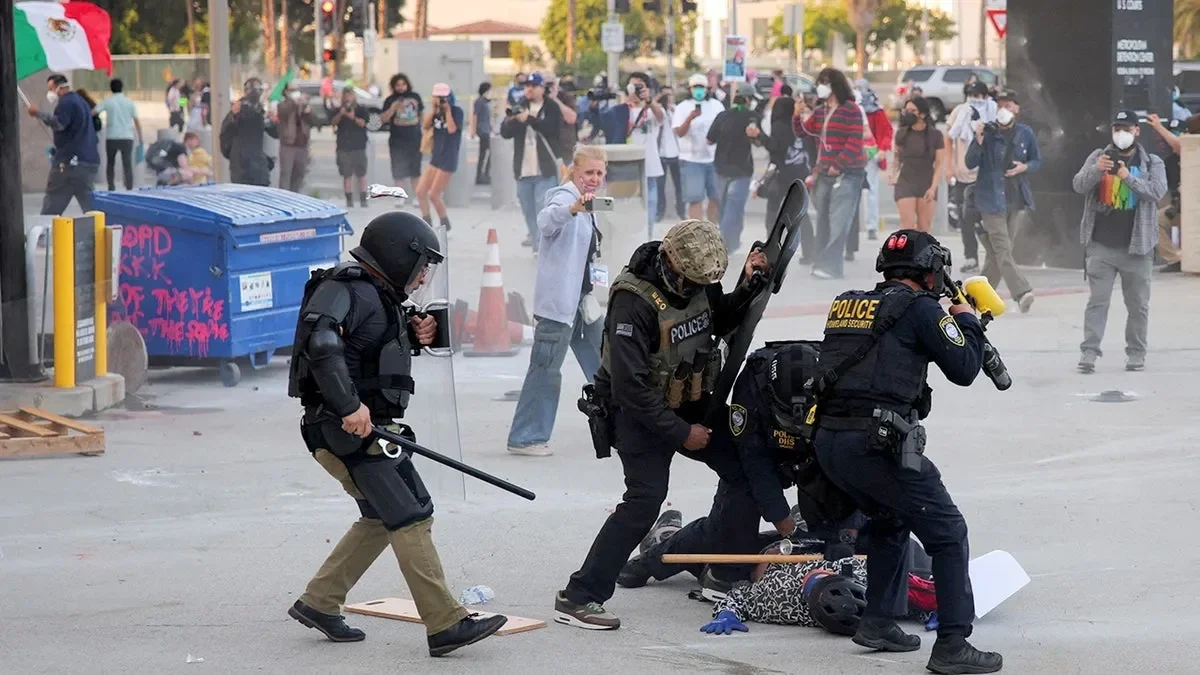

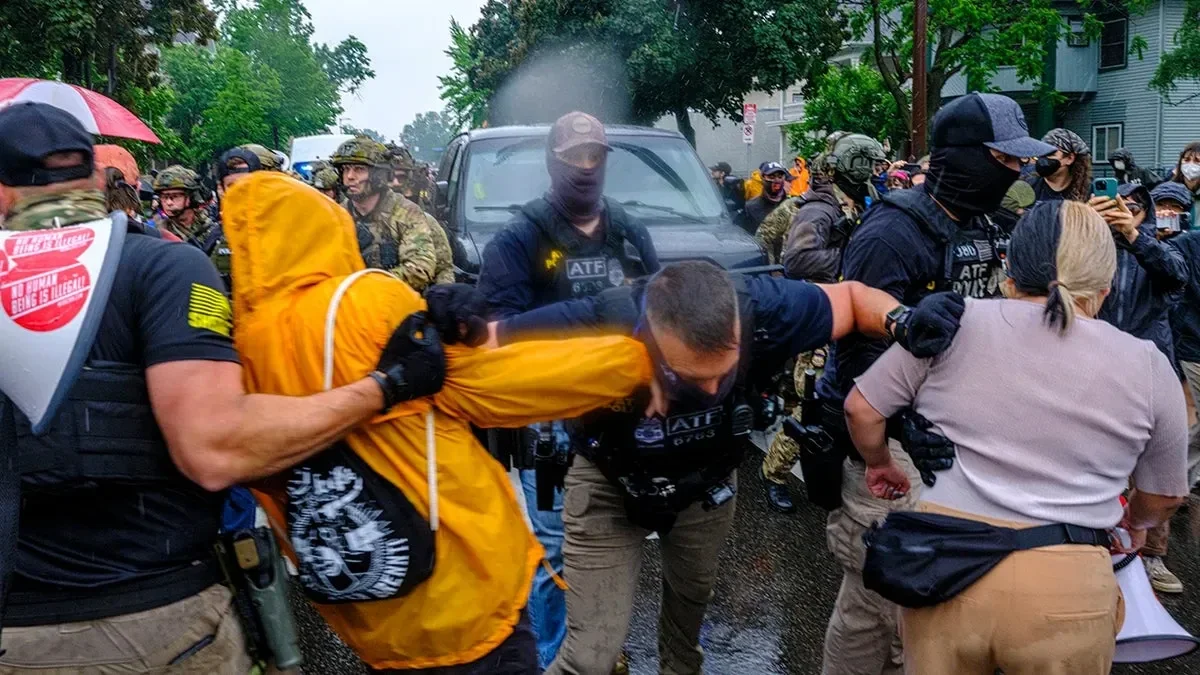
Masked Protesters, Violence, and Self-Defense: Can Citizens Lawfully Shoot?
Authority Versus Anonymity -- Why legal status matters more than a mask
In the U.S., the legal question is not really “masked protester vs. citizen” or “protester vs. press.” The core question is whether the person who used force reasonably believed they faced an imminent threat of death or serious bodily injury (or were stopping that kind of threat against someone else). Deadly force is treated as the last-resort level of force, and it usually must be proportional to the danger in that moment, not the politics or the optics of the situation.
If masked protesters attack citizens or members of the press, a person may be justified in using force to defend themselves or others, but the level of force matters. Non-deadly force may be justified to stop an assault, escape, or protect someone being beaten. Deadly force is generally only justified if the attacker’s actions create a reasonable fear of imminent death or great bodily harm (for example, a severe beating, a weapon being used, or a realistic threat of being killed or crippled). An attack on “the press” is still an attack on a person, but it does not automatically make deadly force lawful unless the threat rises to that level.
Whether someone is “masked” can matter in a practical way, but it usually does not change the legal standard by itself. A mask might affect how a reasonable person perceives threat (especially in a chaotic crowd), but the law still typically comes back to imminence, necessity, and proportionality. Also, the legal rules vary by state: some states impose a duty to retreat if it can be done safely, while “stand your ground” states may remove that duty in places where you have a right to be.
A major line that comes up in these cases is the difference between defending life versus defending property. In many places, deadly force is not justified solely to protect property or stop vandalism, even if the property damage is criminal or outrageous. That is why a person who shoots during a riot “to protect a store” can still face serious charges if prosecutors believe the threat was not an imminent threat of death or serious injury.
Conservative-leaning arguments often stress that citizens should not be required to absorb violence, especially when authorities are slow to respond, and that the law recognizes the right of self-defense and defense of others. More middle-of-the-road views often stress that “reasonable belief” is intensely fact-specific, that deadly force can escalate chaos in crowds, and that even a legally arguable shooting can still bring arrest, prosecution, and civil lawsuits depending on how video, witnesses, and local prosecutors interpret the moment. Either way, the practical reality is that using a gun in a crowd is one of the highest-risk legal situations a person can step into, even if they believe they are stopping an attack.
If you’re asking this because you’re trying to think clearly about rules in street confrontations: the safer, more legally defensible pattern is usually to create distance, retreat if you safely can (even in stand-your-ground states, it can help your legal defense), call 911, and document what happened. Deadly force is typically judged as lawful only when a reasonable person would say there was no safe alternative to prevent imminent death or severe injury.
So what is the difference between the masked ICE agent and the masked violent protester?
What a “Masked Federal Agent” Is
A masked federal agent is someone acting under the authority of U.S. law enforcement, such as agents from U.S. Customs and Border Protection (CBP) or U.S. Immigration and Customs Enforcement (ICE), who are deployed as part of an official operation. In Minneapolis this year, federal agents wearing masks and tactical gear were part of Operation Metro Surge, a federal immigration enforcement initiative. These agents were carrying out arrests, detentions, and other law-enforcement actions under federal law.
Federal agents are supposed to operate under legal standards that govern police conduct, including protocols on use of force (such as deadly force when facing an imminent threat of serious harm). When an incident occurs—like the fatal shootings of Renée Good and Alex Pretti in Minnesota—officials typically claim the actions were within the scope of law enforcement duties, even if those claims are disputed by local authorities or witness video.
Importantly: masked does not mean “anonymous criminal.” Agents may wear protective equipment for safety or tactical reasons, but they are still operating as part of a government law-enforcement mission with legal authority to detain, arrest, and use force under defined circumstances.
What a “Masked Violent Protester” Is
A masked violent protester is a civilian participant in a demonstration who wears a mask (for anonymity, protection, or intimidation) but generally lacks government authority. Protesters may be peaceful, but the term “violent protester” refers to individuals who may engage in assaultive or criminal behavior—such as throwing projectiles, attacking other people, damaging property, or threatening violence against others.
In public discourse, masked violent protesters might be seen as someone who chooses to take direct action against others, including civilians or members of the press. Unlike law enforcement, they do not have a legal mandate to enforce laws or maintain public order.
The Core Legal and Practical Difference
Authority and legitimacy:
Federal agents are empowered by law to enforce federal criminal and civil statutes, detain individuals, and in narrow circumstances, use force—including deadly force—when they reasonably believe there is an imminent threat. Even when controversial, their actions are judged against law enforcement standards and are subject to internal review and legal processes.
Masked violent protesters, on the other hand, do not inherently have legal authority. If they assault someone, damage property, or threaten violence, they can be charged with criminal offenses. Being masked doesn’t legalize their actions—it may even be an aggravating factor in criminal charges. Their conduct is evaluated as civilian misconduct, not law enforcement activity.
How This Matters in a Shooting Scenario
If a masked, violent protester attacks a person with lethal force, the question under U.S. law is whether the victim or defender reasonably believed they faced imminent death or serious bodily harm. Self-defense laws apply to all civilians, but lethal force must be proportionate to the threat and justified under the specific state’s statute. An attacker—even masked—does not automatically lose legal protections; it depends on the situation.
In contrast, when a federal agent uses deadly force, courts and investigators evaluate whether the agent’s conduct complied with legal standards for law enforcement use of force (including threat assessment, command structure, and policies). These incidents can result in internal investigations, criminal probes, or civil suits if the force is judged excessive or unlawful.
Public Perception and Controversy
Part of the debate around recent Minnesota events is that federal agents were masked and unidentified, which fueled public fear and suspicion, especially given the shootings of Pretti and Good. Some officials and residents have criticized the lack of transparency and accountability, saying that law-enforcement actions should be identifiable to preserve trust.
Protesters and civil rights groups argue that such federal operations blurred the lines between law enforcement and militarized presence, while others argue that protesters can become violent and law enforcement must be able to defend themselves and the public.
Neither perspective changes the underlying legal distinction: government agents act under legal authority; protesters, even masked, do not.
The Brutal Truth — The brutal truth is simple: a masked federal agent is acting under lawful authority and accountable to the state, while a masked violent protester is a civilian committing a crime, and the law treats those two roles very differently no matter how similar they may look in the moment.
Sources (address links)
National Conference of State Legislatures (NCSL) – Self-Defense and “Stand Your Ground” overview: https://www.ncsl.org/civil-and-criminal-justice/self-defense-and-stand-your-ground
FindLaw – Self-Defense Law Overview (proportionality and threat level): https://www.findlaw.com/criminal/criminal-law-basics/self-defense-overview.html
Justia – Stand Your Ground Laws (50-state survey): https://www.justia.com/criminal/defenses/stand-your-ground-laws-50-state-survey/
Wikipedia – Killing of Alex Pretti (2026): https://en.wikipedia.org/wiki/Killing_of_Alex_Pretti
Wikipedia – Operation Metro Surge: https://en.wikipedia.org/wiki/Operation_Metro_Surge
Background on Protests and Enforcement
Wikipedia – 2026 Anti-ICE Protests in the United States: https://en.wikipedia.org/wiki/2026_Anti-ICE_Protests_in_the_United_States
PBS NewsHour – Shootings by federal immigration officers in Minneapolis: https://www.pbs.org/newshour/nation/a-look-at-shootings-by-federal-immigration-officers
Please Like & Share 😉🪽
@1TheBrutalTruth1 FEB. 2026 Copyright Disclaimer under Section 107 of the Copyright Act of 1976: Allowance is made for “fair use” for purposes such as criticism, comment, news reporting, teaching, scholarship, education, and research.
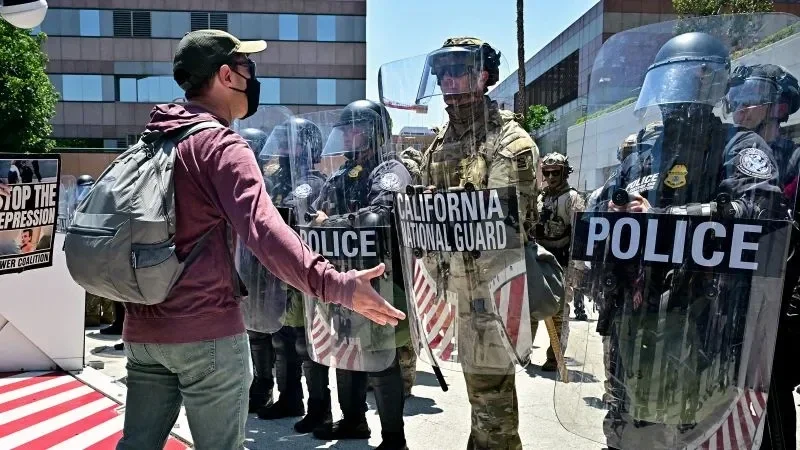
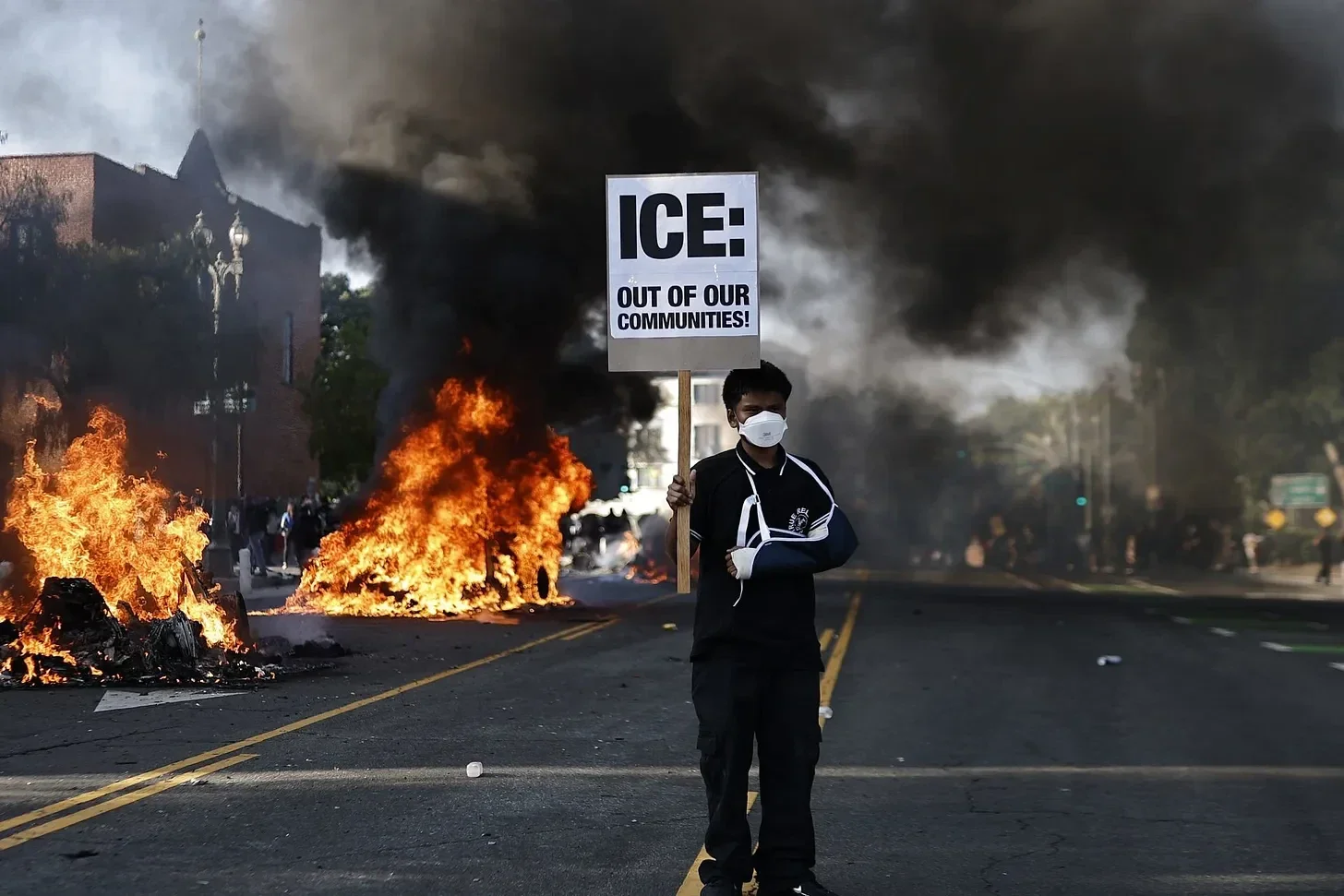

Ilhan Omar Under Spotlight as Federal Fraud Probe Widens in Minnesota
Claims of “fleeing” spread online while financial disclosure numbers fuel new political heat
Online headlines and viral videos are claiming Rep. Ilhan Omar “plans to flee” as the FBI expands scrutiny in Minnesota’s growing fraud investigations, but there is no verified public evidence she is preparing to run, relocate, or evade authorities.
What is real is that Minnesota remains under intense federal attention due to large-scale fraud cases, and Omar’s household wealth estimates have become a fresh political target because of how congressional disclosures report business values in broad ranges.
The “$30 million net worth” figure being repeated is not a single confirmed bank-balance number. It comes from Omar’s required House financial disclosure forms, which list asset values in wide brackets and can produce a large possible range depending on how a spouse’s business is valued and how ownership stakes are reported. Analysts note that opponents often cite the highest possible number from those ranges as if it is a precise total, even though the forms are designed to show ranges, not exact totals.
In Omar’s 2024 disclosure filed with the U.S. House Clerk, some of the largest numbers tied to the family’s reported assets are connected to her husband Tim Mynett’s business interests, including the venture capital firm Rose Lake Capital and a winery business. The forms show that these holdings were reported with significantly higher valuation ranges than the prior year’s disclosure, which is why the jump looks dramatic in chart form and social media posts.
Omar has pushed back on the idea that the viral “net worth” framing proves wrongdoing, and reporting on the topic has emphasized that a large range on a disclosure form does not automatically mean illegal activity. At the same time, the optics of sudden wealth increases in Congress regularly trigger public distrust, and critics argue it should lead to sharper rules, clearer reporting, and faster audits when politicians’ finances shift quickly.
Separate from Omar’s personal finances, Minnesota’s fraud scandals are a major reason federal attention is escalating. The Feeding Our Future case—built around child nutrition program funds during the pandemic—has produced sweeping indictments and convictions, and public reporting says federal officials are now looking more broadly at possible fraud across multiple social programs and very large dollar totals. This broader crackdown is becoming a political fight inside Minnesota, with blame traded between state leadership, agencies, and federal investigators over oversight failures and how fast warnings were acted on.
Federal guidance has also warned financial institutions to watch for red flags tied to child nutrition program fraud schemes, pointing back to major cases like Feeding Our Future. That kind of federal alert signals the government sees this as a repeatable model for laundering or moving money, not just one isolated scandal, and it increases pressure for tighter controls on grants, reimbursements, and nonprofit contracting.
It is also worth noting Omar has faced ethics-related scrutiny in the past on unrelated issues, and the House Ethics Committee previously referenced an OCE referral and stated the matter was recommended for dismissal. That history gets pulled back into the conversation now, even though it does not prove the newer claims being circulated online.
Address links (sources)
House Clerk (Omar 2024 financial disclosure PDF): https://disclosures-clerk.house.gov/public_disc/financial-pdfs/2024/10068415.pdf
House Clerk (Omar 2023 financial disclosure PDF): https://disclosures-clerk.house.gov/public_disc/financial-pdfs/2023/10060937.pdf
Forbes analysis of the net worth range issue (Jan 27, 2026): https://www.forbes.com/sites/zacheverson/2026/01/27/ilhan-omar-trump-net-worth-disclosure-30-44-million/
AP on Homeland Security fraud investigation in Minneapolis: https://apnews.com/article/5f97cefc9adf9c0d14a90762dca3cfc8
CBS News on Minnesota fraud case / prosecutors resigning: https://www.cbsnews.com/news/minnesota-fraud-case-prosecutors-quit/
FinCEN Alert PDF on child nutrition program fraud red flags (Jan 9, 2026): https://www.fincen.gov/system/files/2026-01/FinCEN-Alert-Federal-Child-Nutrition-Programs.pdf
KSTP on Feeding Our Future trial venue ruling: https://kstp.com/kstp-news/top-news/judge-denies-motion-to-change-venues-in-next-feeding-our-future-trial/
House Ethics Committee statement (Mar 22, 2022): https://ethics.house.gov/press-releases/statement-chairman-and-ranking-member-committee-ethics-regarding-representative-ilhan/
Please Like & Share 😉🪽
@1TheBrutalTruth1 FEB. 2026 Copyright Disclaimer under Section 107 of the Copyright Act of 1976: Allowance is made for “fair use” for purposes such as criticism, comment, news reporting, teaching, scholarship, education, and research.
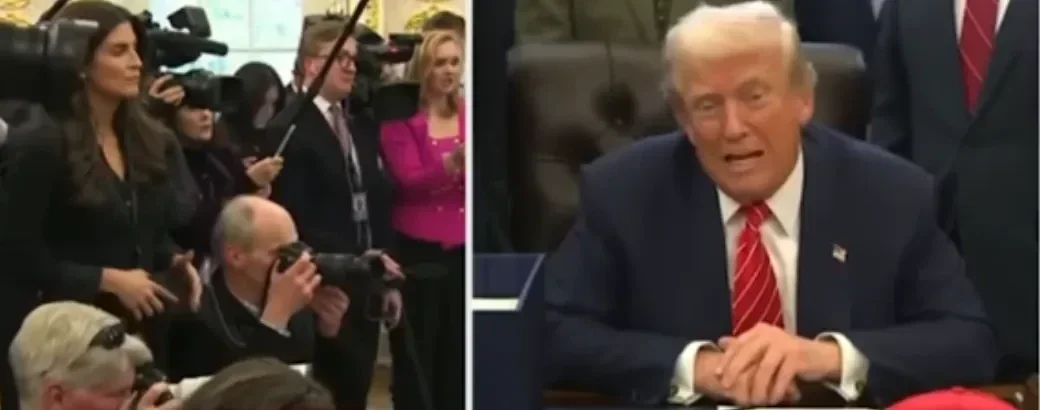
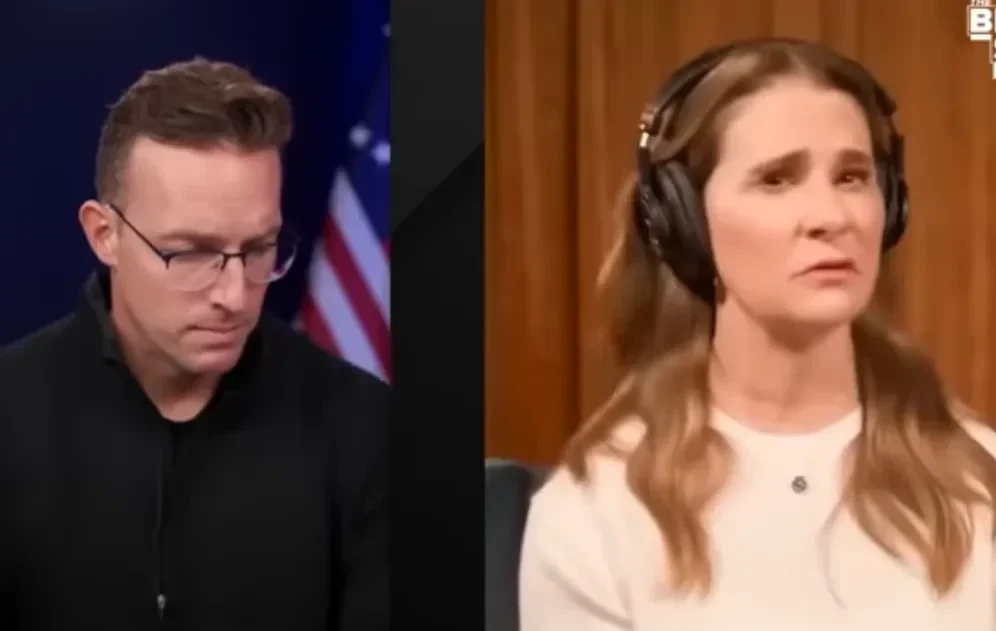
Alex Jones Says the Epstein Files Prove “It’s All CIA” and Claims Epstein Is Alive
What he’s alleging, what the government has officially said, and what the latest document releases actually are
Commentator Alex Jones is pushing a new wave of Epstein coverage after the latest “Epstein files” releases, claiming the entire operation was tied to U.S. intelligence and suggesting Jeffrey Epstein may still be alive. The headlines are designed to hit hard, but the most important thing for readers is to separate what Jones is alleging from what is confirmed by official documents and mainstream reporting.
Jones’ comments came in an interview and show segment promoted by InfoWars, where he argues Epstein was part of a larger system and that newly released material supports his claims. He frames it as proof that powerful institutions used Epstein as a tool and that the public is being lied to about major parts of the story. This is a familiar pattern in the Epstein debate: shocking claims, sweeping conclusions, and the idea that the official story is a cover for something bigger.
The biggest problem with the “he’s alive” claim is that it runs directly against the official findings that have been repeatedly restated by authorities. A well-known fact-check from 2019 explains that “Epstein is alive” narratives have circulated for years, often built on misread images, rumors, and social media speculation rather than verifiable evidence. That doesn’t prove the government is always right about every detail, but it shows the “alive” claim is not new, and it has not been supported with solid proof.
On the federal side, the Justice Department has publicly described its handling of the “Epstein files” as a compliance and transparency effort under a law it says required disclosure. On January 30, 2026, DOJ announced it published over 3 million additional pages, plus thousands of videos and many images, saying this brought it into compliance with the Epstein Files Transparency Act. This means there is a real, massive release happening, but a large release by itself does not automatically validate every theory about what the files “prove.”
Mainstream reporting on the January 30, 2026 release describes a huge tranche of documents that includes communications and records connected to Epstein, while also noting the messy nature of releases like this, including duplicates and debates over redactions. That matters because people can cherry-pick pages, screenshots, or names and claim it proves a grand plot, when the larger record may be incomplete, duplicated, or lacking the context needed to make a strong conclusion.
There is also a second layer to this story that frustrates many Americans: the government previously released a DOJ-FBI memo (July 2025) that said it found no credible evidence of a “client list,” no basis to open cases against uncharged third parties, and reaffirmed the official conclusion that Epstein died by suicide. When people hear that, then see millions of pages released later, they assume the memo must be a lie. But the government’s position is basically: there is a huge amount of material, much of it cannot be made public because it involves victims or illegal content, and what is public does not justify the most extreme claims.
If you’re looking at this with a “put this country first” mindset, the practical question is not whether a radio host can say wild things, but whether the United States can cleanly investigate powerful criminals, protect victims, and prosecute wrongdoing without politics, favoritism, or excuses. Americans want real transparency, but they also need claims to be backed by evidence that holds up in court, not just in viral clips. If the files contain crimes and identifiable offenders, the public interest is simple: follow the evidence, protect victims, and charge who can be charged under the law.
Address links (sources)
https://apnews.com/article/epstein-files-justice-department-trump-ed743598c320b94bd9d91631618678d9
https://apnews.com/live/epstein-files-news-updates-1-30-2026
https://www.opb.org/article/2026/02/03/whats-in-the-new-batch-of-epstein-files/
https://www.justice.gov/opa/media/1407001/dl
https://time.com/7300378/epstein-client-list-suicide-blackmail-conspiracy-theories-doj-fbi-memo/
https://www.factcheck.org/2019/08/bogus-conspiracy-theory-claims-epstein-is-alive/
Please Like & Share 😉🪽
@1TheBrutalTruth1 FEB. 2026 Copyright Disclaimer under Section 107 of the Copyright Act of 1976: Allowance is made for “fair use” for purposes such as criticism, comment, news reporting, teaching, scholarship, education, and research.
Epstein and Mandelson: New Leak Allegations Trigger Police Review and Political Fallout
What the latest reports claim, what’s confirmed so far, and why it matters
New reporting is resurfacing the Jeffrey Epstein scandal in a different direction: whether Epstein received sensitive government information from British political heavyweight Peter Mandelson, and whether those alleged communications could rise to criminal wrongdoing or major ethics violations.
The phrase “Secret Leaks for the Empire” is being used online to describe the idea that elites quietly shared insider information to protect power networks, but the confirmed news story right now is narrower: police and government officials in the U.K. are responding to allegations tied to newly surfaced records and emails.
According to the Associated Press, British police have been assessing whether Mandelson should face a criminal investigation connected to claims that he leaked sensitive government information to Epstein. The reporting describes the issue as serious because the information could have been market-sensitive, meaning it could be used to gain advantage in financial markets. This is not being presented as gossip alone, but as a question of whether official information was improperly shared outside government channels.
PBS reported that newly released files contain emails in which Mandelson allegedly passed along political information to Epstein, and critics argue some of that content may have crossed legal or ethical lines. The same reporting notes that Mandelson’s ties to Epstein have created ongoing public outrage, in part because Epstein was a convicted sex offender who still maintained influence in elite circles for years. The new focus is not only the relationship itself, but what may have been exchanged through it.
In the U.K., the political fallout has reportedly been growing as questions mount about how Mandelson was vetted for public roles, and how much leadership knew about his Epstein communications before new details came out. The Guardian reported that Prime Minister Keir Starmer ordered the release of files related to Mandelson’s appointment as U.S. ambassador, describing it as an attempt to get ahead of the widening controversy and draw a clear line around what the government will disclose.
The Guardian also reported that if Mandelson leaked plans tied to major government financial decisions, there could be questions about market abuse and whether the conduct fits offenses that carry serious penalties under British law. That does not mean guilt is proven, but it explains why police interest matters and why this is more than just embarrassing emails. It also shows why governments treat insider information like a national asset, because leaks can damage public trust and distort markets.
Conservative readers may view this as another example of a protected political class that talks about rules while operating by different ones, especially when money, power, and global influence overlap. A middle-of-the-road reader may focus on due process and want the same standard applied to everyone: investigate, confirm what is real, and prosecute only if evidence supports it. Either way, the public interest is simple: government secrets and market-moving decisions should not be filtered through private friendships with disgraced figures, because that weakens confidence in institutions and hurts ordinary citizens who play by the rules.
Online, some creators are packaging this as a larger “empire” story about hidden networks, blackmail, and insider pipelines. It’s fair to say Epstein’s history fuels public suspicion, but it’s also important to separate the verified claims from the dramatic framing. The strongest confirmed pieces in mainstream reporting right now are about specific emails, alleged sharing of sensitive information, and a police assessment of whether criminal investigation is warranted. The bigger theories may be discussed widely, but they are not automatically proven by the existence of an inquiry.
Address links (sources)
https://www.theguardian.com/us-news/2026/feb/03/epstein-files-peter-mandelson-government-inquiry
https://www.thedailybeast.com/disgraced-diplomat-sent-government-secrets-to-epstein/
Please Like & Share 😉🪽
@1TheBrutalTruth1 FEB. 2026 Copyright Disclaimer under Section 107 of the Copyright Act of 1976: Allowance is made for “fair use” for purposes such as criticism, comment, news reporting, teaching, scholarship, education, and research.

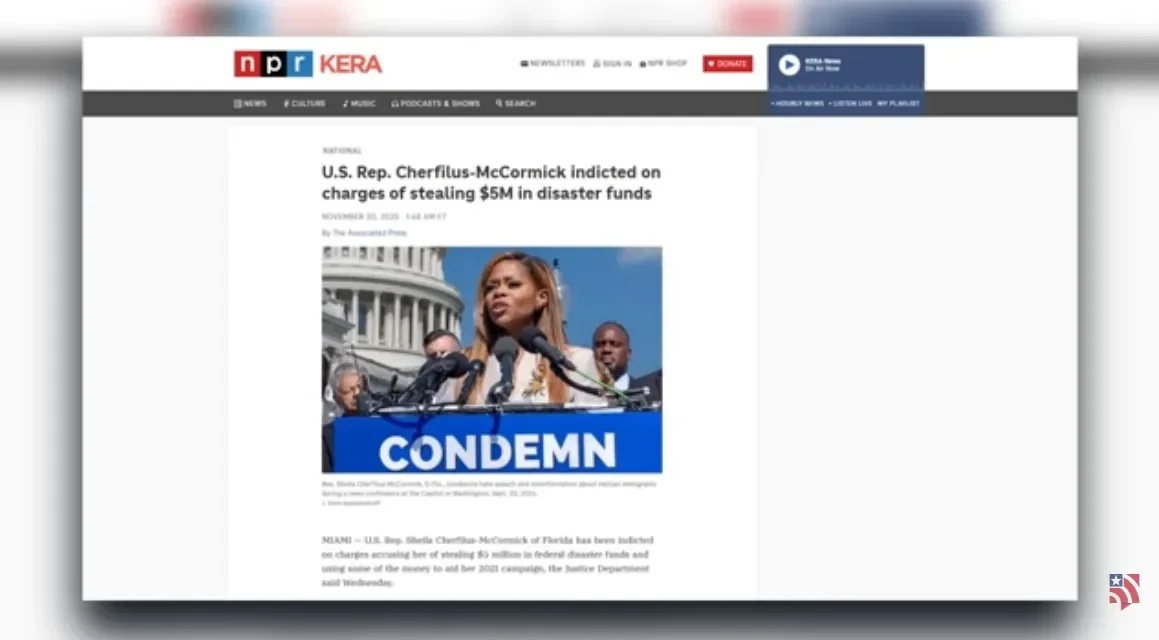
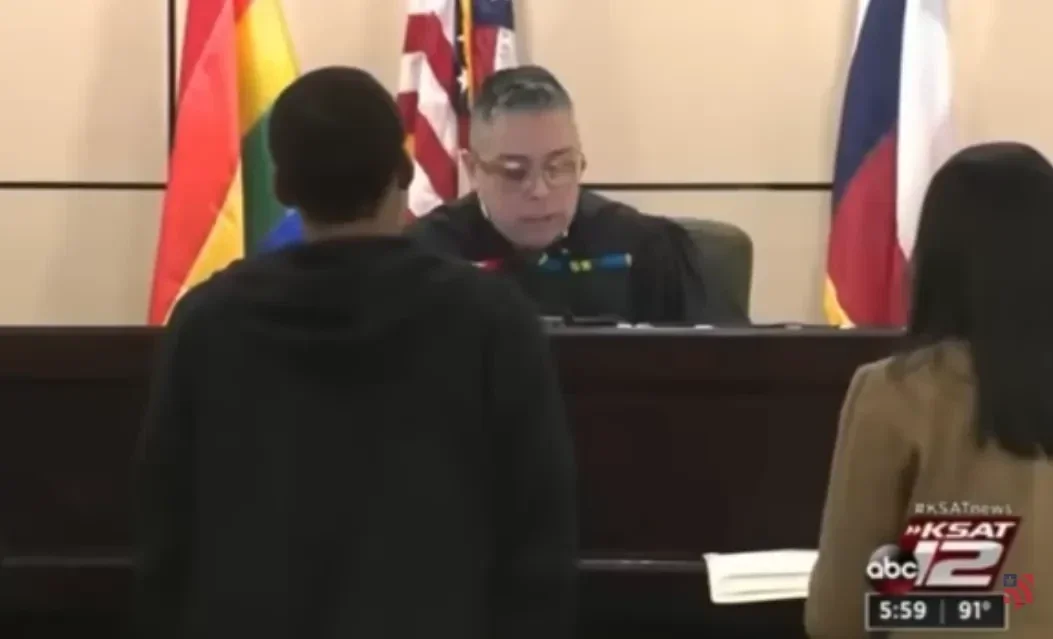
And Now... Here Come the Arrests...
What’s Actually Happening With the FBI, Democrats, and Politicians
Separating verified news from viral claims
A wave of social media posts claiming the “FBI is raiding and arresting Democrat judges and politicians” is trending online, but the reality is much more nuanced and not a sweeping politically-targeted purge.
There are real FBI investigations and actions involving public officials, but they do not match the extreme claim that federal agents are sweeping up elected Democrats simply for being Democrats. Here’s what reliable reporting shows:
1. There was an FBI search in Georgia tied to election documents, not an arrest purge
In late January 2026, the FBI executed a search warrant at the Fulton County (Georgia) elections office, seizing documents related to the 2020 presidential election under court authorization. Local Democratic officials criticized the action as an “attack on elections,” but no mass arrest of Democratic judges or politicians was reported in connection with that operation. Federal and local officials are now contesting the legality and scope of the search.
From a perspective focused on protecting the country’s integrity and the rights of its citizens, the FBI search of the Fulton County elections office can be seen as an effort to make sure federal election laws are followed and that public trust in voting is preserved. When serious questions exist about how election records were handled, federal authorities have a duty to secure evidence and determine whether laws were broken, regardless of which political party controls a local office. This kind of action is meant to reinforce confidence in the system, not undermine it, because a nation cannot function if large portions of the public believe elections are beyond review or accountability. Ensuring that records are properly examined under court oversight helps safeguard fair elections, protects lawful voters, and strengthens national stability by showing that no local government is above federal law.
2. A Wisconsin judge was legally arrested and charged, but not because of party affiliation
In 2025, Milwaukee County Circuit Court Judge Hannah Dugan was arrested by FBI agents and charged with obstruction after federal authorities alleged she interfered with an immigration arrest happening at her courthouse. This was a specific criminal case, not a broad political sweep. She pleaded not guilty and faced trial.
Looking at this through a lens that puts the country’s safety and rule of law first, the arrest of a Wisconsin judge shows that no one is supposed to be above the law, even those wearing robes or holding power. If a judge is accused of interfering with a lawful immigration arrest inside a courthouse, federal authorities have a responsibility to act to protect enforcement of national laws and the safety of the public. This was not about politics or party labels, but about whether a public official crossed a legal line and blocked federal officers from doing their job. Holding judges to the same legal standards as everyone else helps keep the justice system fair, protects citizens from selective enforcement, and reinforces the idea that laws passed at the national level must be respected everywhere in the country.
3. FBI involvement in locating lawmakers is procedural, not arrests based on party
In a separate situation, the FBI agreed to help locate Texas Democratic state legislators who fled the state to block a GOP redistricting vote. This wasn’t an arrest of lawmakers for political reasons, but rather assistance in enforcing legislative attendance rules — a procedural issue in state governance.
From a viewpoint that prioritizes national order and respect for the law, the FBI’s involvement in locating Texas lawmakers was about keeping government functions running, not punishing anyone for their beliefs. When elected officials leave the state to stop a vote, it can paralyze the legislative process and deny voters the representation they elected those lawmakers to provide. Federal assistance in locating them supports the idea that laws and procedures matter, and that political disagreements should be handled through debate and votes, not by abandoning duties. Making sure legislatures can function as intended protects the stability of the system, respects voters, and helps keep state and national governance working for the benefit of the country as a whole.
4. Federal agents investigating journalists or government leaks are unrelated to mass “Democrat arrests”
Recent reporting also shows the FBI executed a search of a journalist’s home in connection with a criminal investigation involving classified information leaks. Democratic lawmakers described the action as concerning for press freedom; however, this was a criminal inquiry, not a political roundup of Democrats.
When national security and the safety of the country are put first, investigations into leaks of classified information are about protecting the nation, not silencing political views or targeting a party. Classified material exists to keep Americans safe, protect military operations, and guard sensitive intelligence from foreign enemies. If those secrets are leaked, federal agents are obligated to find out how it happened and who is responsible, even if a journalist is involved. This kind of investigation is not a mass political arrest or an attack on free speech, but a narrow effort to enforce the law and prevent harm to the country. A free press matters, but so does national security, and both must be protected within the limits of the law.
5. Historical arrests of Democratic officials have occurred for corruption, but not as a coordinated raid
Separately from current news, in past years FBI investigations have led to arrests of individual Democratic elected officials in unrelated corruption cases (e.g., former local officials in Cincinnati). Those actions were tied to criminal investigations, not political affiliation.
Looking at past corruption cases through a lens that puts the country and its citizens first, arrests of individual officials show that accountability is supposed to apply to everyone. When elected leaders misuse public money, abuse power, or break the law, it hurts taxpayers and weakens trust in government. Investigating and arresting officials for corruption, no matter their political party, helps protect hardworking Americans from being cheated and reminds public servants who they really work for. These cases were not part of any coordinated political raid, but normal law enforcement actions meant to clean up wrongdoing, defend honest governance, and keep public institutions serving the people instead of themselves.
What the claim misunderstands
When people share dramatic headlines like “FBI is arresting Democrats,” they often conflate individual criminal or investigative actions with a politically targeted sweep. Federal law enforcement can investigate any person — Republican, Democrat, or non-partisan public official — if there’s evidence of criminal conduct, but there’s no credible reporting that a coordinated mass arrest of Democratic officeholders is happening now.
For conservative readers, context about the FBI’s role and limits on federal vs. state powers may help evaluate how enforcement actions are reported and perceived. Middle-of-the-road readers may focus on the factual distinctions between individual cases and broad political narratives, and recognize how social platforms can exaggerate isolated events.
Trump’s public message on this has been that the FBI actions are about enforcing the law and proving that government offices and officials are not “untouchable,” not about targeting people just for being Democrats. After the FBI seized 2020 election records in Fulton County, Georgia, reports say Trump personally spoke with some of the agents afterward and thanked them, while continuing to repeat his claim that the 2020 election was rigged and arguing that the federal government should take stronger control over elections in Democratic-run areas.
At the same time, his allies and supporters often frame these moves as “cleaning up corruption” and restoring trust in elections and law enforcement, while critics say the rhetoric fuels the false idea that a mass political purge is underway.
The Brutal Truth… More Arrests are Coming.
Address links (sources)
https://www.fox5atlanta.com/news/fulton-county-seeks-return-2020-election-records-seized-by-fbi
https://en.wikipedia.org/wiki/FBI_raid_of_Fulton_County%2C_Georgia_election_office
https://en.wikipedia.org/wiki/Hannah_Dugan
https://www.cbsnews.com/news/fbi-help-track-down-texas-democrats-who-left-state-sen-john-cornyn/
https://en.wikipedia.org/wiki/P.G._Sittenfeld
Please Like & Share 😉🪽
@1TheBrutalTruth1 FEB. 2026 Copyright Disclaimer under Section 107 of the Copyright Act of 1976: Allowance is made for “fair use” for purposes such as criticism, comment, news reporting, teaching, scholarship, education, and research.
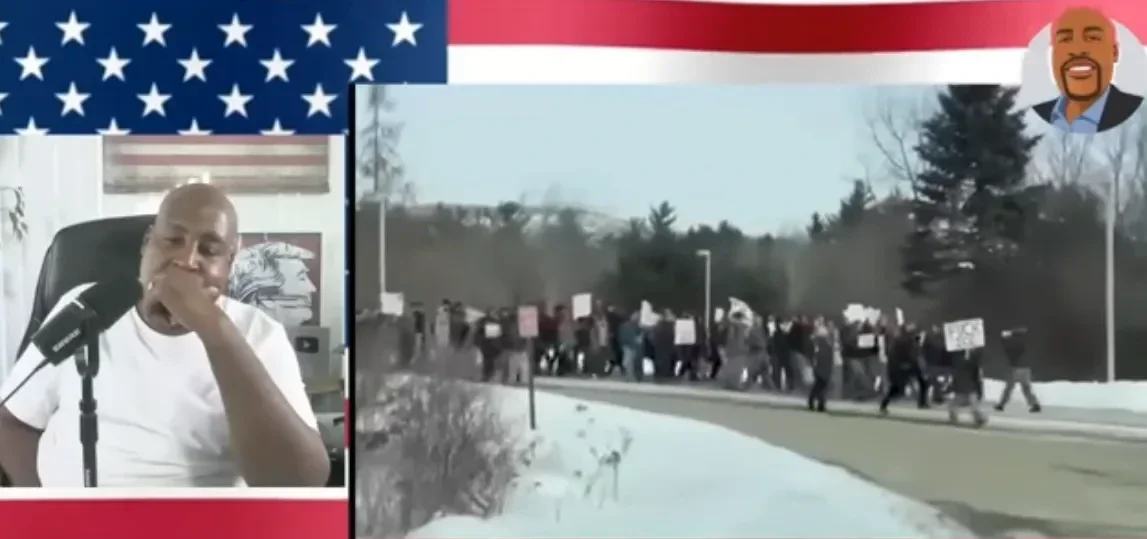
Parents Furious After Viral Claims Students Were “Forced” Into Anti-ICE Protests
What’s verified, what’s being exaggerated, and what schools actually warned students about
A wave of student anti-ICE walkouts and street protests has triggered backlash from parents across multiple states, with some viral posts claiming kids were forced to participate or face expulsion.
What is clearly documented in mainstream local reporting is that many school districts warned students they could be disciplined for leaving campus or skipping class for walkouts, and some state education officials warned educators not to enable protests during instructional time.
Those real warnings are now being reframed online as “forced protests,” even though the most widely reported disputes involve attendance rules and discipline for walking out, not punishments for refusing to protest.
In metro Atlanta, for example, school district messages circulated ahead of planned anti-ICE walkouts, emphasizing that instructional time cannot be disrupted and that students who leave class could face consequences under attendance and conduct policies. Critics argued the tone of the warnings felt overly punitive and could chill speech, while districts argued they were simply enforcing the school day and safety rules. This is the basic pattern showing up in several places: schools aren’t ordering students into protests, they are warning about the penalties for skipping class to join them.
In Texas, the fight escalated beyond one district because the Texas Education Agency issued guidance and warnings that educators who help organize or facilitate walkouts during school hours could face professional consequences, and districts that don’t enforce attendance could face state action. That crackdown has become part of the national online narrative, with some commentators describing it as schools “forcing” politics into classrooms, while the documented policy conflict is about whether walkouts happen during school hours and whether adults at school are encouraging it.
In Central Texas, protests drew large crowds of students walking out near multiple campuses, and separate incidents went viral online, including confrontations near protest routes. Local reporting shows districts responding by repeating that walkouts are unexcused absences and that students should remain on campus, which is the opposite of “mandatory participation.” The discipline being discussed in official statements is tied to leaving class or leaving campus without permission, not refusing to attend a protest.
Another reason parents “exploded” is that social media videos made it look like schools were allowing or encouraging kids to pour into streets. In Auburn, Washington, a widely shared clip shows a mother pulling her child from school on the spot, saying she believes the protest environment was unsafe and that students were being swept into something parents didn’t approve. The viral video spread faster than confirmed details, and online claims escalated from “the school allowed a walkout” to “the school forced students to protest,” even though the most verifiable accounts describe a student walkout and parent anger over how it was handled, not an official expulsion threat for refusing to protest.
Outside Washington, similar parent disputes are showing up wherever walkouts happen. In Arizona, local coverage described districts telling families that leaving class for demonstrations would be counted as an unexcused absence, and state-level officials discouraged staff participation during the school day. Parents split into two camps: those who view walkouts as civic engagement and those who see them as political activism using school time and resources. Again, the documented enforcement is tied to attendance, not compelled protest participation.
Some students have reported being suspended for participating in walkouts, which is where “forced or expelled” headlines often get their emotional punch. In Georgia, one student said she was suspended after an anti-ICE walkout, and stories like that are being used online to argue schools are politicizing discipline either to punish speech or to control it. The key distinction is that suspension for walking out is not the same as expulsion for refusing to protest, but both sides are using the most extreme phrasing to drive attention.
What would “forced into protests” actually mean in plain terms? It would mean staff directing students to attend, threatening punishment for refusal, or tying grades or enrollment to participation. Based on the widely reported examples in major local outlets and education press, the dominant conflict is about students choosing to walk out and schools responding with unexcused absences, detentions, suspensions, and safety warnings. If families believe coercion occurred, the most concrete step is documenting it in writing, requesting the district’s policy used to justify discipline, and escalating through the district complaint process, because claims that rely only on viral clips can collapse when the actual attendance and conduct policy is reviewed.
Address links (sources)
https://www.expressnews.com/news/education/article/student-ice-walkouts-tea-crackdown-21333415.php
https://www.fox7austin.com/news/hays-cisd-student-protests
https://www.fox10phoenix.com/news/arizona-parents-divided-student-anti-ice-walkouts-spread
Parents Furious After Viral Claims Students Were “Forced” Into Anti-ICE Protests
Please Like & Share 😉🪽
@1TheBrutalTruth1 FEB. 2026 Copyright Disclaimer under Section 107 of the Copyright Act of 1976: Allowance is made for “fair use” for purposes such as criticism, comment, news reporting, teaching, scholarship, education, and research.
PRESS FREEDOM CHALLENGED AFTER FOX NEWS CAMERA CABLE CUT AT LOS ANGELES PROTEST
A protest in Los Angeles escalated after a protester cut the camera cable of a Fox News reporter, interrupting a live or recorded news segment. Video of the incident spread quickly online, showing broadcast equipment being deliberately damaged while the reporter was covering the demonstration.
At this time, it is unclear whether any arrests were made or if charges will be filed. Fox News has not released detailed information about injuries, equipment damage costs, or follow-up actions. Local authorities have indicated that available video footage will likely be reviewed to determine whether any laws were violated during the incident.
The event has reignited debate over press freedom and protest conduct. While the right to protest is protected under the First Amendment, journalists also have constitutional protections to gather and report news in public spaces. Media advocates emphasize that targeting reporters or damaging news equipment crosses a legal line, regardless of political disagreement with the outlet being covered.
From a conservative perspective, incidents like this are viewed as evidence of increasing hostility toward dissenting viewpoints and selective tolerance for free speech. Critics argue that attacks on journalists undermine transparency and intimidate the press, especially when the targeted outlet is unpopular with protest groups.
From a middle-of-the-road perspective, the focus remains on enforcement of existing laws. Peaceful protest and free press are both protected rights, but neither includes the right to interfere with or sabotage lawful newsgathering. Most legal experts agree that damaging equipment or obstructing reporting can result in criminal charges if intent is established.
As protests continue across major cities, law enforcement agencies and courts are expected to face growing pressure to clarify boundaries between protected protest activity and unlawful interference with the press. The outcome of any investigation into this incident may shape how similar cases are handled going forward.
Address links
Associated Press overview of press freedom and protests
https://apnews.com/article/press-freedom-protests-journalists-safety
Reporters Committee for Freedom of the Press on journalist protections
https://www.rcfp.org/resources/know-your-rights-journalist/
Fox News official site (incident coverage and statements, if released)
Los Angeles Police Department media and public information updates
https://www.lapdonline.org/media-relations/
ACLU explainer on protest rights and legal limits
https://www.aclu.org/know-your-rights/protesters-rights
Please Like & Share 😉🪽
@1TheBrutalTruth1 FEB. 2026 Copyright Disclaimer under Section 107 of the Copyright Act of 1976: Allowance is made for “fair use” for purposes such as criticism, comment, news reporting, teaching, scholarship, education, and research.
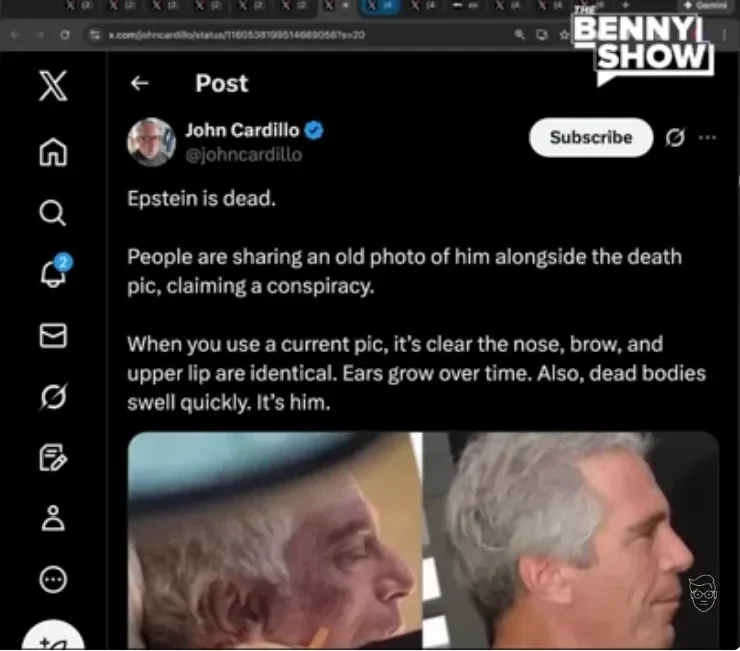
Is This For Real?
Evidence show that Epstein was removed the night before his death from his cell
WASHINGTON – The Department of Justice published over 3 million additional pages responsive to the Epstein Files Transparency Act, which was signed into law by President Trump on November 19, 2025.
More than 2,000 videos and 180,000 images are included in today’s additional publication. Combined with prior releases, this makes the total production nearly 3.5 million pages released in compliance with the Act.
These files were collected from five primary sources including the Florida and New York cases against Epstein, the New York case against Maxwell, the New York cases investigating Epstein’s death, the Florida case investigating a former butler of Epstein, Multiple FBI investigations, and the Office of Inspector General investigation into Epstein’s death.
The Department erred on the side of over-collecting materials, and any materials not produced fall within one of the following categories:
-
Duplicate documents between SDNY and SDFL investigations.
-
Withheld under privilege - deliberative process privilege, attorney client privilege.
-
Withheld based upon exceptions under the act (depictions of violence);
-
Items that are not part of the case file for Epstein or Maxwell and were completely unrelated to these cases.
More than 500 attorneys and reviewers from the Department contributed to this effort. In addition, the United States Attorney’s Office for the Southern District of New York (USAO-SDNY) employed an additional review protocol to ensure compliance with a Court order requiring United States Attorney Jay Clayton to certify that no victim identifying information would be produced unredacted as part of the public production.
Through the process, the Department provided clear instructions to reviewers that the redactions were to be limited to the protection of victims and their families. Some pornographic images, whether commercial or not, were redacted, given the Department treated all women in those images as victims. Notable individuals and politicians were not redacted in the release of any files.
This production may include fake or falsely submitted images, documents or videos, as everything that was sent to the FBI by the public was included in the production that is responsive to the Act. Some of the documents contain untrue and sensationalist claims against President Trump that were submitted to the FBI right before the 2020 election. To be clear, the claims are unfounded and false, and if they have a shred of credibility, they certainly would have been weaponized against President Trump already.
To access the full letter the Justice Department sent to Congress today, visit:
https://www.justice.gov/letter-to-congress.pdf
To access all files produced, visit: https://www.justice.gov/epstein
Updated February 1, 2026
So we have our Official and Unofficial documentations going on here.. Is Epstein Dead or Alive?
And if he is still alive, then who is this man?
Please Like & Share 😉🪽
@1TheBrutalTruth1 FEB. 2026 Copyright Disclaimer under Section 107 of the Copyright Act of 1976: Allowance is made for “fair use” for purposes such as criticism, comment, news reporting, teaching, scholarship, education, and research.
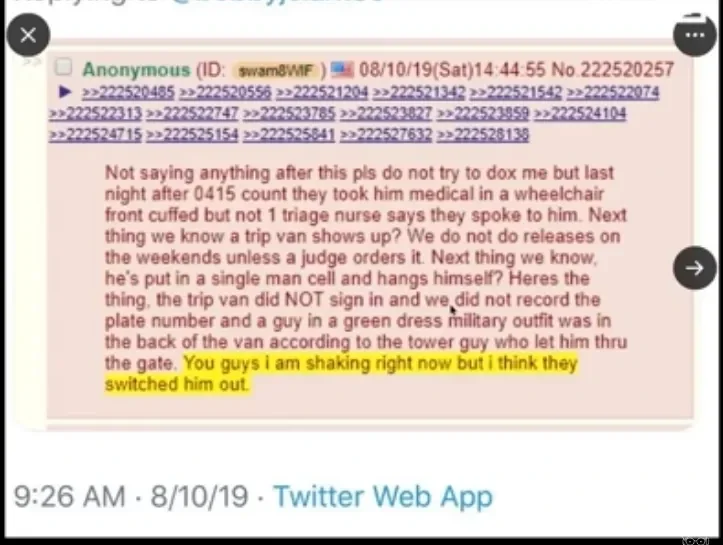
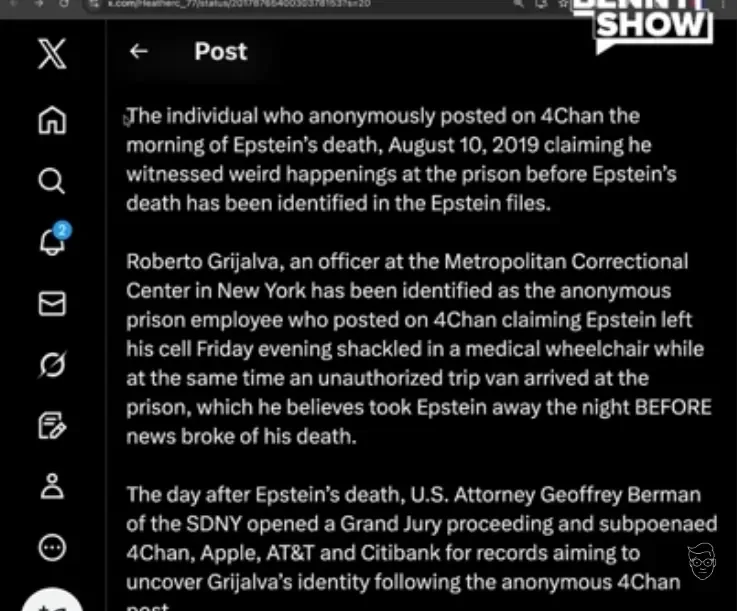
A calmer look at the “Microslop vs. Linux” claim as Windows 11 pushback grows
Older PCs Locked Out as Hardware Rules Force User Decisions
A video making the rounds says “Microslop ERUPTS at Linux” because users are leaving Windows 11. That wording is attention-grabbing, but the more documented story looks different: Microsoft is publicly signaling that it needs to rebuild trust in Windows by fixing performance, reliability, and long-running “pain points,” at the same time more users are at least considering Linux as an alternative.
One big reason this conversation is happening right now is the post-Windows 10 timeline. Microsoft says Windows 10 support ended on October 14, 2025, and encourages people to move to Windows 11 (or newer hardware) to keep getting security and feature updates. That puts pressure on people with older PCs, especially those that don’t meet Windows 11 requirements.
The hardware requirements are not a small detail. Windows 11’s baseline rules (like modern CPU support and security features such as TPM 2.0 / Secure Boot) are part of what leaves some perfectly usable older machines in a tough spot: upgrade hardware, change operating systems, or accept higher risk staying on an unsupported setup.
What’s being framed as “erupting at Linux” in some commentary is, in mainstream reporting, closer to “damage control.” The Verge reports an internal push (described as “swarming”) to focus engineers on Windows 11 problems that users complain about repeatedly, including reliability and performance issues and other long-standing frustrations.
In the same reporting cycle, Microsoft’s Windows leadership is quoted saying the company needs to improve Windows “in ways that are meaningful for people,” and that trust has to be earned back over time. That is not a direct attack on Linux so much as an admission that user confidence has been shaken and the company wants to reverse that.
So why are more people talking about Linux at all? Part of it is cultural frustration with the direction of Windows (updates, defaults, nags, and features people didn’t ask for), and part of it is practical: Linux gaming and compatibility have improved, especially thanks to Valve’s work around Proton/Steam Deck and the broader ecosystem that grew from it.
Gaming data gets cited a lot because it’s measurable. Steam’s Hardware & Software Survey tracks OS share among Steam users, and multiple write-ups point to Linux rising above the old ~1–2% range and hovering around the low 3% range recently, which is still small overall but meaningful growth in a category that used to be stuck.
It’s also worth separating two things that get blended together in hot takes: “people are mad about Windows 11” and “people are actually switching to Linux.” Many users complain but still stay on Windows because of work software, hardware drivers, anti-cheat in certain games, or familiarity. At the same time, a real slice of users are experimenting with Linux (or SteamOS-style setups) because the cost of trying it is low and tutorials are everywhere.
If you want the cleanest takeaway: there’s strong evidence that Microsoft sees a trust and quality problem in Windows 11 and is putting engineering focus on fixing it, while Linux is benefiting from a moment where users feel squeezed by Windows 10’s end-of-support timeline and the Windows 11 hardware bar. That’s the core story underneath the “erupts” framing.
Sources and address links
The Verge (rebuild trust / “swarming” report):
https://www.theverge.com/tech/870045/microsoft-windows-11-issues-rebuilding-trust-notepad
GameSpot summary (cites The Verge and includes Davuluri quote):
Microsoft Support (Windows 10 support ended Oct 14, 2025):
Microsoft Support (transition guidance / security risk after Oct 2025):
Microsoft Support (Windows 11 system requirements):
https://support.microsoft.com/en-us/windows/windows-1-system-requirements-86c11283-ea52-4782-9efd-7674389a7ba3
Microsoft Learn (supported Intel processors for Windows 11):
Steam Hardware & Software Survey (January 2026):
https://store.steampowered.com/hwsurvey/Steam-Hardware-Software-Survey-Welcome-to-Steam
Phoronix (Steam survey write-up with OS share figures):
https://www.phoronix.com/news/Steam-Survey-January-2026
Windows Central (context on SteamOS/Linux gaming growth):
Please Like & Share 😉🪽
@1TheBrutalTruth1 FEB. 2026 Copyright Disclaimer under Section 107 of the Copyright Act of 1976: Allowance is made for “fair use” for purposes such as criticism, comment, news reporting, teaching, scholarship, education, and research.
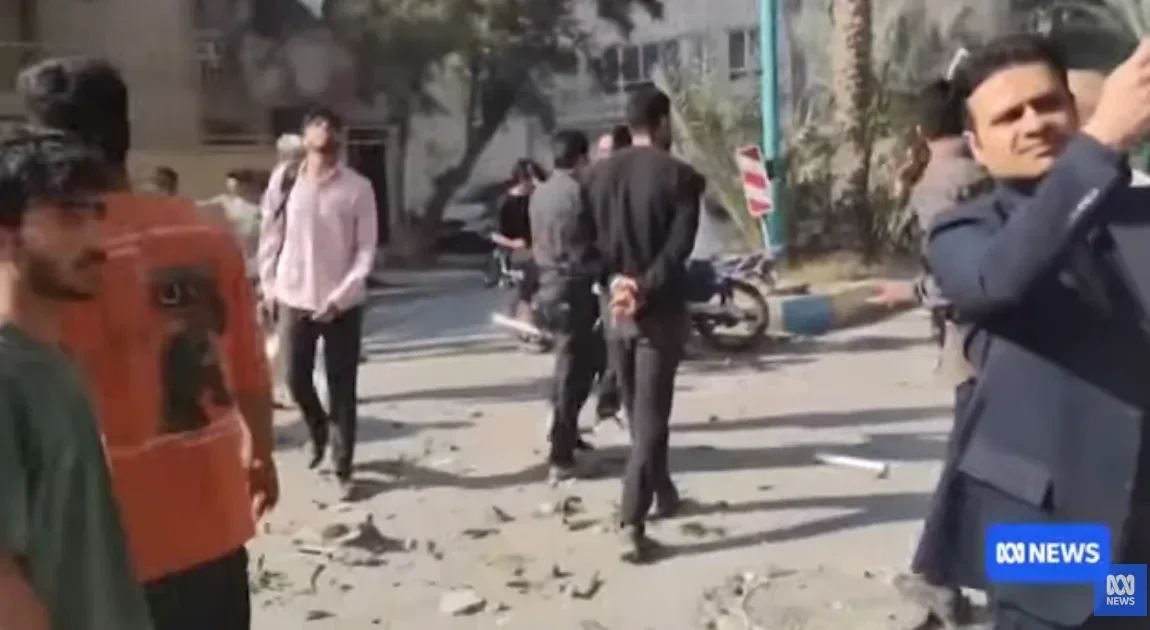
Reports of Explosions in Iran Amid Tensions, But No Confirmed U.S. Surprise Attack
Officials urge caution as facts continue to emerge
In the past few days, several explosions have been reported in Iran, including a major blast in the southern port city of Bandar Abbas, where at least two people were killed and more than a dozen were injured. Iranian officials and state media say these explosions were caused by accidental gas leaks, not military action. Independent reporting confirms the blasts occurred, but there is no confirmed evidence that the United States launched a surprise attack on Iran. Both U.S. and Israeli officials have publicly denied involvement in the explosions.
The reported explosions took place in areas including Bandar Abbas and Khuzestan province, where officials also attributed a separate blast to a gas leak. Iranian authorities are investigating all the incidents, and local emergency responders are treating them as domestic accidents for now. Videos and photos circulating online showed significant damage to buildings and vehicles, but no independent confirmation has linked these blasts to a military strike.
These events are unfolding against a backdrop of heightened tensions between Tehran and Washington, involving disagreements over Iran’s nuclear program and the U.S. deployment of a carrier strike group in the Persian Gulf. Iranian leaders — including Supreme Leader Ayatollah Ali Khamenei — have warned that any U.S. military attack would spark a broader conflict, and the United States has stressed that it wants negotiations and de-escalation rather than open war.
In summary, while multiple explosions have occurred in Iran and are making headlines, there is no verified reporting from major international news outlets confirming that the United States launched a surprise military attack on Iranian territory or military targets. The most credible reports attribute the blasts to accidental causes and ongoing domestic incidents. Journalists and analysts emphasize that speculation about attacks is not supported by verified evidence at this time.
Address Links and Sources
Reuters – Explosion in Iran’s Bandar Abbas blamed on a gas leak:
Iran Insight – Suspicious blasts kill several in southern Iran; officials blame gas leak:
https://www.iranintl.com/en/202601315488
New York Post – Reports of explosions and denials of U.S./Israel involvement:
AP News – Iran’s supreme leader warns U.S. attack would spark regional war:
https://apnews.com/article/c0023d9ff1e7c4e6fa92077d640e244c
France24 – Explosions at two Iranian cities amid rising tensions:
Please Like & Share 😉🪽
@1TheBrutalTruth1 FEB. 2026 Copyright Disclaimer under Section 107 of the Copyright Act of 1976: Allowance is made for “fair use” for purposes such as criticism, comment, news reporting, teaching, scholarship, education, and research.


Cambridge Academics Accuse University of Hiding Links to Arms Investments
Calls grow for transparency on investments and research linked to weapons work
Academics at University of Cambridge have accused the institution’s leadership of lacking transparency over how its multibillion-pound endowment is invested, particularly when it comes to links with arms and defense companies.
According to multiple reports, senior staff say the university has made it difficult to properly review these investments by not clearly disclosing which companies are involved, a situation one academic described as “maximal obfuscation.” The issue has become a point of internal dispute as the university prepares to review a report on defense-related investments.
The focus of the controversy is the university’s £4.2 billion endowment fund, which is intended to protect Cambridge’s long-term financial stability. The fund is managed by University of Cambridge Investment Management Limited, a company wholly owned by the university. UCIM operates as a “fund of funds,” meaning its money is spread across multiple investment vehicles and sectors rather than being placed directly into individual companies. Critics argue that this structure makes it harder for staff and students to understand where the money ultimately ends up.
Concerns about arms-related investments intensified after students set up a pro-Palestinian encampment on campus in 2024. The protest lasted several months and ended only after the university agreed to review its financial links to the arms and defense industry. During that review, UCIM told an internal working group that it did not directly invest in arms manufacturers. However, it later acknowledged that about 1.7 percent of its holdings were connected to the aerospace and defense sector, without naming specific companies.
The Cambridge University Council, which includes the vice-chancellor, college leaders, elected staff, and student representatives, is expected to discuss a report on these investments at a scheduled meeting. This discussion follows earlier commitments by the university to divest from companies involved in producing what it called “controversial weapons,” though it did not publicly define which weapons or companies fell under that category.
The debate has also been influenced by decisions at the college level. In 2024, King’s College Cambridge announced it would divest from the arms industry and from companies it said were linked to the occupation of Ukraine and Palestinian territories. That move increased pressure on the wider university to clarify not only where its money is invested, but also how its research activities may intersect with defense and weapons development. Some academics are now asking for clearer answers about whether Cambridge’s research partnerships contribute to weapons systems, including those classified as weapons of mass destruction, and whether existing oversight is sufficient.
Address links and sources
Middle East Eye – Cambridge academics accuse university of hiding links to arms investments:
The Guardian – Cambridge staff say lack of transparency blocks scrutiny of arms investments:
University of Cambridge – About the endowment and UCIM:
https://www.cam.ac.uk/about-the-university/finances-and-funding/endowment
University of Cambridge Investment Management Limited (UCIM) – Official site:
BBC News – UK universities face pressure over defense and arms investments:
https://www.bbc.com/news/education-uk-universities-arms-investments
King’s College Cambridge – Statement on divestment:
https://www.kings.cam.ac.uk/news/kings-college-divestment-statement
Please Like & Share 😉🪽
@1TheBrutalTruth1 FEB. 2026 Copyright Disclaimer under Section 107 of the Copyright Act of 1976: Allowance is made for “fair use” for purposes such as criticism, comment, news reporting, teaching, scholarship, education, and research.

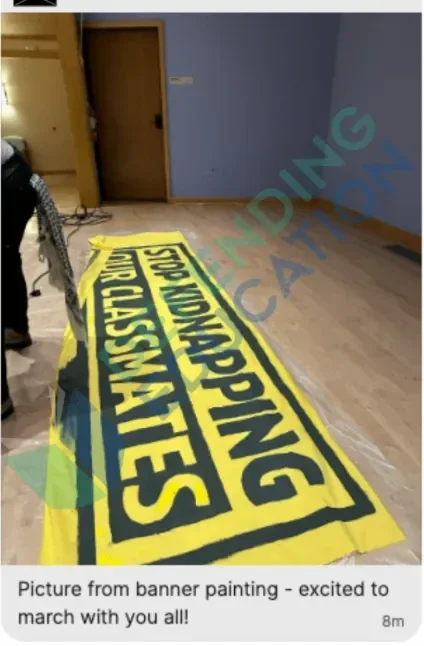
Minnesota School Funding Scrutiny Grows After Reports of Anti-ICE “De-Arrest” Material Circulating
Distinction grows between protected protest and criminal obstruction
Reports are circulating that activist networks tied to “ICE Watch” in Minnesota shared and promoted written material about “de-arresting,” a term used for trying to stop or reverse an arrest. Several outlets report that a “De-Arrest Primer” was posted or reshared through Minnesota ICE Watch-linked social media accounts, and those reports describe it as advocating physical interference with law enforcement.
What is clear from the available reporting is that the “De-Arrest Primer” itself is a real publication that exists online and has been promoted in activist spaces, including through screenshots shared on social media. Outlets describing the document say it includes guidance framed as “community defense,” but they also say it discusses actions that could amount to assault or obstruction if applied during an arrest.
The more serious claim now being pushed is that “anti-ICE resistance manuals and training” were found or distributed at Minnesota schools that receive federal funding. As of today, that specific “discovered at schools receiving federal funding” framing is mainly coming from commentary and advocacy-style reporting, not from a publicly released federal investigative finding or a Minnesota Department of Education document confirming the claim.
Some reporting and compiled “incident” posts argue that student walkouts, organizer chats, and training materials show activism networks encouraging school-based organizing connected to anti-ICE protests. Those materials are presented as evidence of coordination, but they are not the same as proof that a school district officially adopted or taught a “de-arrest” document, and the publicly available sources do not establish that federal education dollars were used to distribute or train students in physical interference tactics.
The key factual issue for readers is the difference between (1) activists using social media and community spaces to share confrontational protest material and (2) a school, using taxpayer funding, formally hosting or endorsing training that tells students to physically interfere with arrests. Based on what is publicly documented so far, the first point is widely reported, while the second point remains an allegation that would require confirmation through school records, facility rental documents, grant conditions, or a law enforcement statement.
If federal authorities or state investigators do step in, the likely focus will be on whether any publicly funded institutions improperly supported unlawful activity, and whether any organizations receiving public funds violated rules tied to grants, facilities use, or student safety policies. That type of review typically depends on hard paperwork: contracts, emails, approvals, and funding trails, not just screenshots and viral posts.
Address links
The Daily Signal (Jan 13, 2026) – Reports MN ICE Watch shared “de-arrest” primer screenshots:
Washington Times (Jan 15, 2026) – Reports MN ICE Watch posted a “de-arrest primer”:
Washington Examiner (Jan 16, 2026) – Describes “de-arrest” primer screenshots and claims about tactics:
New York Post (Jan 12, 2026) – Claims about a “de-arrest” manual shared by MN ICE Watch:
AOL (Jan 12, 2026) – Syndicated version summarizing the “de-arrest” manual claims:
https://www.aol.com/news/renee-good-minnesota-ice-watch-205133966.html
Defending Education (Jan 23, 2026) – Compilation alleging K-12 organizing and training documents:
Gateway Pundit (Feb 2, 2026) – Source of the “manuals and training discovered at schools” claim:
Right Edition (Feb 2, 2026) – Reposts similar claim about schools and training:
Reuters (Jan 29, 2026) – ICE operational guidance in Minnesota after unrest:
Please Like & Share 😉🪽
@1TheBrutalTruth1 FEB. 2026 Copyright Disclaimer under Section 107 of the Copyright Act of 1976: Allowance is made for “fair use” for purposes such as criticism, comment, news reporting, teaching, scholarship, education, and research.
Trump Launches Military Pressure as Iran Faces Unrest and Regional Tensions
In early February 2026, tensions between the United States and Iran have risen sharply amid large-scale protests inside Iran and concern over how the Iranian government is responding. While some videos and social media posts use dramatic language like “decapitation strike” or “Ayatollah trapped,” credible news reporting does not confirm any U.S. military strike aimed at killing Iran’s leaders or mobs dismantling Tehran.
What is documented is a complex mix of anti-government protests across Iran, a U.S. military buildup in the region, and heavy diplomatic rhetoric from both Tehran and Washington. Major unrest in Iran — driven by economic issues and government crackdowns — has led to hundreds or possibly thousands of deaths, and Iranian security forces have been criticized for their response to protesters. This is the most severe internal unrest Iran has seen in years.
In response to the protests and reports of violence, the U.S. has signaled its concern, with President Donald Trump warning Tehran about possible military options if Iranian forces kill civilians, but as of now no official U.S. military attack on Iran has been announced or confirmed by independent news outlets. Trump has also spoken about diplomatic channels, and Iran’s foreign minister has said the country is willing to talk under certain conditions.
Iran’s Supreme Leader Ayatollah Ali Khamenei and other officials have strongly rejected the idea of U.S. strikes, warning that any attack on Iran would lead to a wider regional war. Tehran has positioned its leadership as prepared to defend the country, and there are ongoing fears that further escalation — whether by conflict or crackdown — could lead to broader instability in the Middle East.
At the same time, the European Union has taken steps such as designating Iran’s Revolutionary Guard as a terrorist organization in response to its actions. Regional diplomacy, including mediation attempts by Qatar and others, is continuing alongside the unrest inside Iran.
In summary, while there is no verified “decapitation strike” or confirmed U.S. operation targeting the Iranian ayatollah at this time, there is a serious diplomatic and security standoff involving protests in Iran, potential U.S. military options, and strong rhetoric from both sides. Experts and officials warn that further escalation could have significant consequences for the region and beyond.
Address / Source Links
Reuters – Iran fears U.S. strike may reignite protests and imperil regime:
The Guardian – Trump hints at deal to avoid military strikes:
The Guardian – Iran top diplomat says government ready for talks with U.S.:
https://www.theguardian.com/world/2026/feb/02/iran-abbas-araghchi-talks-us-nuclear-deal
The Guardian – EU designates Iran’s Revolutionary Guards as terrorist organization:
Reuters / AP reporting on Iran protests and casualty figures:
Please Like & Share 😉🪽
@1TheBrutalTruth1 FEB. 2026 Copyright Disclaimer under Section 107 of the Copyright Act of 1976: Allowance is made for “fair use” for purposes such as criticism, comment, news reporting, teaching, scholarship, education, and research.
California Homeless Spending Scandal Sparks Federal Task Force as Fraud Cases Pile Up
California $7 Billion ‘Homeless Fraud’ Triggers FBI TAKEOVER
A new wave of scrutiny is hitting California’s homelessness spending after federal prosecutors and investigators announced a coordinated effort to investigate fraud and corruption tied to money meant to help people off the streets. Supporters of the crackdown say it is long overdue because taxpayers have watched budgets climb while street conditions stay bad in many areas. Critics of the political messaging warn that “takeover” language can exaggerate what is really a normal law-enforcement step: building a multi-agency task force and pursuing cases one by one.
What is confirmed is this: federal authorities in Southern California announced a Homelessness Fraud and Corruption Task Force that includes federal prosecutors working with the FBI and other federal watchdogs. The stated purpose is to examine potential fraud and corruption tied to homelessness funds across multiple counties, after audits and public complaints raised alarms about oversight and transparency.
The “$7 billion” claim is not the same as a proven $7 billion homelessness theft. In recent political and media chatter, the number has been attached to California fraud more broadly, including claims tied to federal payment fraud findings, but those claims are not presented as a finalized homelessness-only total in the official homelessness task force announcements. If you see headlines saying “$7B homeless fraud,” treat that as a composite talking point unless it is backed by a specific audit report, court filing, or agency statement that pins that amount to homelessness programs.
At the same time, there are real, documented criminal cases involving homelessness money. One recent case announced by the U.S. Department of Justice describes a charity executive accused of stealing millions designated for homelessness programs in Los Angeles, with investigators alleging money meant for services was diverted to personal luxury spending. These allegations are now moving through the court process, where prosecutors must prove the case and the defendant can fight the charges.
There is also an accountability fight inside local government. Los Angeles officials have debated reducing reliance on or bypassing the regional homelessness agency model after audits raised concerns about record-keeping, contract oversight, and missing documentation for certain advances and payments. Some leaders argue reorganizing the system is needed to restore public trust; others argue governance changes won’t matter unless programs show measurable results and enforcement exists when contractors fail.
So what does “FBI takeover” really mean in practice? It usually means federal investigators are actively running leads, serving subpoenas or warrants when justified, and coordinating with inspectors general and prosecutors who can bring charges. It does not automatically mean the FBI is “running” California’s homelessness programs day-to-day. The practical takeaway is that the risk level just went up for anyone faking services, padding invoices, or routing public money into private pockets, because federal tools and federal penalties are now clearly on the table.
If the task force expands, the public will likely see more of three things: more audits driving referrals, more “paper trail” cases tied to invoices and contracts, and more high-visibility arrests designed to deter copycats. The bigger policy debate—how to reduce homelessness while keeping strict financial controls—will continue, and it will stay heated because it sits at the intersection of compassion, public safety, housing costs, addiction and mental health, and trust in government.
Address links and sources
DOJ press release (Jan 23, 2026) – Executive director of South L.A.-based charity arrested (alleged $23M fraud):
AP coverage via ABC News (wire) – LA homeless services CEO charged (mentions $23M):
NBC Los Angeles – Local summary of the same case:
CBS Los Angeles – Report on the charges and press conference:
AP – Feds to investigate potential fraud involving homeless funds in Southern California (task force announcement context):
https://apnews.com/article/1aef3e57f09215e253c925491b2b8107
Santa Monica Daily Press – Task force write-up (local reporting on the federal announcement):
https://www.smdp.com/federal-government-to-investigate-fraude-in-local-homelessness-funding/
AP – LA officials move to take control of homelessness agency amid audits and spending concerns:
https://apnews.com/article/45a5aa98fc0d4ff88a08b8ad43b530a6
CalMatters (Aug 2024) – Audit warning California risked millions in homelessness funds due to weak fraud controls:
https://calmatters.org/housing/homelessness/2024/08/hud-hcd-audit/
Context on the “$7B” claim (political statement coverage; not a homelessness-only audited total):
Please Like & Share 😉🪽
@1TheBrutalTruth1 FEB. 2026 Copyright Disclaimer under Section 107 of the Copyright Act of 1976: Allowance is made for “fair use” for purposes such as criticism, comment, news reporting, teaching, scholarship, education, and research.
“We Will NOT Comply” — Brandon Johnson and Chicago Police Clash Over ICE Orders
How a new executive order is deepening tensions between Chicago’s local leaders and federal immigration authorities
Chicago Mayor Brandon Johnson recently signed an executive order called “ICE On Notice” that directs the Chicago Police Department (CPD) to document and preserve evidence of alleged illegal activity by federal immigration agents such as ICE and Customs and Border Protection and to refer possible violations to prosecutors.
While Johnson framed it as holding federal agents accountable for misconduct, critics interpret the move as a refusal to cooperate with federal law enforcement — especially after federal immigration actions known as Operation Midway Blitz led to protests and multiple deadly encounters in the Midwest.
The order does not instruct CPD to arrest federal agents, but it does ask officers to record interactions, collect body-cam footage, identify supervisors, and report any behavior that appears to break local or state law. Johnson said this is necessary because, in his view, Washington has not adequately held ICE personnel accountable for violence — including shootings in Minnesota and Illinois tied to federal immigration enforcement.
Supporters of the executive order say it protects immigrant communities and ensures transparency when federal agents operate in Chicago. Opponents — including some former law enforcement officials — argue that telling police to document federal activity undercuts cooperation between local and federal law enforcement and could hinder public safety when multiple agencies respond to the same crisis.
This development comes amid broader national debates over sanctuary cities and federal power. Cities like Chicago have long resisted partnering with federal immigration enforcement, and the new order reflects an escalation of that stance. Local leaders say they are asserting municipal autonomy and civil rights protections, while critics say it deepens distrust between law enforcement layers and could create confusion in active situations.
Sources and address links
ICE On Notice — executive order overview – https://en.wikipedia.org/wiki/ICE_On_Notice
Mayor Brandon Johnson’s executive order text – https://www.chicago.gov/city/en/depts/mayor/press_room/press_releases/2026/january/ice-on-notice.html
Chicago mayor orders CPD to document alleged illegal federal agent activity – https://www.fox32chicago.com/news/chicago-johnson-exec-order-1-31
ABC7 Chicago coverage of the order – https://abc7chicago.com/post/brandon-johnson-executive-order-directs-chicago-police-investigate-alleged-illegal-activity-ice-agents-other-federal/18515701/
The Guardian on Chicago’s ICE order – https://www.theguardian.com/us-news/2026/jan/31/chicago-ice-brandon-johnson
Please Like & Share 😉🪽
@1TheBrutalTruth1 FEB. 2026 Copyright Disclaimer under Section 107 of the Copyright Act of 1976: Allowance is made for “fair use” for purposes such as criticism, comment, news reporting, teaching, scholarship, education, and research.
“LOST CONTROL”: Claims Xi Has Lost Complete Control of China’s Military
Analysis of recent reports suggesting cracks in President Xi Jinping’s control over the People’s Liberation Army and what it might mean for China’s future
In recent days a number of commentators and analysts have raised claims that President Xi Jinping may no longer have full control over China’s military, sparking debate about internal divisions within the Chinese Communist Party (CCP) and the People’s Liberation Army (PLA).
These claims center on purges, arrests, and expulsions of senior military leaders who were once close to Xi, including members of the Central Military Commission, which is the body that formally commands the armed forces. Some observers point to the high number of top generals removed over corruption or disciplinary violations — including the vice-chair of the commission and other top commanders — as signs that loyalty within the PLA might be fracturing and that Xi’s grip on the military’s leadership is weaker than it appears.
Xi has long emphasized absolute party control over the military, enshrining structures like the chairman responsibility system that legally make him the top decision-maker for defense and troop command. Yet ongoing internal reshuffling, rumors about intra-party debates, and reports of senior officers falling out of favor have fueled speculation that factions within China’s leadership may be challenging his authority behind the scenes. While the Chinese government continues to portray unity and strength publicly, these developments — whether interpreted as routine corruption crackdowns or deeper power shifts — have prompted foreign analysts to question just how centralized military control really is under Xi’s leadership.
At this stage, these reports reflect analyst interpretations and rumors rather than official confirmation from Beijing, and China’s tightly controlled information environment makes external verification difficult. However, the pattern of high-level oustings and restructuring has drawn increased attention from observers tracking both China’s internal politics and its strategic intentions on the global stage.
Sources and address links
Rumors about the removal of Xi Jinping – https://en.wikipedia.org/wiki/Rumors_about_the_removal_of_Xi_Jinping
Anti-corruption campaign under Xi Jinping – https://en.wikipedia.org/wiki/Anti-corruption_campaign_under_Xi_Jinping
Chairman responsibility system – https://en.wikipedia.org/wiki/Chairman_responsibility_system
Please Like & Share 😉🪽
@1TheBrutalTruth1 FEB. 2026 Copyright Disclaimer under Section 107 of the Copyright Act of 1976: Allowance is made for “fair use” for purposes such as criticism, comment, news reporting, teaching, scholarship, education, and research.
JP Morgan Caught Unloading Massive Silver Shorts & DOLLAR IS Crashing
A weaker dollar affects everyday life in several ways & Complaints that “Markets Are Rigged”
Financial markets can move fast, and when a major player makes a big bet, other traders pay attention. Recently, JP Morgan Chase & Co., one of the largest banks in the United States and a major commodities trader, was reported to have closed significant short positions in silver at a time when prices were at historic lows. Short selling means betting that a price will fall, and then profiting if it does.
According to public filings and trading data, JP Morgan reduced large short positions in silver futures during a period when silver prices had declined sharply. Critics of the move have pointed to the timing — closing the shorts at the exact bottom of the market — as evidence that some firms may have information, scale, or influence that smaller traders do not. This has fueled complaints that “markets are rigged,” meaning that regular investors face unfair disadvantages in transparency and access.
Silver is traded on exchanges such as the COMEX division of the New York Mercantile Exchange (NYMEX), and positions by large banks and hedge funds are reported in weekly Commitments of Traders data. Short positions are typically visible in this data, and sharp changes in these figures can reveal how big players are adjusting their exposure. In this case, public data showed a large reduction in short positions shortly after prices hit cyclical lows.
Supporters of the trading system say that large financial firms can manage risk more actively and may simply have been adjusting positions based on changing price expectations. Markets are designed so that buyers and sellers make bets on future price directions, and large institutions are known to scale in and out of positions rapidly as part of risk management. From this perspective, closing out shorts at a price low does not necessarily prove improper behavior — it could reflect normal trading dynamics where futures positions are rolled or exited for strategic reasons.
Critics argue that the combination of size, access, and information advantages allows big banks to move markets or at least react faster than individual investors. In the silver market, this debate has been ongoing for years, with frequent calls for increased regulation or transparency. Some traders point to the bank’s historical trading footprint, while others emphasize that the commodities markets have hundreds of participants and that timing can sometimes look suspicious in hindsight when prices reverse soon after.
Regulators such as the Commodity Futures Trading Commission (CFTC) and the Securities and Exchange Commission (SEC) oversee futures and financial markets in the United States. They require disclosures and monitor trading patterns for signs of manipulation. There has been no public finding to date that the silver trades in question violated market rules, and proponents of the current system say that claims of rigging often reflect frustration with normal price volatility rather than documented misconduct.
Market controversies like this highlight the tension between perception and reality in financial markets. When prices fall sharply and large positions unwind, it raises questions about fairness, information symmetry, and how regulation keeps pace with complex trading activity. Whether the trades in this case represent strategic risk management or something more dubious remains a topic of lively debate among investors, analysts, and regulators.
DOLLAR IS Crashing
Why the U.S. dollar’s value has slipped, what’s driving the decline, and how it affects consumers, markets, and global finance
In recent weeks, the U.S. dollar — long considered the world’s premier reserve currency — has slid to its lowest levels in years, prompting headlines that the dollar is crashing. While currency movements are normal, the scale of the decline and its impacts are drawing widespread attention from investors, economists, and everyday consumers alike.
The U.S. dollar’s strength is typically measured by the U.S. Dollar Index (DXY), which compares the dollar’s value to a basket of major global currencies. Recently the index fell sharply, reaching a four-year low. The decline follows an approximate 11% drop over the past year — a rare and notable slide for a currency that often acts as a global safe haven.
Several factors are contributing to this downward trend. Trade and tariff uncertainties, volatile fiscal policy, and debates over Federal Reserve independence have weakened confidence among global investors. At times, political leadership in the U.S. has signaled that a weaker dollar could benefit exporters and economic competitiveness, further complicating market expectations.
When investors lose confidence in the dollar’s stability, they may shift capital into other currencies, foreign assets, or hard assets like gold. That trend — sometimes described in market commentary as the “Sell America” trade — reflects a broader reassessment of U.S. asset risk, including the dollar and government bonds.
A weaker dollar affects everyday life in several ways. Imported goods — from electronics to cars — become more expensive because it takes more dollars to buy the same foreign products. Fuel costs can also climb because oil is priced in dollars worldwide. For consumers and businesses, this can translate into higher prices at the pump and on store shelves.
The dollar’s slide isn’t all negative. Exporters can benefit because U.S. products become cheaper for buyers abroad, potentially boosting manufacturing and global sales. Investors may also find opportunities in international markets and assets that gain when the dollar weakens.
Economists caution that the current fall is not necessarily a sudden “crash” in the sense of total collapse, but rather part of a broader cycle of currency adjustment influenced by policy, market sentiment, and global economic forces. Still, the ongoing weakness underscores how geopolitical shifts, economic policy, and investor confidence can reshape the role of the dollar in global finance.
Sources and address links
-
JP Morgan reduces short positions in silver (report and context) – https://www.zerohedge.com/markets/jpmorgan-caught-unloading-massive-silver-shorts-exact-market-bottom
-
How silver futures markets work (COMEX explanation) – https://www.investopedia.com/terms/s/silver-futures.asp
-
Commitments of Traders (COT) report basics – https://www.cftc.gov/MarketReports/CommitmentsofTraders/index.htm
-
Commodity Futures Trading Commission overview – https://www.cftc.gov/ConsumerProtection/EducationCenter
-
Brief on short selling — what it means, risks and mechanics – https://www.investopedia.com/terms/s/shortselling.asp
-
How the U.S. dollar hit a four-year low and what it means – https://www.investopedia.com/dollar-hits-4-year-low-how-it-could-impact-your-wallet-and-financial-plans-11894221
-
Dollar sinks to four-year low, Trump brushes off the decline – https://www.reuters.com/business/dollar-sinks-four-year-low-trump-brushes-off-decline-2026-01-27/
-
Dollar weakness explained by Sky News – https://news.sky.com/story/dollar-has-become-a-falling-chainsaw-what-it-means-for-you-13499913
-
“Sell America” market trend affecting the dollar – https://en.wikipedia.org/wiki/Sell_America
-
Facts vs feelings: should we worry about the crashing dollar – https://news.mitlinfinancial.com/insights/blog/facts-vs-feelings-take-5-should-we-worry-about-the-crashing-dollar/
Please Like & Share 😉🪽
@1TheBrutalTruth1 FEB. 2026 Copyright Disclaimer under Section 107 of the Copyright Act of 1976: Allowance is made for “fair use” for purposes such as criticism, comment, news reporting, teaching, scholarship, education, and research.
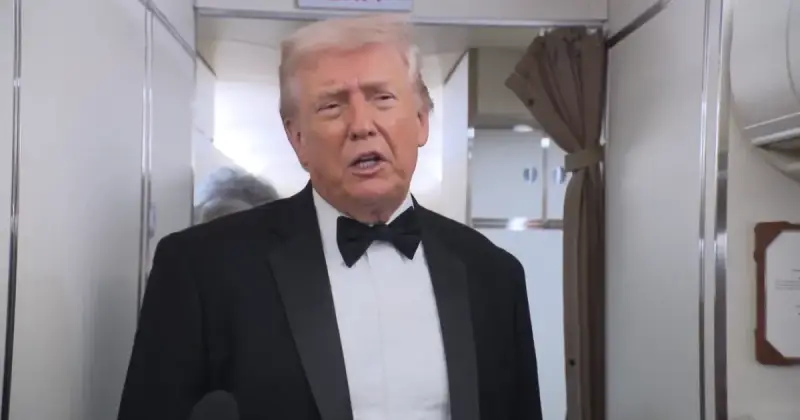
Trump Says Violent ICE Rioters “Will Have to Suffer” — A Deeper Look
Last week, President Donald Trump addressed reporters about a wave of protests and clashes linked to Immigration and Customs Enforcement (ICE) actions in several U.S. cities. His comments, and the policy direction he announced, have stirred debate about federal authority, civil unrest, and how the government responds to violent demonstrations.
Reporter: Back to your post on ICE protests, what did you mean when you said people will suffer an equal or greater consequence?Trump: If they do anything bad to our people, they will be— they will have to suffer. I’m sorry. If they start spitting in people’s faces, watching our people, watching our soldiers, our patriots, they will get taken care of in at least an equal way. They’re not going to do that like, you know, you see it, the way they treat our people. And I said you’re allowed— if somebody does that, you can do something back.
In a social media post and remarks to the press, Trump said his administration will not send federal forces into protests or “riots” in Democratic-led cities unless local officials formally ask for help. He emphasized that mayors and governors must make explicit requests before federal agencies step in. That includes large demonstrations related to immigration enforcement that have expanded in places like Minneapolis, Portland, and Los Angeles.
Despite limiting overall intervention, Trump directed the Department of Homeland Security (DHS)—including ICE and Border Patrol—to protect federal property and buildings and to use forceful measures if demonstrators damage government facilities or attack federal personnel. He warned that people who commit violent acts like throwing bricks or spitting on officers would face strong consequences, saying “if they do anything bad to our people, they will have to suffer.”
These remarks come amid heightened tensions over several incidents in recent weeks where federal agents clashed with protesters, including shootings in Minneapolis tied to ICE operations that have drawn national attention and widespread protest. Local officials, including mayors and state leaders, criticized federal engagement and urged de-escalation.
Political leaders are divided on the response: some Republicans support Trump’s directive as a defense of law and order and the protection of federal assets; others, including Democratic officials and protest organizers, argue that aggressive federal enforcement risks escalating violence and violating civil liberties.
As protests continue in multiple cities, Trump’s statements set a framework that balances federal restraint in local civil matters with a promise of tough action to defend government property. Leaders on both sides are watching closely, and the impact on local-federal relations could shape how similar unrest is handled in the coming months.
Sources and address links
Trump warns cities to handle riots, orders ICE & Border Patrol to defend federal property – https://www.13wham.com/news/nation-world/trump-warns-cities-to-handle-riots-orders-ice-border-patrol-to-defend-federal-property-minneapolis-minnesota-portland-oregon-los-angeles-california-homeland-security-dhs-kristi-noem
Trump says feds won’t intervene during protests in Democratic-led cities unless asked – https://apnews.com/article/e14e47e9a55576d6b5750c4dd776aad0
Minnesota ICE protests: Trump says DHS won’t intervene in riots – https://www.the-independent.com/news/world/americas/ice-minnesota-protests-news-live-b2911444.html
WATCH: Trump Says Violent ICE Rioters “Will Have to Suffer” – https://www.thegatewaypundit.com/2026/02/watch-trump-says-violent-ice-rioters-will-have/
Killing of Renée Good (background on ICE-related protests) – https://en.wikipedia.org/wiki/Killing_of_Ren%C3%A9e_Good
Please Like & Share 😉🪽
@1TheBrutalTruth1 JAN. 2026 Copyright Disclaimer under Section 107 of the Copyright Act of 1976: Allowance is made for “fair use” for purposes such as criticism, comment, news reporting, teaching, scholarship, education, and research.

Michigan Democrat Under Expanded Investigation as Kornak Case Deepens
A widening investigation fuels debate over transparency and political connections in Michigan
Probe of Prominent Michigan Democrat Traci Kornak Just Got Bigger
The ongoing legal and political scrutiny involving Traci Kornak, a former treasurer of the Michigan Democratic Party, has intensified in recent days. New developments reveal broader investigations, serious felony charges, and heightened political debate about how the case was handled by state authorities.
Kornak, who also served on the transition team of Michigan Attorney General Dana Nessel, has been charged with multiple felonies including embezzlement and false pretenses related to her role as a conservator for a vulnerable elderly woman in Kent County. Prosecutors allege that Kornak misused funds from the estate of the woman she was legally responsible for protecting. The most serious charge carries a potential prison sentence of up to 15 years.
This week’s court proceedings mark a significant escalation in public attention. Kornak is scheduled for arraignment in 63rd District Court in Grand Rapids. The charges reportedly stem from an Adult Protective Services referral and a long-running investigation by the Kent County Sheriff’s Office, which began in early 2023.
The case has taken on political overtones because Republicans in the Michigan legislature say earlier complaints about Kornak were not adequately pursued by the Attorney General’s office. They argue that since Kornak and AG Nessel were politically connected — Kornak was part of Nessel’s transition team — the initial state-level review may have been influenced by that relationship.
House Oversight Committee members have held hearings questioning how and why the earlier inquiry into Kornak was closed by the AG’s office in 2022, before a separate county investigation continued. Some lawmakers contend that the initial review should have resulted in stronger action against Kornak.
Democrats and spokespeople for the Attorney General’s office have pushed back on those criticisms. Officials insist that the earlier review involved different allegations and was concluded appropriately, and that the current criminal charges are connected to a distinct set of facts and a separate investigation.
In the public eye, Kornak’s case raises broader questions about political accountability, transparency in how cases are handled by prosecutors, and how relationships between political figures might impact oversight. With charges now filed and further hearings expected, the probe appears to be entering a more intense phase both legally and politically.
Watch as she tries to escape questioning from a reporter.. 🤣🪽
Probe of Prominent Michigan Democrat Just Got Bigger
Sources and address links
Kent County embezzlement charges against Kornak – https://www.crainsdetroit.com/politics-policy/traci-kornak-faces-embezzlement-charges-kent-county-case
Midland News on charges, arraignment & political reaction – https://www.ourmidland.com/news/article/politics-democratic-u-s-senate-primary-tightens-21322656.php
Deadline Detroit coverage of former Michigan Dem treasurer charges https://www.deadlinedetroit.com/articles/34150/former_democratic_party_treasurer_charged_with_embezzling_from_vulnerable_adult
House Oversight Committee hearings & ethics concerns article – https://www.newsfromthestates.com/article/house-oversight-committee-continues-hearings-alleged-ethics-concerns-attorney-generals-office/
Please Like & Share 😉🪽
@1TheBrutalTruth1 JAN. 2026 Copyright Disclaimer under Section 107 of the Copyright Act of 1976: Allowance is made for “fair use” for purposes such as criticism, comment, news reporting, teaching, scholarship, education, and research.
Nipah Virus Outbreak Update: What We Know, What’s Being Done, and What Happens Next
Two confirmed cases in eastern India trigger containment steps and regional screening, while health agencies say wider spread looks unlikely right now.
Here we go again…
India has reported two confirmed Nipah virus cases in West Bengal, with national and international health agencies saying the situation appears contained so far. Public reporting indicates both cases are linked, both patients were hospitalized and isolated, and large contact lists were traced and tested with results reported as negative to date.
The World Health Organization has assessed the risk of spread as low at this stage and has not recommended travel or trade restrictions. A key reason officials cite is that contact tracing has not found additional symptomatic positives, and the known cases were reportedly not traveling while ill, which lowers the chance of wider seeding events.
Nipah is a zoonotic virus, meaning it can jump from animals to humans, and then sometimes spread person to person, especially with close contact and in healthcare settings without strict infection controls. Health agencies describe common pathways as exposure to fruit bats, contaminated food (including raw date palm sap in some past events), infected animals such as pigs, or direct exposure to bodily fluids from an infected person.
What makes Nipah scary is severity, not speed. Reported outbreaks have shown a high case-fatality range (often cited around 40% to 75%), and illness can progress from fever and respiratory symptoms into brain inflammation (encephalitis). There is no widely approved “cure” medicine, so hospitals focus on supportive care and aggressive infection control to stop chains of transmission.
On the ground, the response described by health authorities and partners is the classic containment playbook: isolate confirmed patients, trace contacts, quarantine and test close exposures, and tighten hospital infection controls. Officials have also discussed sequencing the virus sample to confirm details and watch for changes, while emphasizing that there is currently no strong sign of unusual mutation driving faster spread.
Regionally, a second layer of response has kicked in: several Asian destinations increased airport screening and monitoring for travelers, largely out of caution during heavy travel periods. In plain terms, one side of the political debate tends to stress border screening, strict accountability, and fast consequences for any preventable failures in hospitals, while a more middle-of-the-road view focuses on transparency, rapid testing, and making sure frontline health workers have the gear and staffing needed to prevent hospital spread.
If you live in or travel to affected areas, public health guidance generally centers on practical steps: avoid raw date palm sap and fruit that could be contaminated, wash hands, and avoid close contact with sick people; in clinical settings, follow masking/PPE and isolation rules exactly. Most people outside the affected area are not at high risk, but the key is catching cases early, because early isolation is what prevents “two cases” from becoming “two hundred.”
Sources and address links
WHO Disease Outbreak News (India) – https://www.who.int/emergencies/disease-outbreak-news/item/2026-DON593
Press Information Bureau, Government of India (NCDC update) – https://www.pib.gov.in/PressReleseDetail.aspx?PRID=2219219&lang=1®=6
ECDC risk note – https://www.ecdc.europa.eu/en/news-events/nipah-virus-disease-cases-reported-west-bengal-india-very-low-risk-europeans
Reuters report on WHO risk assessment – https://www.reuters.com/business/healthcare-pharmaceuticals/who-says-nipah-virus-risk-low-india-with-no-sign-spread-2026-01-30/
AP report on containment and regional screening – https://apnews.com/article/166df6c637780b99ede380bf4ddccfcc
Australia CDC situation update PDF – https://www.cdc.gov.au/sites/default/files/2026-01/nipah-virus-infection-situation-update-1---west-bengal-india---30-january-2026_0.pdf
India NCDC CD Alert PDF – https://ncdc.mohfw.gov.in/wp-content/uploads/2026/01/CD-Alert-NIPAH-Virus.pdf
UKHSA explainer – https://ukhsa.blog.gov.uk/2026/01/27/nipah-virus-what-is-it-where-is-it-found-and-how-does-it-spread/
UN India update – https://india.un.org/en/309174-nipah-virus-update-west-bengal-india
More videos and news - Nipah Virus Outbreak Update: What We Know, What’s Being Done, and What Happens Next
Please Like & Share 😉🪽
@1TheBrutalTruth1 JAN. 2026 Copyright Disclaimer under Section 107 of the Copyright Act of 1976: Allowance is made for “fair use” for purposes such as criticism, comment, news reporting, teaching, scholarship, education, and research.
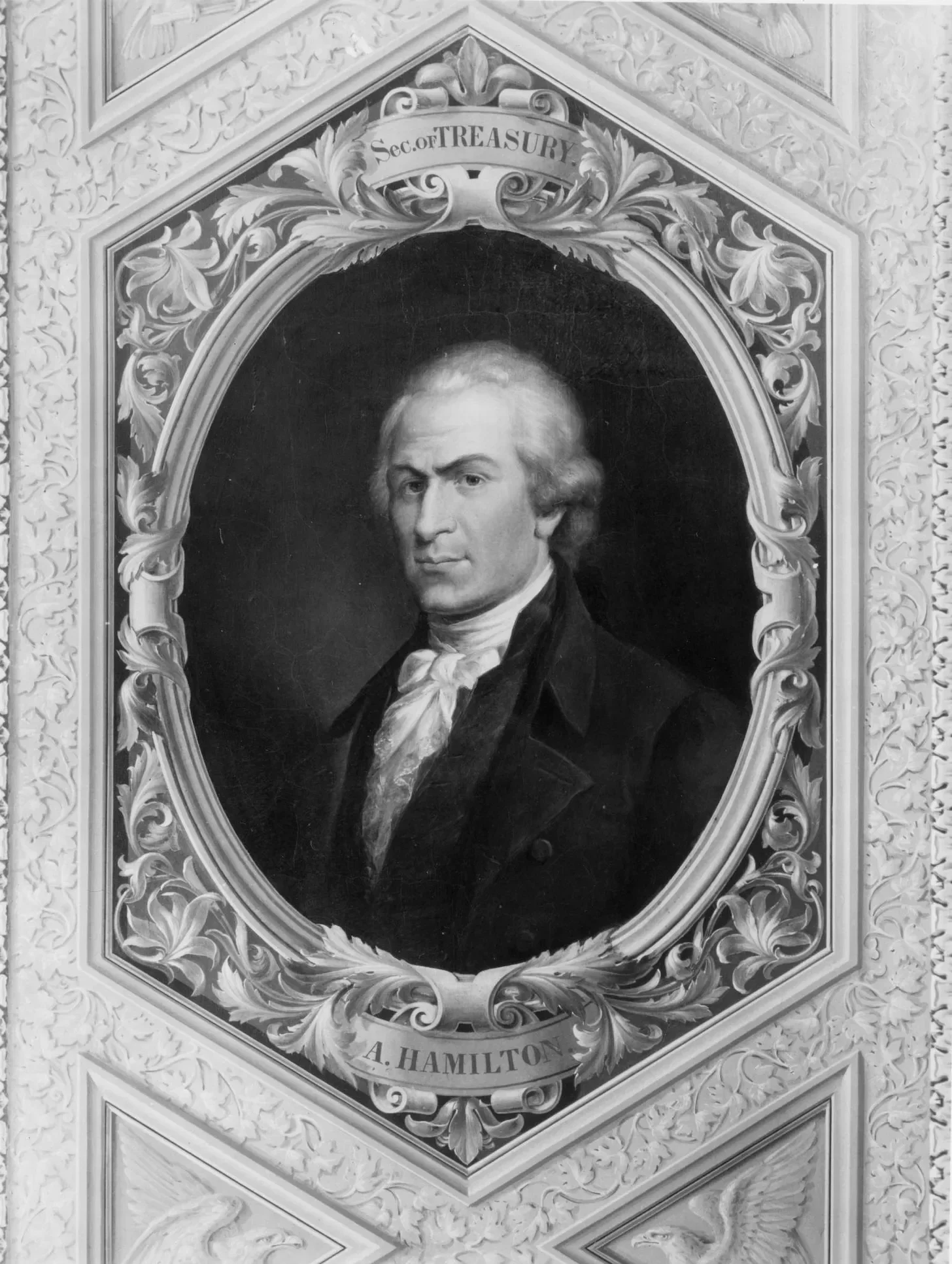
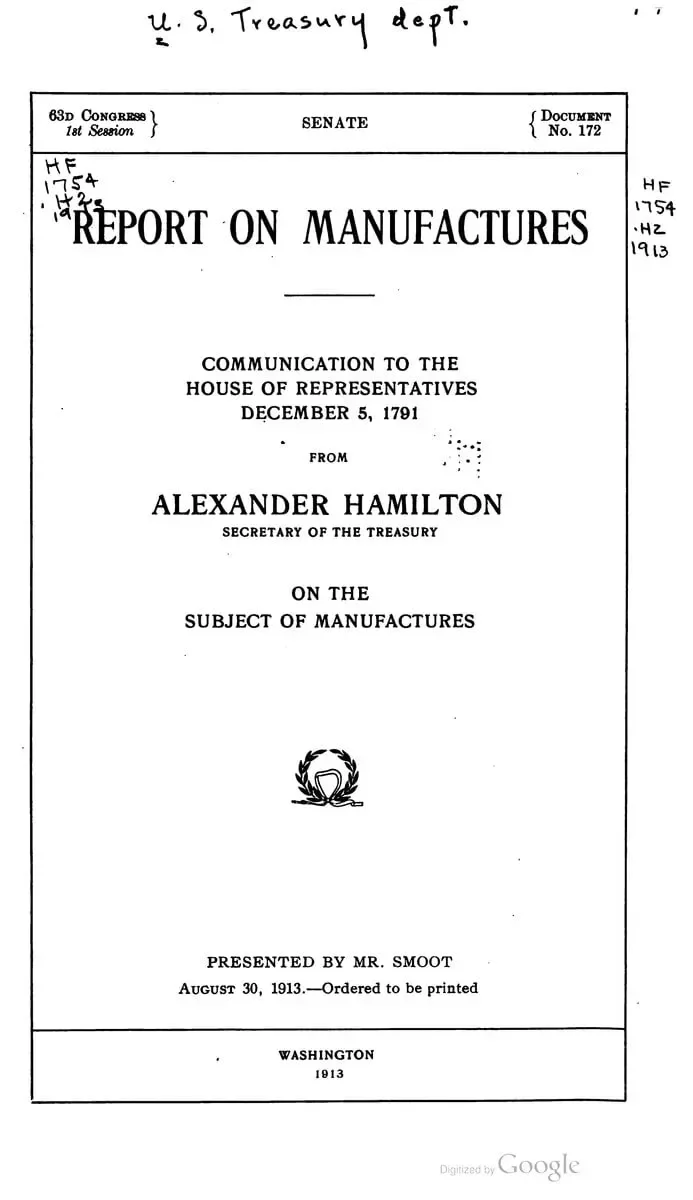
Why They Assassinated the American System
Assassinated Leaders and Broken Continuity - Federal Reserve Marks the Turning Point
A speech delivered at the World Economic Forum in Davos reignited a long-running argument that America’s original economic model was deliberately dismantled because it threatened global power structures.
The argument centers on the Hamiltonian economic system, first outlined by Alexander Hamilton in 1791, which promoted national banking, protective tariffs, and government support for domestic industry to make the United States economically independent.
Supporters of this view argue that this system fueled American growth through the 19th and early 20th centuries, but was systematically attacked over time. They point to the assassinations of leaders who strongly pursued these policies, including Hamilton himself, Abraham Lincoln, and William McKinley, as historical turning points.
According to this perspective, the creation of the Federal Reserve in 1913 marked the final shift away from national economic sovereignty toward a centralized banking system tied to global finance.
Recent comments by Trump administration figures at Davos, including calls to revive industrial policy and shift economic power back toward the Treasury and Main Street, are seen by supporters as a direct challenge to that global system. They argue the real impact of this shift will not show up in political debates or stock market talk, but in factory growth, job creation, and rising wages across the country.
Sources (address links)
https://founders.archives.gov/documents/Hamilton/01-10-02-0001-0007
https://history.house.gov/Historical-Highlights/1800-1850/Alexander-Hamilton-killed-in-duel/
https://www.archives.gov/milestone-documents/federal-reserve-act
https://www.weforum.org/about/world-economic-forum
https://www.whitehouse.gov/administration/commerce/
Please Like & Share 😉🪽
@1TheBrutalTruth1 JAN. 2026 Copyright Disclaimer under Section 107 of the Copyright Act of 1976: Allowance is made for “fair use” for purposes such as criticism, comment, news reporting, teaching, scholarship, education, and research.